"Meditation Doesn't Work for Me" Is Usually Just the Wrong Kind

Hot take: if you've decided meditation isn't for you, you probably tried the wrong one.
You start with the same generic mindfulness app. You don't feel much. You quit, and tell yourself that meditation is not right for you.
That's cause it probably was the wrong kind for what you needed.
Plot twist: "meditation" is a dozen different tools with a dozen different jobs. One calms a busy mind, another works on a childhood pattern, another's just for sleep. When the practice matches what's actually going on, everything changes. I learned that the slow, expensive way, through years of subscriptions (yes, I spent over a thousand dollars so you don't have to).
So instead of a generic "how to meditate," here's what to use for what.
If you won't stop overthinking/can't stop working: mindfulness
This is the classic follow-your-breath kind, and it's good, for this one job. When my head is a loud open-tab situation, plain mindfulness settles it. A 2014 review in JAMA Internal Medicine found it measurably lowered anxiety, so it earns its reputation. BUT this type of meditation does NOT fix everything. It merely settles a noisy day without getting at the pattern sitting underneath it. When I'm too wired to sit still, a Daily Check-in gets me there faster than a twenty-minute sit.
If you constantly say to yourself "I'm not enough" or "I hate myself": loving-kindness
If the thing hurting you is the mean voice narrating your every move, that's what loving-kindness is for. Breath-watching won't get near it. You practice sending warmth outward, then the harder part, toward yourself. Barbara Fredrickson's research found it slowly built people's warm emotions. I resisted this one for years because it felt corny. Then a bad self-esteem stretch made me try it, and starting with an easy person and letting the warmth spill toward me was the only version I could stand. It still moved something.
If you keep repeating the same toxic pattern: IFS
IFS (Internal Family Systems, from psychologist Richard Schwartz) treats you as a set of parts, each one trying to protect you. Honestly it sounded a little woo to me at first, until I realized that the me who rewrites an email at 11pm is a part, and she thinks she's protecting me. The meditation walks you in to meet one and ask what it wants. This is my pick when I catch myself doing the same thing again and want the why behind it. Attached builds personalized IFS meditations around the part that keeps surfacing in your journaling. Just don't do it in the middle of a spiral. Parts work needs a calm window.
If abandonment is your fear: Ideal Parent Figure
If your fundamental fear is that you'll be left, the mindfulness apps were never going to reach it. Ideal Parent Figure is built for exactly this. You imagine the calm, always-there (fake) parents you needed and let your body borrow that safety. It comes from attachment researchers Daniel Brown and David Elliott. It's slow, and I felt it in small ways first, a beat longer before I assumed the worst. It's the one aimed straight at attachment.
If you're not anxious, just flattened: body scan or yoga nidra
Some weeks you've got nothing left in the tank. Just flat, blahhh. For that I don't want to "focus" on anything. I want a body scan, or a yoga nidra track that walks me into that half-asleep state (some people call it NSDR now). There's research on yoga nidra improving sleep, and it's the one I do flat on the floor when I've got nothing left. It asks no discipline, which is the whole point on those days.
If it's one specific habit: hypnotherapy
And if what you want fixed is one concrete habit, the 3pm snacking or the flight dread, the general practices are aimed at the wrong target. Guided hypnotherapy points at the specific thing. I used one before a flight and it did more than I expected. Quality is all over the place, so I stayed with a named clinician instead of a random upload. Highly recommend this practitioner.
Note: this isn't medical advice. If you've been struggling for a while, talk to a doctor or therapist.
The Attached App Makes This Easier
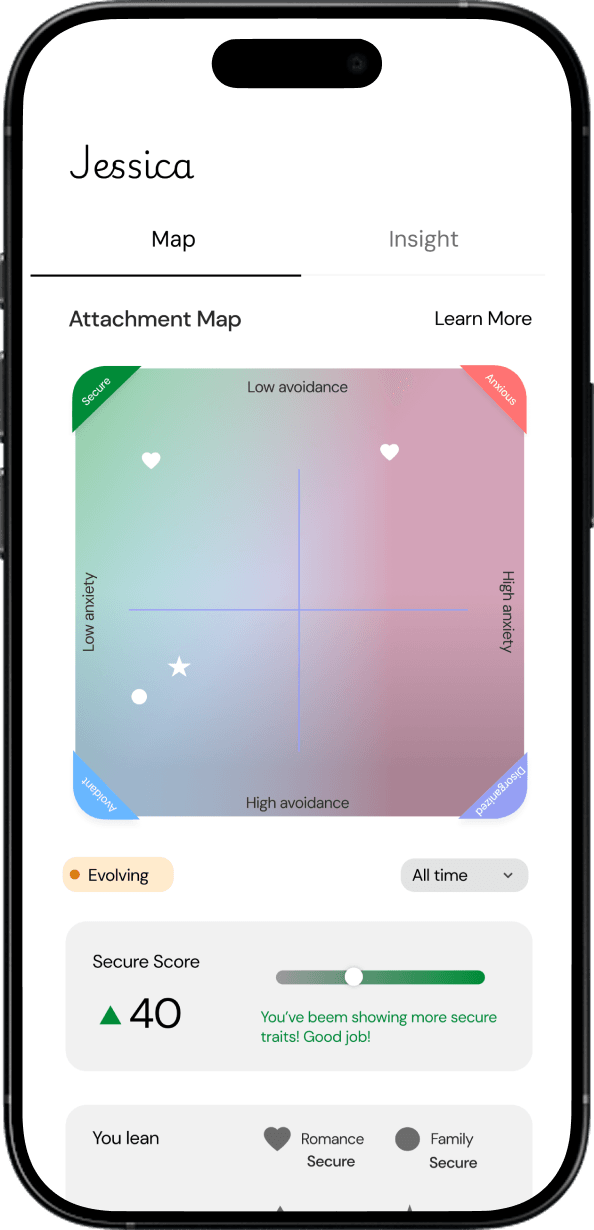
The reason the wrong kind keeps happening is most apps hand everyone the same track. Attached builds the practice around what you're actually working on, so you're not guessing which tool fits.
- Personalized meditations built from what you've been journaling about
- Ride the Storm for when anxiety hits and sitting still is off the table
- Daily reflection prompts so you catch the pattern early
Because changing doesn't come from forcing the same wrong practice forever. Changing starts when the page asks a better question.
Related articles
More reading to help this topic connect across the blog.
Most of the changing happens outside the therapy room. A memoir about Tuesday spirals, therapy homework, and the between-session practice that finally made the pattern real.
What to actually say when you sit down with your inner child. The sentences that finally worked after weeks of getting nothing back, what to do when it feels fake, and when to skip it entirely.
How I found an IFS (Internal Family Systems) therapist or coach, step by step — where to look, what to ask about training, how to pick by what you're struggling with, and how to use the waitlist to start parts work.
Most people put off shadow work journaling because of wrong ideas about what it is. Here are 5 things people get backwards, and an easier way to start.
Understand your attachment style
Read the full guide to each attachment style, or take the quiz to find yours.