freebyattached
Personalized Shadow Work Prompt Journal
What area of life do you want to work on?
Free, No Signup Generator
1. Share what’s going on
2. Create your personalized 7-day shadow work journal
3. Reflect
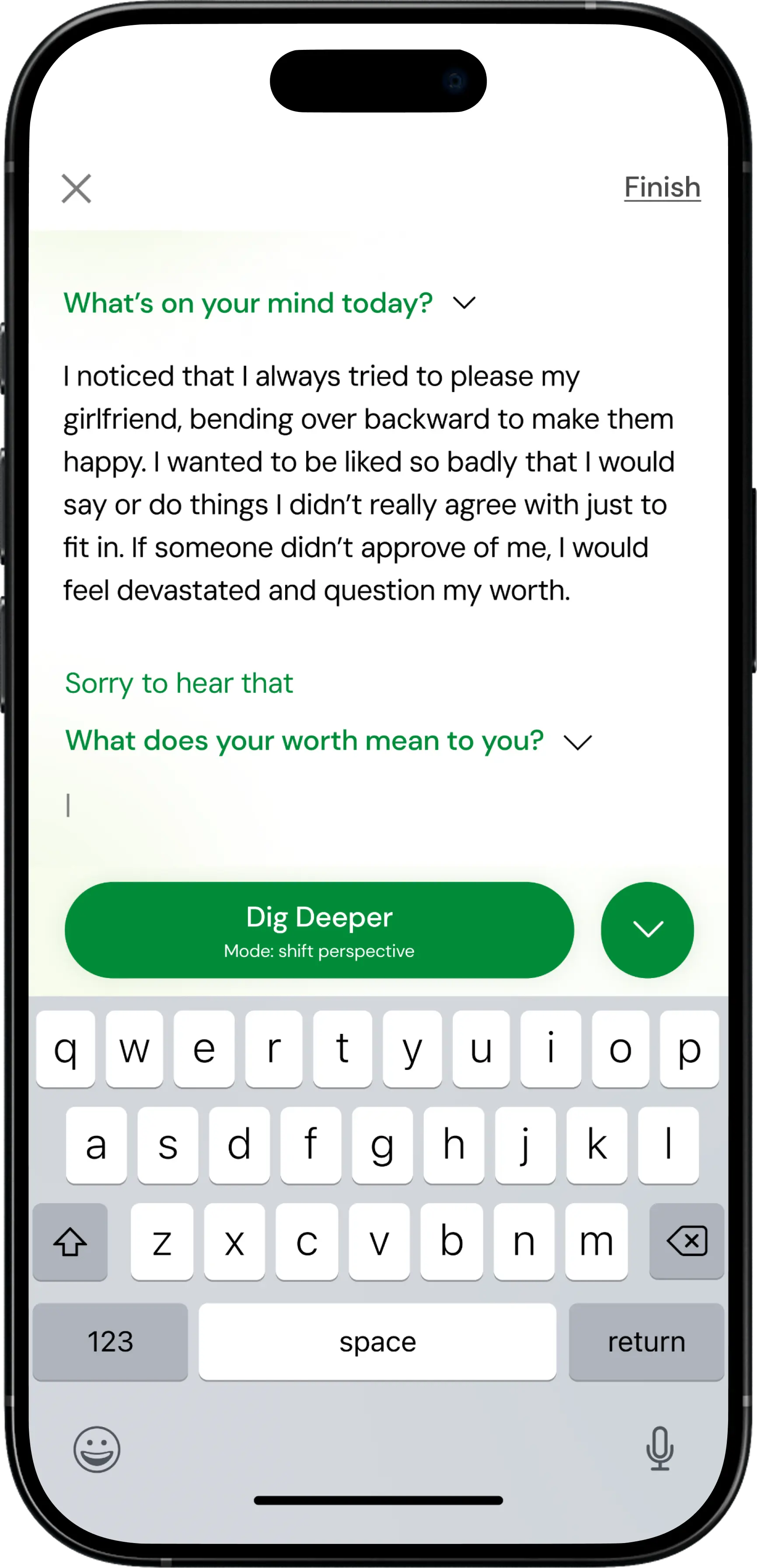
Want to dive-deeper?
Continue in Attached with personalized journal prompts, meditations, and exercises based on your memories.


FAQ
What is shadow work in psychology, and how is it connected to Carl Jung?
Shadow work is a self reflection practice inspired by Carl Jung and Jungian psychology. Jung used the idea of the shadow to describe the parts of the personality that sit outside everyday awareness: feelings, needs, desires, fears, and traits a person has learned to hide, reject, or judge. In journaling, shadow work usually means slowing down around a strong reaction and asking what it might reveal about the parts of you that want to be seen, protected, or understood.
What is the shadow self?
The shadow self is not a separate person inside you. It is a way to name the hidden or rejected parts of your inner life. These can include anger, jealousy, shame, dependency, ambition, sensitivity, grief, or even positive qualities you were taught were unsafe to show. Shadow work does not mean acting out every impulse. It means noticing what you disown so you can respond with more honesty and choice.
What are shadow work journal prompts?
Shadow work journal prompts are writing questions that help you explore what sits underneath a strong reaction. Instead of only asking, “Why did this happen?” a shadow work prompt might ask, “What did this moment make me afraid was true about me?” or “What part of me felt rejected, exposed, or unseen?” Good prompts make reflection specific, personal, and grounded in a real moment.
How do I start shadow work journaling as a beginner?
A beginner shadow work journal does not need to be dramatic or intense. Start with one real trigger, such as a moment when you felt jealous, angry, ashamed, rejected, ignored, or defensive. Write what happened, what emotion got loud, what story your mind created, and what part of you might have been trying to protect you. End with a steadier question, such as, “What would I say to myself if I did not have to attack or abandon myself right now?”
What are good shadow work prompts for jealousy, anger, shame, or rejection?
Good shadow work prompts stay close to the emotion without shaming you for having it. For jealousy, you might ask, “What am I afraid someone else has that I will never receive?” For anger, ask, “What boundary, need, or hurt is my anger trying to protect?” For shame, ask, “What part of me believes I have to hide to stay loved?” For rejection, ask, “What story did this moment make me tell myself about my worth?”
Can shadow work help with relationship triggers and attachment patterns?
Shadow work can be useful for relationship triggers because many strong reactions are tied to hidden fears and unmet needs. If you panic when someone pulls away, shut down during conflict, chase reassurance, or judge yourself for needing closeness, a prompt can help you ask what part of you felt threatened. It does not replace communication or therapy, but it can help you understand the protective pattern before you react from it.
Is shadow work the same as therapy?
No. Shadow work is not the same as therapy. Shadow work prompts can support self awareness, emotional honesty, and journaling, but they are not a diagnosis, treatment plan, or substitute for professional care. If your writing brings up trauma memories, panic, self-harm thoughts, dissociation, or feelings that are too much to hold alone, it is better to pause and get support from a licensed mental health professional or crisis resource.
Is shadow work evidence-based psychology?
Shadow work is rooted in Jungian and depth psychology, especially Carl Jung’s ideas about the shadow, persona, projection, and individuation. It is not usually treated as one standardized, evidence-based clinical protocol in the way some therapy methods are. Still, many parts of shadow work overlap with practices psychologists often use or study, such as journaling, naming emotions, noticing patterns, exploring projections, and building more self-compassion.
What is the difference between shadow work, inner child work, and parts work?
Shadow work, inner child work, and parts work often overlap, but they are not identical. Shadow work focuses on the parts of you that feel hidden, rejected, shameful, or projected onto others. Inner child work usually focuses on younger emotional needs, old wounds, and memories of not feeling safe, loved, or understood. Parts work looks at different inner protectors, such as the part that people-pleases, criticizes, avoids, or gets angry, and asks what each part is trying to do for you.
Can AI help me create shadow work prompts?
Yes. AI can help create personalized shadow work prompts by turning a real trigger into clearer journal questions. For example, instead of giving you generic prompts, an AI shadow work prompt generator can respond to the area of life, emotion, and depth you choose. The important limit is that AI should be used as a journaling support tool, not as therapy, medical advice, a diagnosis, or a replacement for human care.
How deep should I go with shadow work?
Shadow work is most useful when it stays within a depth you can actually hold. You do not have to force yourself into the deepest memory or most painful interpretation. A light prompt might help you name the feeling; a medium prompt might explore the story underneath it; a deep prompt might ask what fear or old role is being protected. If your body feels overwhelmed, numb, panicky, or unsafe, pause and choose a gentler form of support.
How often should I do shadow work journaling?
You do not need to do shadow work journaling every day for it to be useful. Many people benefit from using it a few times a week, after a meaningful trigger, or when the same emotional pattern keeps repeating. Because shadow work can be intense, it helps to balance it with grounding: rest, movement, connection, creativity, and normal daily routines. The goal is more self awareness, not endless self-analysis.