Most of My Therapy Happened Between the Sessions

I used to think therapy happened in the room. Fifty minutes on the green couch, the tissue box I never quite needed, my coach nodding while I worked something out mid-sentence. I'd walk out feeling lighter, drive home, and by the time I pulled into the Target lot I'd half-forgotten what we said.
Then Tuesday would come. My partner would take a beat too long to text back, and there I'd be at the kitchen counter, spiraling, doing the exact thing we'd spent an hour on two days before. My session was Thursday, but the spiraling always seemed to hit on a Tuesday, when nobody was around.
It took me years to realize how little of the actual changing happens in that room. You find the thing there, sure, but you do the changing on all the other days, mostly on your own.
I did the math once, because I'm like that. If you see someone weekly, that's about one hour out of the sixteen or so you're awake each day, seven days a week. Less than one percent of your waking life. The rest of it, the part where the old pattern actually fires, you're on your own. None of that is therapy's fault. The old pattern mostly shows up out here, on the normal days.
For a long time I treated the in-between days like a waiting room. I'd kill time, try not to fall apart, and show up Thursday to report back. What changed things was starting to treat those days as the actual practice.
The first shift was small. When the Tuesday spiral hit, instead of white-knuckling it or texting three friends the same screenshot, I started doing a quick Daily Check-in to settle my nervous system before I did anything else. I just needed to get calm enough to think, because I've never once made a good decision while spiraling.
Then, once I was actually calm, I'd write. Not in the moment, that never worked for me. Writing while I'm spiraling just makes the spiral longer. Hours later, or the next morning with coffee in the backyard, I'd do some guided journaling on what set me off. And I kept noticing the same thing come up. Some version of "if I have to wait, it means they're leaving." My coach and I had circled it in session. But I didn't actually believe her until I watched it happen on my own, four Tuesdays running.
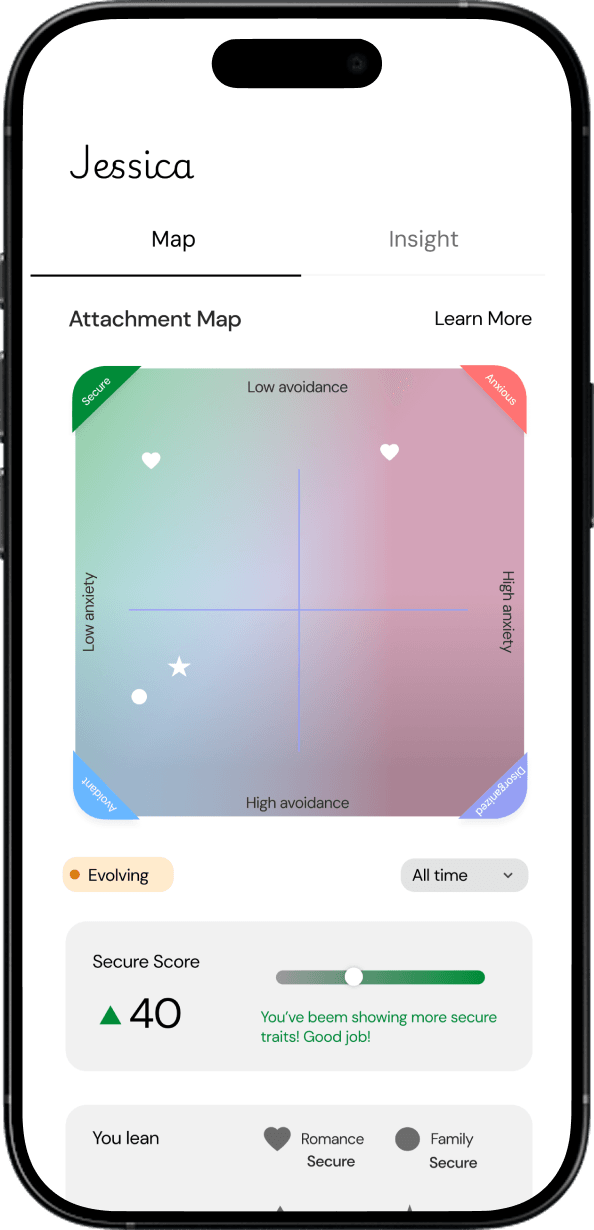
My coach could name the pattern, and I'd nod along, but seeing it repeat when she wasn't there is what made it real for me. The app keeps a thread of your recurring patterns so you can watch the same one surface over weeks, which is a lot easier than trying to remember what last month even felt like.
Nathan Kazantzis has spent years studying the "homework" part of therapy, and he's found that people who do the between-session work tend to get more out of it than people who only show up for the appointment. It matched my experience exactly. The weeks I actually did the between-session stuff were the ones where something finally moved, and honestly the coasting weeks just cost me forty-five minutes and a copay.
None of this replaced my coach. Therapy is where I found the words for what was going on with me, and I spent the rest of the week actually practicing them, on the days she wasn't around to remind me.
I'm not on that green couch anymore. But the Tuesday practice stuck, and it's the thing that changed me more than any single session ever did.
Note: this isn't medical advice, and an app isn't a replacement for therapy. If something's been weighing on you for a while, talk to a doctor or therapist.
The Attached App Is Built for the Days Between Sessions
You find the pattern with your coach in that one hour, and then it fires all week long, so you don't have to work through it alone on a blank page.
- Guided journaling for the thing that keeps setting you off
- CBT journaling for the anxious story that shows up when they go quiet
- Forward-looking journaling for learning secure attachment, growth, and new behavior
Because changing doesn't come from writing the same wound forever. Changing starts when the page asks a better question.

Related articles
More reading to help this topic connect across the blog.
What to actually say when you sit down with your inner child. The sentences that finally worked after weeks of getting nothing back, what to do when it feels fake, and when to skip it entirely.
I spent thousands of dollars so you don't have to. Here's which type of meditation to use for what, from mindfulness to IFS to Ideal Parent Figure.
Most people put off shadow work journaling because of wrong ideas about what it is. Here are 5 things people get backwards, and an easier way to start.
Skip the cold plunge and the 5am routine. Here's how to restore your nervous system based on how much time you actually have — from 2 minutes to a full day off — using simple, research-backed steps like movement, time outside, and being near water.
Understand your attachment style
Read the full guide to each attachment style, or take the quiz to find yours.