Limerence for an Avoidant Ex: Why You Can't Stop Thinking About Them
It's 2:14am and you're in the thread again. Scrolling up. Past the last cold message, past the week things got weird, all the way back to that stretch in March when they texted you good morning every day like it was nothing.
You're not reading it. You're looking for evidence. Some line that proves it was real, that they felt it too, that this isn't something you invented and carried on your own for a year.
Nine months out and this is still the thing your brain does when it has nothing else to hold.
Why limerence after a breakup with an avoidant hits differently
Dorothy Tennov coined the word limerence in her 1979 book Love and Limerence, after interviewing hundreds of people about being in love. The thing she found, which almost nobody expects, is that limerence doesn't run on affection. It runs on uncertainty — hope and doubt in roughly equal parts. Enough warmth to think maybe. Enough distance to think maybe not. Remove either one and the whole thing starts losing fuel.
Now think about what dating an avoidant partner actually felt like day to day.
Close weekend, then three days of short replies. A conversation where they said something they'd never told anyone, followed by a week of being busy. You'd relax, they'd pull back, you'd get sharp again, they'd come warm again right when you were about to give up.
That isn't cruelty and it usually isn't strategy. Their system reads closeness as pressure and reaches for distance to breathe. But whatever the intention, the pattern it produces is a near-perfect delivery system for limerence: intermittent warmth on an unpredictable schedule. It's the exact condition Tennov said keeps the fixation alive.
Which means by the time the relationship ended, you'd already had months of training in wanting someone you couldn't quite reach. The breakup didn't start the obsession. It removed the last thing that was capping it.
The dynamic itself is worth understanding on its own terms; we broke it down in the anxious-avoidant trap.
The missing explanation is doing most of the work
Avoidant breakups tend to end strangely. Not with a fight, usually. With a slow fade, a vague "I need space to figure myself out," or a conversation where the reasons given didn't match anything you'd observed.
You never got a version of events that made sense. So your mind, which is built to close open loops, kept working on it.
That's why this doesn't feel like ordinary grief. Grief has an ending to grieve. This has a question. And you can't mourn a question — you can only keep asking it, at 2am, in a text thread, with the brightness turned down.
The research describes the shape of this well. A small qualitative study by Willmott and Bentley (2015) found three recurring themes in people living through limerence: ruminative thinking, a free-floating anxiety with nowhere to put itself, and a feeling of the self coming apart. Participants also described the person they longed for as partly real and partly built by them. That last part matters here. Nine months on, you're not thinking about your ex. You're thinking about a version of them assembled almost entirely from the good weeks.
Why "they might come back" keeps it going
Here's the sentence that quietly extends everything: avoidants often do come back.
It's true. Once the pressure fades, the longing they'd buried tends to resurface, and they reach out — usually casually, as though the last several months didn't happen. We covered the full psychology in do avoidants ever come back.
But knowing it's possible is exactly what your fixation needs to stay funded. As long as the door is technically open, the doubt never resolves, and Tennov's finding says limerence fades with certainty in either direction. Hoping isn't neutral. Hope is the fuel.
There's also a mismatch you might recognize. In a study of 374 undergraduates, Feeney and Noller (1990) found anxious-ambivalent participants scored highest on measures of limerence, mania, and love addiction, while avoidant participants reported less desire for deep commitment. Two people can leave the same relationship carrying wildly different weights. You're nine months in and still reconstructing March. There's a decent chance they're not.
That's not because you loved harder or better. It's because anxious attachment makes unresolved distance feel like an emergency, and emergencies don't fade politely into the background.
The 2am re-read, and what it's actually for
Everyone with an avoidant ex has a version of this ritual. The thread. The photos. The one voice note. The Instagram story you watched three times to see if there was someone in the background.
It looks like nostalgia. It's closer to a search.
You're trying to settle the question — was it real, was it me, would it have worked if I'd been calmer — and the archive feels like it should hold the answer. It never does. But every scroll produces one small hit of contact, which tops the hope back up, which resets the whole thing. That's the trap. The behavior that's supposed to end the loop is what keeps it fed.
The most useful move isn't willpower. It's making the ritual inconvenient. Archive the thread. Mute the account rather than dramatically blocking it. Move the phone out of the bedroom so 2am doesn't have a device attached to it.
What no contact actually does to limerence
Cut the contact and you cut the intermittent hope. Without new signal, doubt eventually has to resolve, and Tennov's whole model says that's when the fixation starves.
But expect it to get worse first. Wakin and Vo (2008) proposed limerence as a clinical construct partly because of its parallels with substance dependence and OCD-style intrusive thinking, and that's roughly how the first two weeks feel. The thoughts get louder, not quieter. You'll invent reasons to reach out that sound extremely reasonable — returning a jacket, a birthday, a song. The spike is the thing working, not failing.
Two more things worth being honest about. One, checking their profile counts as contact. Your nervous system doesn't care that they didn't see it. Two, no contact is not a strategy for getting them back. If you're doing it to make them miss you, you've kept the hope alive on purpose and nothing starves. The practical version of all this is in should you go no contact with your avoidant ex, and if they do resurface and you want to reply without falling straight back into the old rhythm, what to text an avoidant after no contact covers the words.
Write the letter you're never going to send
The loop keeps running because it's unfinished. So finish it somewhere other than their inbox.
Write the whole thing out. Not a good version — the real one. What you actually wanted to say the night they went quiet. The question you've asked in your head six hundred times. The part where you're angry, and the part right after where you'd still take them back tomorrow, which is embarrassing and also true.
Then don't send it. The point was never delivery. Getting it out of your head and onto a page turns a loop into an object, and an object you can put down.
Some people write one and are done. Most write four or five over a few weeks and notice the tone changing — less pleading each time, more ordinary sadness. That shift is the actual progress marker.
Do you miss them, or the relief of being chosen?
This is the question that tends to crack the whole thing open, so answer it slowly.
Picture them coming back. Really picture it. What's in the image?
If it's mostly the moment — the message arriving, the apology, the wave of relief, the proof that you were worth choosing after all — that's not missing a person. That's missing the end of the uncertainty. The fantasy stops at the yes because the yes was always the point.
Now try the other one. Picture an ordinary Wednesday with them. Not a reunion. A Wednesday: dishes, someone tired, you asking a normal question and them going quiet in that specific way. Sit in that for a second.
For a lot of people that image is a relief to leave. Which tells you something worth knowing — you may not be grieving the relationship so much as the version of yourself who finally got picked.
That's not a failure of love. It's what happens when someone withholds certainty long enough that getting it starts to feel like the prize. Learning to stop chasing that is most of the work, and it's the same work whether they come back or not. If you want the wider picture on the pattern itself, start with what limerence is and why anxious attachment fuels it, or the step-by-step in how to stop limerence. And if you're wondering how much longer this lasts, here's what the timelines look like.
Not sure which pattern is yours? The free attachment style quiz takes about two minutes.
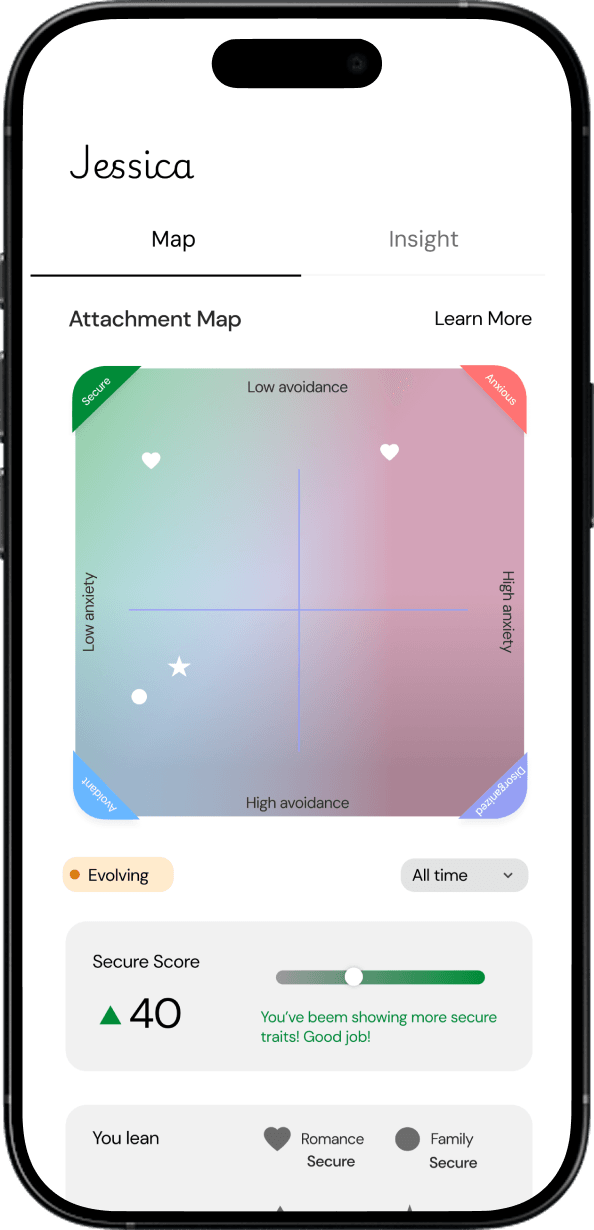
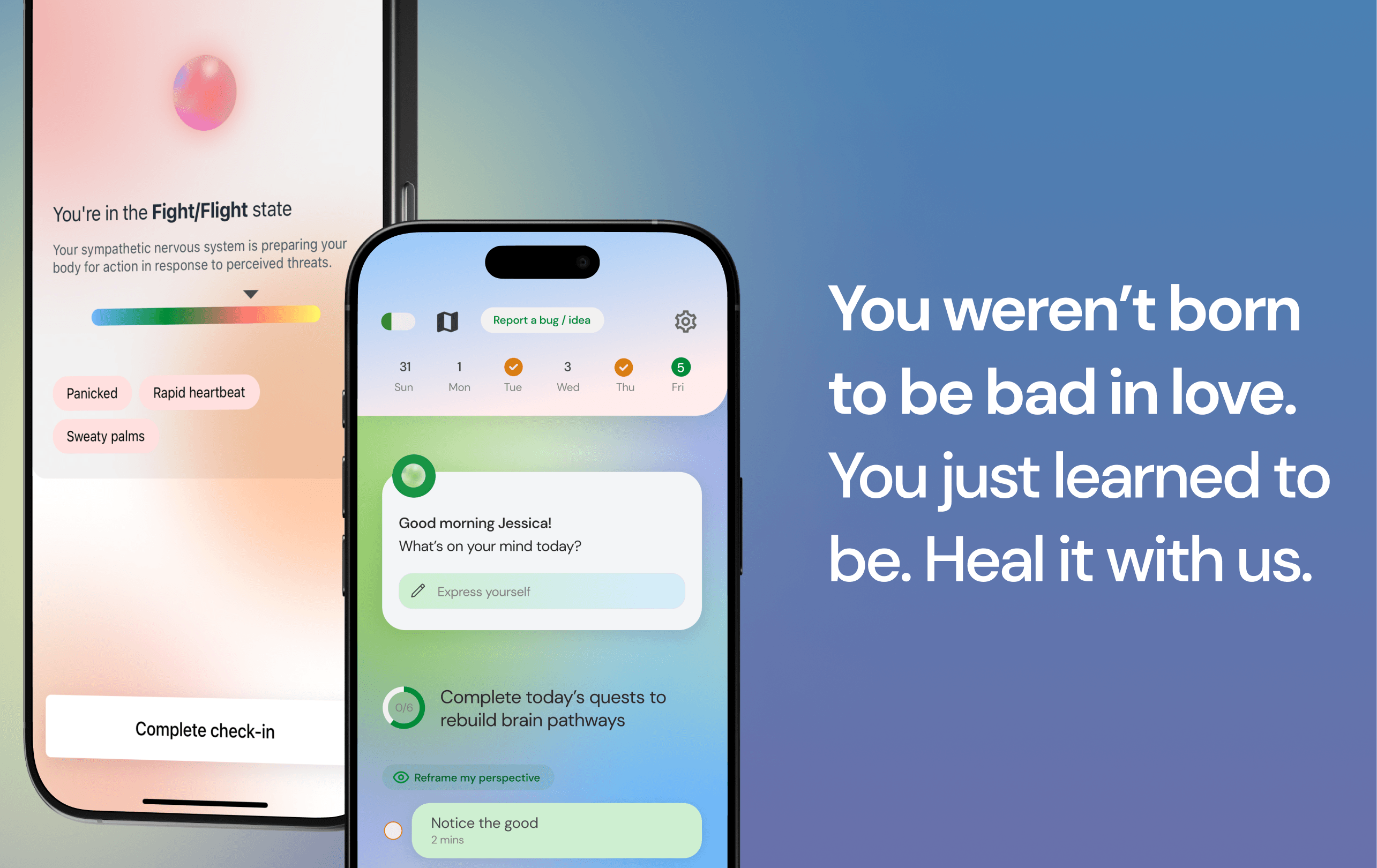
You can write the unsent letter in Attached, in a journal only you will read, as many times as it takes. It's a good place to explore your emotions through guided journaling instead of drafting messages at 2am. Continue with personalized reflection prompts, meditations, and exercises based on what you write.
Frequently asked questions
Why do I have limerence for my ex?
Because the relationship ended without closing. Dorothy Tennov, who coined the term in 1979, found limerence feeds on a mix of hope and doubt rather than on affection. A breakup that leaves the door slightly open keeps both ingredients in play, so your mind keeps working the problem instead of grieving it.
Does no contact cure limerence?
It doesn't cure it, but it removes the fuel. Limerence needs intermittent hope, and every text, view, or check quietly tops it up. Cut the supply and the fixation gradually starves. Expect it to spike hard in the first week or two — that's withdrawal, not a sign you should reach out.
Why am I more obsessed with my avoidant ex than with anyone else?
Because the relationship itself was built on uncertainty. Avoidant partners often move close and then withdraw, which creates exactly the hope-and-doubt rhythm limerence runs on. You spent months in a state of not-quite-knowing, and your mind got very good at chasing the resolution.
How do I know if I miss them or just miss being chosen?
Ask what you picture when you imagine them coming back. If the fantasy is mostly the moment of being wanted — the message, the apology, the relief — and not an ordinary Wednesday together, you're likely missing the relief more than the person.
How long does limerence after a breakup last?
Tennov's interviews put a typical episode at roughly 18 months to 3 years, with extremes from weeks to many years. Breakup limerence tends to run shorter once contact and hope are genuinely cut off, and longer when there's ongoing ambiguity.

Related articles
More reading to help this topic connect across the blog.
You've read the same text forty times. You check if they viewed your story. Here's how to stop limerence step by step, and why anxious attachment keeps the loop running.
You want a number. The honest answer is 18 months to 3 years on average — but the timeline depends much less on the calendar than on how much uncertainty you're still feeding it.
Limerence is the involuntary, all-consuming fixation on one person and whether they feel the same. Here's what it is, the signs, how it differs from love and a crush, why anxious attachment makes it so much worse, and how it ends.
It feels like the biggest love of your life. So why does it only feel good when they text back? Here's how to tell limerence from love, and infatuation from both.
Understand your attachment style
Read the full guide to each attachment style, or take the quiz to find yours.