How to Stop Limerence: A Step-by-Step Guide to Getting Your Head Back
It's 11:40pm and you're reading the same message again. Not for information. You already know it by heart. You're reading it for tone — for some hidden signal about whether they meant it warmly or were just being polite.
Then you check if they viewed your story. They did. Two hours ago. You do the math on what that means.
Tomorrow you'll rehearse a conversation with them in the shower, one that will probably never happen, and you'll feel genuinely good for about ninety seconds.
That loop has a name. And there's a way out of it.
What you're actually trying to stop
Limerence is the involuntary, obsessive form of romantic longing — intrusive thoughts about one person, idealizing them, and a craving for them to reciprocate so the tension finally breaks. Psychologist Dorothy Tennov coined the word in her 1979 book Love and Limerence, after interviewing hundreds of people who described the same strange experience in almost identical terms.
Here's the part most articles skip. Tennov found that limerence isn't fuelled by love. It's fuelled by uncertainty — a specific mix of intermittent hope and intermittent doubt. Too much rejection and it dies. Too much certainty and it settles into something ordinary. Keep the person hovering in the maybe, and it burns for years.
If you want the fuller picture first, here's what limerence is and the signs that separate it from a crush.
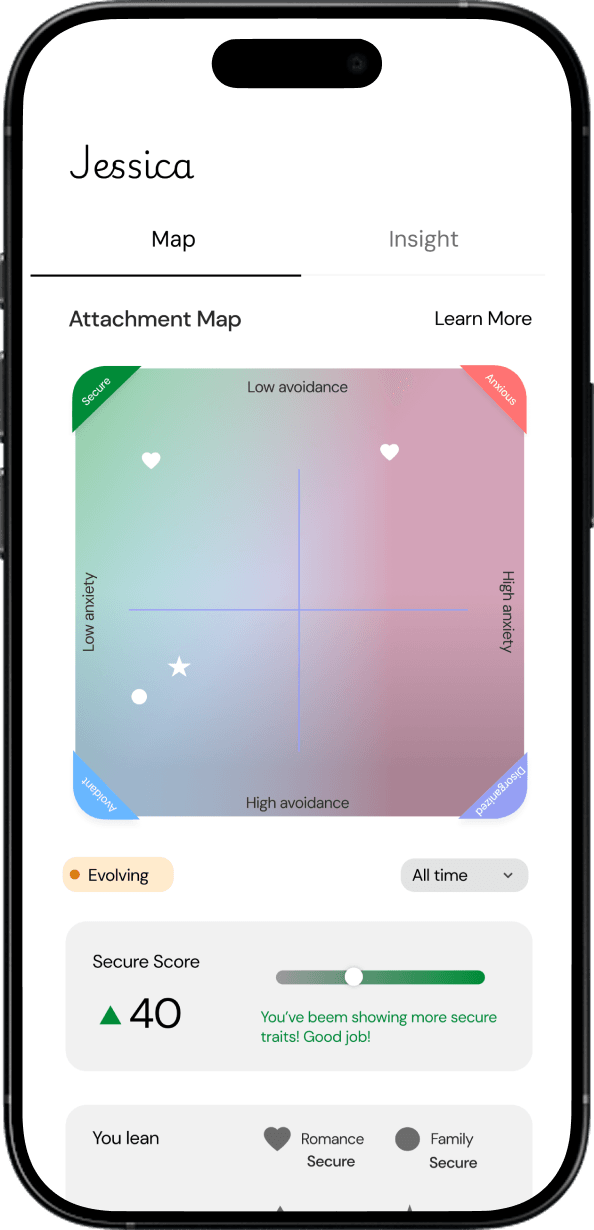
Our framing at Attached is simple: limerence is what anxious attachment feels like at full volume. The anxious pattern reads uncertainty as danger, and then fixates on the one person who could make the danger stop. That's why the obsession feels so urgent. Your body isn't chasing romance. It's trying to resolve an alarm.
That's also why the research keeps pointing the same direction. Feeney & Noller (1990), studying 374 undergraduates, found that anxious-ambivalent attachment scored highest on measures of limerence, mania, and love addiction. Wakin & Vo (2008) proposed treating limerence as a clinical construct, drawing parallels to substance dependence and to the intrusive thinking seen in OCD. And a small qualitative study by Willmott & Bentley (2015) described three themes people kept returning to: ruminative thinking, a free-floating anxiety, and a sense of their own self coming apart. They also noted the person you're fixated on is partly real and partly something you built.
Hold onto that last one. It matters for step four.
How to stop limerence, step by step
None of these steps are about caring less. They're about starving the loop of the thing it eats.
1. Cut the uncertainty inputs
This is the big one, and it's the one people resist hardest.
Every check is a data-gathering mission. You're trying to answer do they want me? using their last-active timestamp, the length of their reply, whether they used a period. And here's the trap: the data never resolves anything. It just produces a new question, which produces another check.
So make a list of every input. Be specific and unflattering about it.
- Re-reading old messages
- Checking who viewed your story
- Looking at their profile, or their new partner's profile
- Asking mutual friends how they seem
- Keeping a tab open on their socials "just in case"
Then remove them mechanically, not by willpower. Mute. Unfollow. Archive the thread. Delete the app off your home screen for two weeks. Willpower fails at 11:40pm. A missing app doesn't.
You will feel worse for a few days. That's not a sign it isn't working.
2. Break the intermittent reinforcement
The reason limerence outlasts logic is that the rewards are random. A warm reply after three cold ones is more addictive than a warm reply every time. Slot machines run on exactly this principle.
So the thing to interrupt isn't your feelings. It's the schedule.
If they're an ex, this usually means real distance — here's whether to go no contact with an avoidant ex and how to think about it. If they're a coworker or a friend, full no contact isn't realistic, so you go for predictable contact instead: same channel, same rough frequency, no late-night messages, no fishing for a reaction. Predictable contact is boring, and boring is exactly what limerence can't survive.
One rule that helps: no contact you initiated in an emotional spike. If you want to send it right now, that's the reason not to.
3. Calm your body before you act
The urge to text is loudest when your body feels least safe. It has almost nothing to do with what you want long-term and almost everything to do with what you're feeling in that thirty-second window.
Put something between the urge and the action. Ten slow breaths where the exhale is longer than the inhale. A walk around the block. Cold water on your wrists. Write the message and don't send it — put it in a note instead, and read it back the next morning. Most of them are unrecognizable by daylight.
The goal isn't to never feel the urge. It's to stop letting a thirty-second window make decisions for you.
4. Take them off the pedestal, gently
Willmott & Bentley found that the limerent object is part real person, part construction. You've been in a relationship with the construction.
You don't fix that by trashing them. Forced negativity usually backfires — it's just another way of thinking about them all day. Instead, get specific and neutral. What are they actually like on a slow Tuesday? What did they do that you quietly excused? How did you feel in the room with them, not in the fantasy about them?
Writing this down works better than thinking it, because thinking it lets you drift back into the fantasy without noticing. This is the kind of thing guided journaling is genuinely good for — you're not trying to reach a conclusion, you're trying to see the real outline of the person.
5. Rebuild worth that doesn't route through them
Limerence shrinks your world down to one person's attention. Your mood becomes a function of their responsiveness. That's the part Willmott & Bentley called the disintegration of self, and it's usually the thing people grieve most afterwards.
The rebuild is unglamorous. Put things back on the calendar that were yours before this started. See the friend you cancelled on. Do the thing you're mediocre at and enjoy anyway. What you're doing is giving your sense of worth more than one power source, so a single unanswered message can't black out the whole house.
6. Work the pattern, not just this person
Here's the uncomfortable part of limerence recovery. If you only get over them, the same thing usually happens with the next unavailable person in about eight months.
The pattern underneath is what's worth your attention: the way uncertainty reads as danger, the way inconsistency feels like chemistry, the way calm and available people feel a bit boring. That's an anxious pattern, and it can shift. It shifts slowly, through noticing it in real time, over and over, until you can feel the difference between I love this person and I can't stand not knowing.
If it's specifically an ex who pulls away and reappears, limerence for an avoidant ex covers why that particular combination is so sticky. And if you're not sure whether what you're feeling is love or the pattern, limerence vs love walks through the difference.
When to talk to someone
Limerence isn't a diagnosis and it isn't in the DSM. Most of the time it's a painful, ordinary human experience that runs its course.
But it's worth talking to a therapist if it's disrupting your work, wrecking your sleep, damaging a relationship you actually want to keep, or if the intrusive thoughts feel like something you can't put down at all. That's not a sign of weakness. It's a sign the loop has gotten loud enough that you shouldn't have to manage it alone.
What getting better actually looks like
It's not a switch. It's the gaps getting longer.
First you go an hour without thinking about them. Then an afternoon. Then one day you realize you haven't checked in a week, and the realization itself is a little anticlimactic — no fireworks, just quiet.
Somewhere in there their name stops being an event.
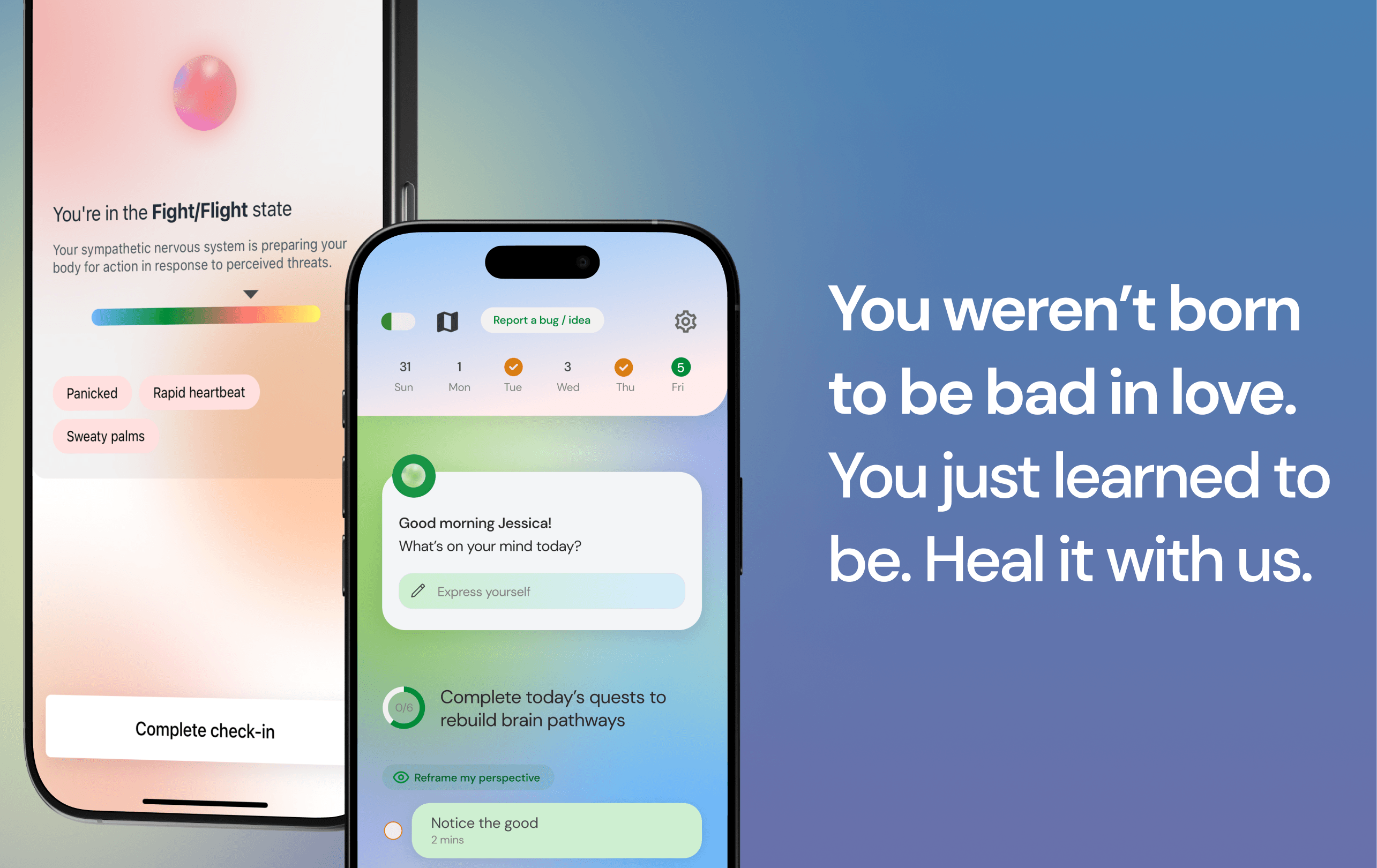
Curious whether what you're feeling is love or an anxious pattern? Is it love or an anxious pattern? Take the 2-minute quiz, or find your attachment style first. Then learn about your attachment patterns and explore your emotions through guided journaling in Attached — with personalized reflection prompts, meditations, and exercises based on what you write.
Frequently asked questions
Does limerence ever go away?
Yes. Dorothy Tennov, who named limerence in her 1979 book Love and Limerence, estimated a typical episode runs about 18 months to three years, with some ending in weeks and a few dragging on much longer. It fades fastest when the uncertainty ends — a clear yes, or a clear no with no contact after it.
Is limerence a mental illness?
No. Limerence isn't a diagnosis and it isn't in the DSM. Some researchers have argued it deserves clinical attention because the intrusive thinking looks a bit like OCD and the craving-and-crash cycle looks a bit like substance dependence. But feeling limerent doesn't mean something is wrong with you.
What ends limerence?
Certainty ends it. Tennov's core idea was that limerence needs doubt to survive. When you get a real yes, it either settles into an ordinary bond or quietly deflates. When you get a real no and stop feeding it contact, it starves. It can also end when your attention transfers to someone new, though that's a swap, not a solution.
Can you have limerence for someone you're dating?
Absolutely, and it's more common than people think. If the relationship is hot and cold, or you never quite know where you stand, the uncertainty keeps the limerent loop running even though you technically "have" them. Being in a relationship with someone doesn't create certainty. Consistency does.
How long does it take to get over limerence?
There's no fixed number, and anyone who gives you one is guessing. What's more predictable is the shape: the first few weeks of cutting off contact and checking are the worst, then the spikes get further apart. Most people notice they can go a whole afternoon without thinking about the person long before the feeling disappears entirely.

Related articles
More reading to help this topic connect across the blog.
You want a number. The honest answer is 18 months to 3 years on average — but the timeline depends much less on the calendar than on how much uncertainty you're still feeding it.
Limerence is the involuntary, all-consuming fixation on one person and whether they feel the same. Here's what it is, the signs, how it differs from love and a crush, why anxious attachment makes it so much worse, and how it ends.
It feels like the biggest love of your life. So why does it only feel good when they text back? Here's how to tell limerence from love, and infatuation from both.
It's been months and they still live in your head rent-free. Why an avoidant ex is uniquely hard to get over, and what actually starves the fixation.
Understand your attachment style
Read the full guide to each attachment style, or take the quiz to find yours.