How Long Does Limerence Last? What the Research Says and What Actually Shortens It
You've probably typed the question into your phone at some point, usually late, usually after something small set it off again. A story view. A half-warm reply. Someone saying their name.
You want a number. Something to count down to.
Here's the honest version, and then the more useful version.
How long does limerence last, according to the research
The word comes from psychologist Dorothy Tennov, who coined it in her 1979 book Love and Limerence after interviewing hundreds of people about the experience. What struck her was how consistent the descriptions were — the intrusive thoughts, the idealizing, the desperate hope for one specific person to feel the same.
Her estimate for a typical episode: roughly 18 months to three years.
The range around that was wide. Some episodes burned out in weeks. Others ran for many years, especially when the person stayed in the picture without ever becoming fully available. So the average is real, but it's an average of a very messy set.
One more thing worth saying plainly: limerence isn't a diagnosis. It's not in the DSM. Wakin & Vo (2008) argued it deserves clinical attention, drawing parallels to substance dependence and to the intrusive thinking pattern in OCD. That's a comparison, not a label. If you're in it, you're not sick. You're in a loop.
Why the number is less useful than it sounds
Here's Tennov's actual insight, and it's the part that gets lost in every "18 months to 3 years" headline.
Limerence is fuelled by uncertainty. Specifically, a mix of intermittent hope and intermittent doubt. Not hope alone. Not doubt alone. The alternating current between them.
Which means the clock doesn't run on time. It runs on maybe.
If you got a clear answer six weeks in and stopped all contact, six weeks is your number. If a not-quite-ex has been texting you every couple of months for three years, the timer keeps getting reset. Two people can start on the same day and end up years apart, and the difference isn't willpower or how deeply they felt it. It's how much ambiguity stayed in the system.
That's also why "just wait it out" is bad advice. Waiting, in most limerence situations, means quietly keeping the door open. And the open door is the thing extending the timeline.
What makes some episodes last so much longer
If you want to know what limerence is at the level of signs and causes, that's covered elsewhere. For duration, a few things reliably stretch it out.
Occasional contact. A message every few weeks does more damage than a message every day. Random rewards are the stickiest kind — the same principle that makes slot machines work.
A situation that can't resolve. They're in a relationship. They're your coworker. They're a friend of a friend you'll see at every party for the next decade. Nothing forces an answer, so nothing ends.
Anxious attachment underneath. This is our core framing at Attached: limerence is what anxious attachment feels like at full volume. Your body reads uncertainty as danger and fixates on the one person who could make it stop. That machinery doesn't get tired. It escalates. Feeney & Noller (1990), in a study of 374 undergraduates, found anxious-ambivalent attachment scored highest on limerence, mania, and love addiction measures.
Rumination with nowhere to go. Willmott & Bentley (2015), a small qualitative study, found three themes running through people's accounts: ruminative thinking, a free-floating anxiety, and a sense of self coming apart. They also observed something useful — the person you're fixated on is partly real and partly built by you. A construction doesn't have to leave for the country. It lives in your head, available at all hours.
What actually ends limerence
Tennov described three exits, and they still hold up.
A clear yes. Reciprocation removes the doubt. Sometimes the limerence transforms into an ordinary, warmer bond. Sometimes it just deflates, which is disorienting — people are often surprised by how quickly the intensity drains once they finally have the person.
A clear no, plus no contact. This is starvation. It's the most painful route and the most reliable one. The no on its own isn't enough. Plenty of people get a definitive rejection and then keep the loop alive with checking, story-watching, and one more conversation. The no has to be followed by actual distance.
Transference to a new person. The feeling jumps. This works, in the sense that the old obsession stops. It also usually means the pattern is intact and you've just changed the target.
The first two are endings. The third is a relocation.
The honest timeline for most people
If you're actively cutting the inputs — no checking, no re-reading, no keeping tabs — the shape tends to look like this rather than a countdown.
Before that, a quick note on what "cutting the inputs" means in practice, because it's the single biggest lever on the timeline. It means the small rituals, not the big gestures. Not re-reading the thread at midnight to check the tone of one sentence. Not opening their profile to see if the photo changed. Not asking a mutual friend, very casually, how they've been. Each of those is a tiny dose of maybe, and every dose resets the clock a little.
Most people underestimate how many doses they're taking a day. It's worth actually counting for a week. The number is usually embarrassing, and that's the point — it's not a character flaw, it's just a habit loop that's been running unsupervised.
The first two or three weeks are the worst, and they're worse than doing nothing, which is why so many people bail. Then the spikes get further apart. You still get ambushed by a song or a street corner, but the ambushes stop lasting all day. Somewhere in month two or three, many people notice they went a whole afternoon without thinking about the person. That noticing is usually the first real evidence it's moving.
Full quiet takes longer. But "I don't think about them constantly" arrives much earlier than "I never think about them," and the first one is enough to get your life back.
If you want the practical version, how to stop limerence, step by step walks through it. And if you're still unsure whether this is love or something else, limerence vs love is the clearer place to start.
One last thing. If this is disrupting your work, your sleep, or a relationship you actually want to keep, it's worth talking to a therapist. Not because something's wrong with you, but because you don't have to white-knuckle it alone.
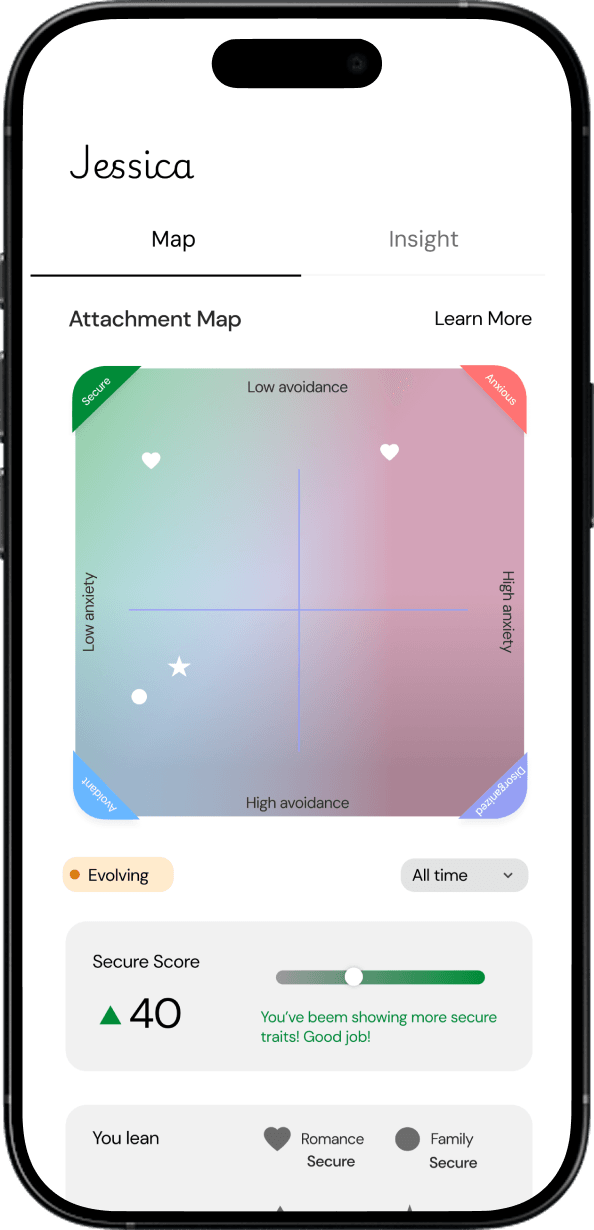
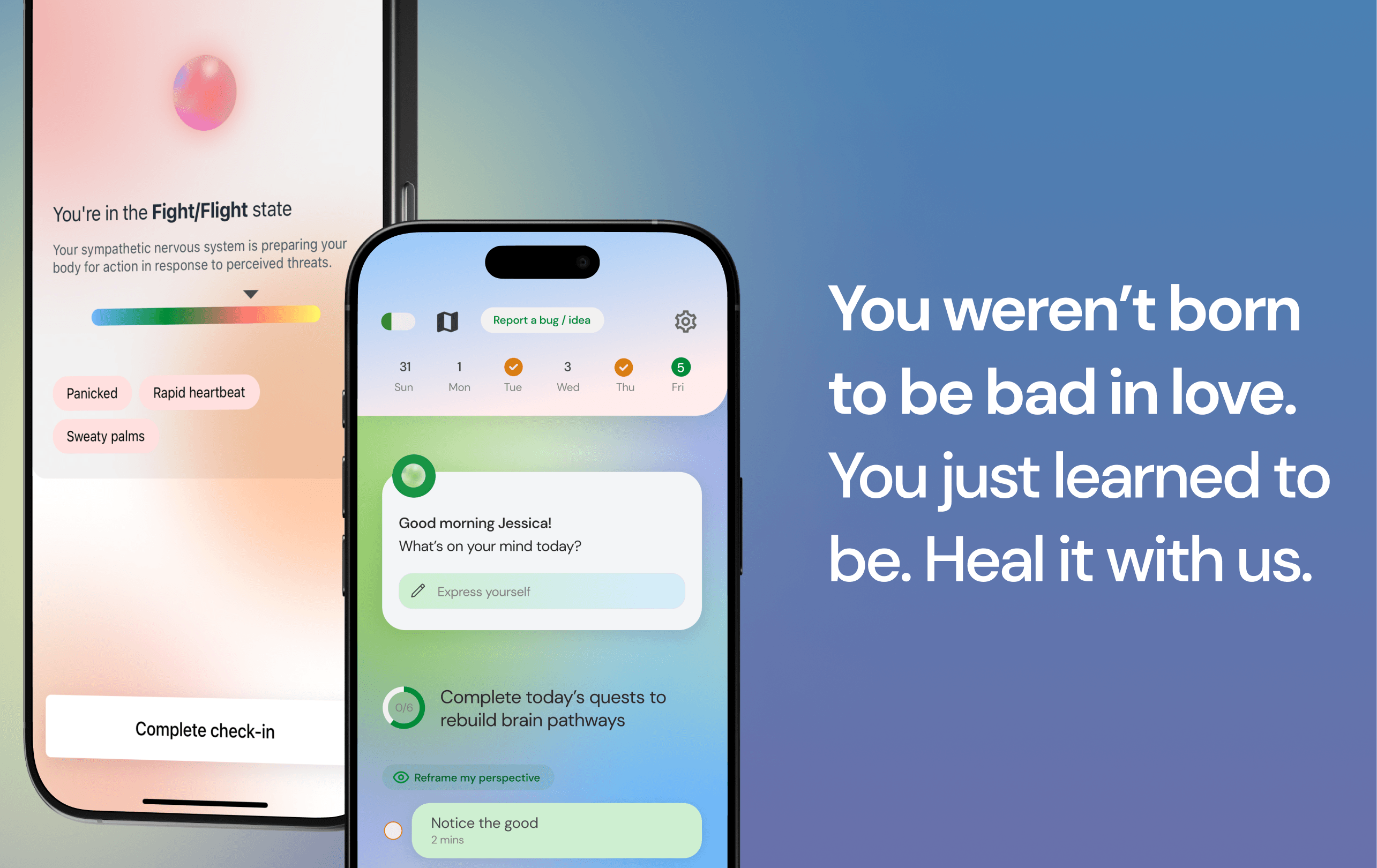
Not sure which one you're in? Is it love or an anxious pattern? Take the 2-minute quiz, or find your attachment style. From there you can learn about your attachment patterns and explore your emotions through guided journaling in Attached, with personalized reflection prompts, meditations, and exercises based on your journals.
Frequently asked questions
Does limerence ever go away?
Yes. Every documented case of limerence ends. It ends when reciprocation becomes certain — a clear yes that turns into an ordinary bond or quietly deflates, or a clear no followed by real distance. It can also end when your attention transfers to someone new, which feels like relief but tends to restart the same loop with a different face.
How long does limerence last on average?
Tennov's estimate, based on interviews with hundreds of people, was about 18 months to three years for a typical episode. The extremes were wide — some ended in weeks, some stretched on for many years. Treat it as a rough shape, not a prediction for your situation.
Why does my limerence keep lasting for years?
Almost always because the uncertainty never resolved. Occasional contact, an ambiguous ex, a coworker you see every week, or a social media feed you still check all keep the maybe alive. Intermittent hope is the fuel. Remove it and the timeline collapses.
Is limerence a mental illness?
No. It isn't a diagnosis and it isn't in the DSM. Some researchers have argued it deserves clinical attention because the intrusive thinking resembles OCD and the craving cycle resembles substance dependence, but experiencing limerence doesn't mean something is wrong with you.
Can you have limerence for someone you're dating?
Yes, and those episodes can run the longest. If the relationship is hot and cold, or you never quite know where you stand, the uncertainty keeps the loop going even though you're technically together. Being with someone doesn't end limerence. Consistency does.

Related articles
More reading to help this topic connect across the blog.
You've read the same text forty times. You check if they viewed your story. Here's how to stop limerence step by step, and why anxious attachment keeps the loop running.
Limerence is the involuntary, all-consuming fixation on one person and whether they feel the same. Here's what it is, the signs, how it differs from love and a crush, why anxious attachment makes it so much worse, and how it ends.
It's been months and they still live in your head rent-free. Why an avoidant ex is uniquely hard to get over, and what actually starves the fixation.
It feels like the biggest love of your life. So why does it only feel good when they text back? Here's how to tell limerence from love, and infatuation from both.
Understand your attachment style
Read the full guide to each attachment style, or take the quiz to find yours.