The Anxious-Avoidant Trap: Why You Chase and They Pull Away

If you've ever felt like the harder you love someone, the faster they slip away, you already know what anxious-avoidant attachment feels like from the inside. You reach for reassurance and they reach for the door. You text to feel close and they go quiet to feel safe. And both of you usually walk away convinced the problem is you.
Most of the time it isn't a flaw in either person. It's the dynamic between two different ways of handling closeness.
The anxious-avoidant pattern is one of the most common reasons a caring relationship starts to hurt. Two people who genuinely want each other get stuck in a loop where each person's way of coping sets off the other's deepest fear. This article covers what an anxious-avoidant relationship actually is, why the cycle is so hard to break, and what helps you step out of it.
What is anxious-avoidant attachment?
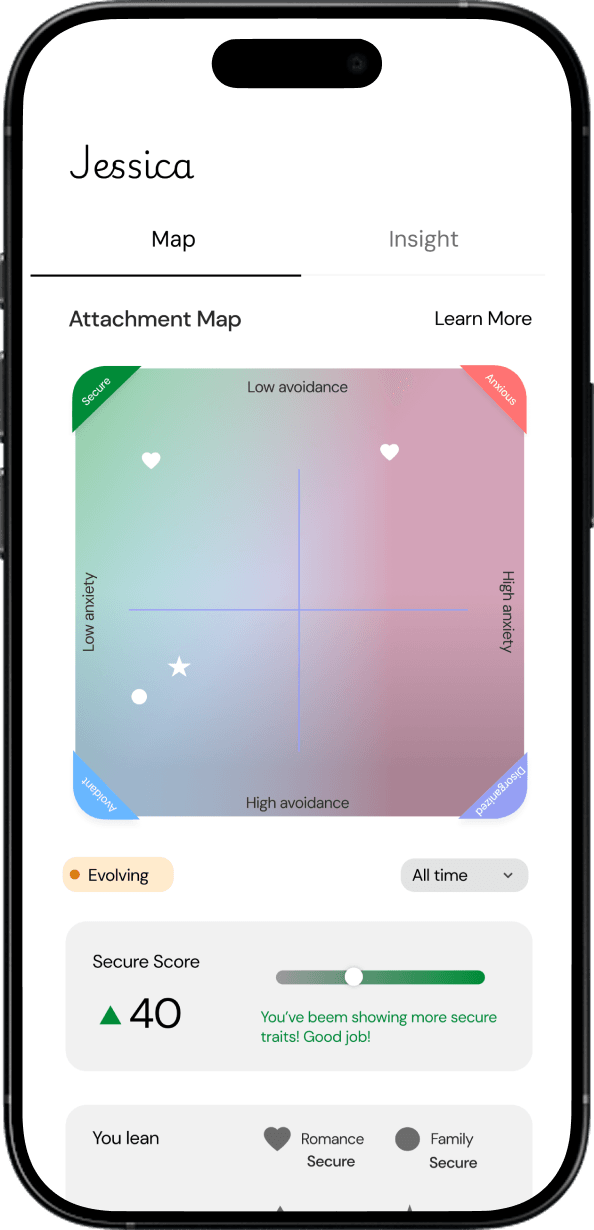
"Anxious-avoidant attachment" usually describes a pairing rather than one person. One partner leans anxious (sometimes called preoccupied) and the other leans avoidant (sometimes called dismissive). Some people call themselves anxious-avoidant because they swing between both, which is closer to a disorganized or fearful-avoidant style. But the classic anxious-avoidant relationship is two different nervous systems trying to love each other across a gap.
The core mismatch is fairly simple. Under stress, the anxious partner is wired to move toward connection, because distance feels like danger and closeness is what calms them down. The avoidant partner is wired to move toward space, because closeness feels like pressure and distance is what calms them down. Both are trying to feel safe. They're just running opposite strategies, and the strategies collide. That mismatch has real costs. In a meta-analysis of 132 studies, both attachment anxiety and avoidance were linked to lower relationship satisfaction, for the person and for their partner (Candel & Turliuc, 2019).
The anxious-avoidant cycle, step by step
Most anxious-avoidant relationships run on a similar loop:
- Closeness rises. A good week, a vulnerable conversation, a great trip, and intimacy goes up.
- The avoidant partner feels the pressure. Too much closeness starts to feel like losing independence, so they pull back with shorter replies and a cooler, quieter tone.
- The anxious partner senses the shift. Their alarm goes off (did I do something wrong, are they losing interest), so they move toward with more texts and more reassurance-seeking.
- The avoidant partner feels chased. The pursuit confirms an old fear that relationships mean being trapped, so they withdraw harder.
- The anxious partner protests or panics, and sometimes shuts down too.
- Distance resets the system. The space eventually lets the avoidant partner relax and come back, and the loop starts again.
It can feel chaotic while it's happening, but it tends to be fairly predictable. That's actually the encouraging part, because a predictable pattern is one you can learn to interrupt. This pursue-and-withdraw loop is well documented: in one study of couples, an avoidant partner's tendency to withdraw during conflict was linked to lower relationship satisfaction (Bretaña et al., 2022).
Why the cycle is so hard to escape
If it's this draining, why do anxious and avoidant partners keep finding each other and staying together?
Part of it is real chemistry. The avoidant partner's independence can read as confidence, and the anxious partner's warmth and pursuit can feel like being genuinely wanted. Early on it often feels intense in a good way. There's more on that in why avoidants are attracted to anxious partners.
There's also a nervous-system reason. If your early experiences of love were inconsistent, then on-and-off closeness can register as more familiar than steady affection does, and the brain tends to mistake familiar for safe. Calm can even feel boring or suspicious. So the pattern doesn't just hurt. On some level it feels like home, and that's a big part of what keeps people in it.
The on-and-off closeness also explains why this dynamic so often tips into obsession. Psychologists call the fixated, can't-stop-thinking-about-them state limerence, and it feeds on exactly this kind of uncertainty. More on that in what limerence is and why anxious attachment fuels it.
Anxious and avoidant often speak different languages
A lot of anxious-avoidant conflict is really a translation problem, where the same moment means opposite things to each person. When the anxious partner says they want to talk it out right now so they know things are okay, the avoidant partner often hears a demand and wants to step away before they say something they'll regret. When the avoidant partner goes quiet to cope, the anxious partner reads the silence as rejection and tries harder to reconnect.
Neither reading is wrong. They're two different operating systems. Once you can tell which one is talking, you stop treating every text and every silence as a verdict on your worth.
How to break the anxious-avoidant cycle
Patterns like this shift through practice more than through insight alone. A few things genuinely help.
Name the cycle together. Something as plain as "I think we're back in the loop, I'm chasing and you're needing space" turns it from a fight into a shared problem you're both looking at from the same side.
If you're the anxious partner, soothe yourself before you reach out. The point isn't to bury your needs. It's to settle your body enough that you reach out calmly instead of in a spike of panic. A short walk or a few minutes of journaling before you send the message changes how it lands.
If you're the avoidant partner, signal instead of disappearing. Going silent sets off your partner's alarm. A quick "I need a couple of hours to recharge, I'm not going anywhere" gives space and reassurance at the same time.
Ask for closeness without sounding the alarm. "Why are you so distant" usually lands as criticism. "I've been missing you, can we plan something low-key this week" asks for the same thing without the threat attached.
Aim for security rather than winning. The way out isn't the anxious partner becoming avoidant or the avoidant partner becoming anxious. It's both people moving toward secure attachment, where closeness and independence stop competing with each other.
What understanding the pattern gives you
The most freeing part of understanding anxious-avoidant attachment is seeing that the dynamic was never proof that you're unlovable or that your partner doesn't care. It's two protective systems reacting in opposite directions, and reactions like that can be retrained over time. Research on couples suggests attachment can gradually shift toward security: anxiety tends to ease in situations that build personal confidence, and avoidance eases with safe, positive dependence on a partner (Arriaga et al., 2018).
If you're not sure where you land in the pattern, the free attachment style quiz is a good place to start, since knowing your style is the first step toward changing how it runs you.
Rewire the pattern with Attached
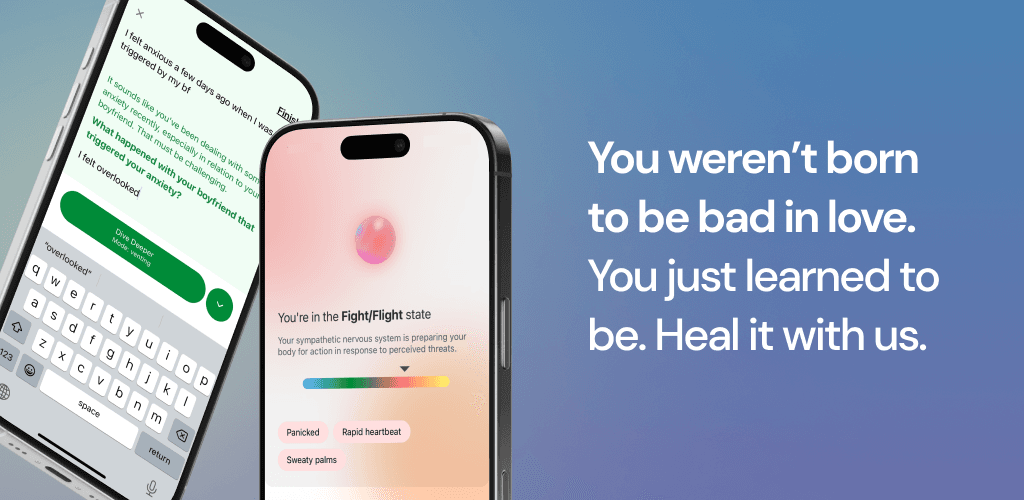
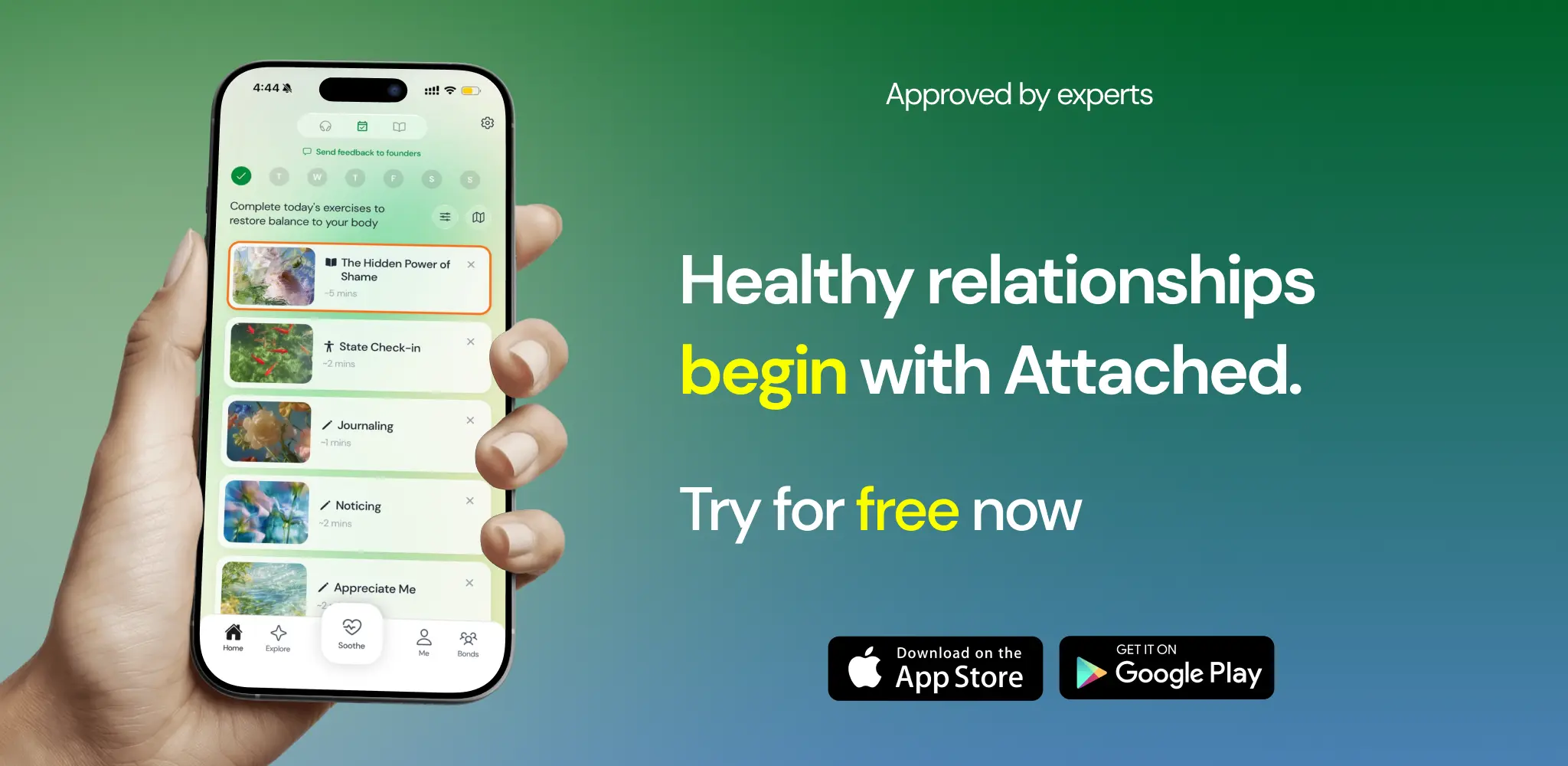
If you're tired of chasing closeness and bracing for the next pullback, you don't have to work through it on your own. The Attached app helps you change the anxious-avoidant cycle with:
- Daily Quests to build secure habits gradually
- Help Mode for the moments you'd usually spiral or shut down
- AI Journal that surfaces the patterns behind your reactions
- Weekly Coaching from Eden, your personal attachment guide
Download Attached for free and start loving from a calmer place.
Related articles
More reading to help this topic connect across the blog.
You've read the books. You can name the distortion while it's happening. And you still re-read the text. This is the insight-regulation gap — the most frustrating stage of working on anxious attachment, and the most fixable.
What if Taylor Swift’s “type” didn’t change by accident… but because of something else? And why Travis Kelce might be different to the rest.
Jealousy in relationships is often tied to insecurity, fear of being replaced, and anxious attachment. Learn why it happens and how to calm the spiral.
If someone you love always has their headphones in, this story will help you see what they’re actually running from, and what you can do about it.
Understand your attachment style
Read the full guide to each attachment style, or take the quiz to find yours.