Why Avoidants Pull Away: Understanding the "Headphone Defense" and Emotionally Shutting Down
I had a fight with my avoidant 67 y/o father yesterday. He didn't know how to use the Uber app and we were late for our flight. He was getting SO stressed.
I told him we could just change our pick up location, but he insisted on cancelling our current ride and start all over.
He shouted.
Then, snatched the phone and cancelled while I was modifying our location.
I immediately felt triggered.
Once we got in our Uber, he immediately fished for his phone. Noise cancelling headphones in.
And we stayed in silent the entire ride.
I pretended to stared out of the window.
I knew we were both angry. But only one of us disappeared.
He had his headphones in. My chest was turning.
But inside, my thoughts were swirling:
- “You don’t listen.”
- “You don’t trust me.”
- “You shut me out.”
And that’s when it clicked for me.
This is what so many of us live with.
Avoidant parents. Avoidant partners. Avoidant friends.
- Always “busy.”
- Always “tired.”
- Always “with their headphones in.”
This isn’t just about music.
This is about attachment style.
This is about how some people escape closeness the second it feels too much.
Why Headphones Become a Way to Shut People Out
Avoidant attachment style (dismissive-avoidant) shows up as:
- “I’m fine on my own.”
- “I don’t need anyone.”
- “Feelings are… a lot.”
Research on adult attachment shows that avoidant people tend to value independence, downplay intimacy, and pull away when someone gets emotionally close.
So what do headphones do for an avoidant person?
They:
- Create a private bubble.
- Signal “I’m busy, don’t talk to me.”
- Give them something to focus on that is not you.
In psychology, this is a deactivating strategy.
From the outside, it looks cold.
Inside, it usually feels like relief + guilt.
The Roots of Avoidance: Why They Learned to Hide Their Feelings
Since I’ve had memories as a child, my father has always had his headphones in.
Picking me up from school? Headphones in. Breakfast at home? Headphones in.
The one thing that did change was he switched from wired headphones to bluetooth headphones.
Attachment theory says our style begins with our earliest caregivers.
If your caregiver:
- Seemed annoyed by your needs
- Pulled away when you cried
- Rewarded you when you were “low maintenance”
…you may have learned one big rule:
“If I need less, love stays.
If I need more, people leave or snap.”
So as a child, you shut feelings down.
Fast-forward 40+ years.
When you felt stupid for not knowing how to use an app. Or exposed. Or out of control.
You feel this old shame boiling up.
You grab the phone. You assert control.
You cancel the ride instead of admit, “I’m lost.”
Then, once the fight cools, your brain still swirls:
“Too much. Too close. I need out.”
They are the grown-up version of going silent in your room.
Headphones = Suppression
Avoidants regulate emotions by suppression.
They push feelings down, avoid talking about them, and distract themselves.
It’s not always conscious. Their body just reaches for the phone.
Their hand knows the script before their mouth does.
And here is the painful part:
Research also shows that these distancing, suppressing strategies don’t actually calm people down on the inside. Avoidant people may look cool and detached, but their emotional arousal often stays high.
So when your avoidant dad has his headphones in?
He might not be “over it.”
He might be silently stewing, replaying the moment he felt stupid, cornered, exposed.
My dad, your dad or your partner might be carrying these hidden beliefs:
- “If I show weakness, I’ll be judged.”
- “If I let you in, you’ll control me.”
- “If I depend on you, I’ll lose myself.”
The Impact on Partners: Why the "Silent Treatment" Hurts So Much
If you lean anxious attachment, the headphones hit hard.
You might feel:
- Rejected
- Unimportant
- Desperate to fix it
You might:
- Ask, “Are you mad at me?” five times
- Start a new argument just to get a reaction
- Go quiet but burn inside
How to Communicate with an Avoidant Partner Without Triggering Them
If you want to make a change:
1. Don’t start the talk mid-headphone.
Choose a calm moment. Not when they are already shut down.
2. Use “I feel” instead of “You always.”
- “I feel shut out when the headphones go in right after a fight.”
- “I feel lonely when we travel together and don’t speak.”
3. Describe the scene, not their character.
Don’t say: “You’re so avoidant and selfish.”
Try: “Earlier in the taxi, we had that tense moment with the Uber app. Then you put your headphones in, and we stayed silent. That felt painful for me.”
4. Ask a curious question.
- “What happens for you when you put your headphones in after we argue?”
- “Does it help you calm down? Or feel safer?”
Healing Avoidant Attachment: Small Steps to Break the Wall
If you recognize yourself in my dad, this part is for you.
I’m sorry you learned distance for a reason. That must’ve been so tough. It probably kept you safe once.
But you can’t build close relationships with a wall in your ears.
Small experiments you can try:
-
Name your need for space out loud.
“I’m really overwhelmed. I need 20 minutes to cool down, then I want to talk.”
-
Delay the headphones. Just for a bit.
Give yourself a rule:
“I wait 5 minutes after conflict before I put them on.”
Sometimes that tiny gap is enough to say one kind sentence first.
-
Share the music instead of using it as a shield.
-
“Can I play you this song I use to calm down?”
-
Sit together. One earbud each.
Same headphones. Different meaning.
-
-
Notice the trigger before the habit.
When your hand reaches for your phone, ask:
“What am I feeling right now?”
Shame? Fear? Helplessness? Anger?
Using An Attachment Style App To Catch These Moments
You don’t have to figure this out in your head.
You can actually track it.
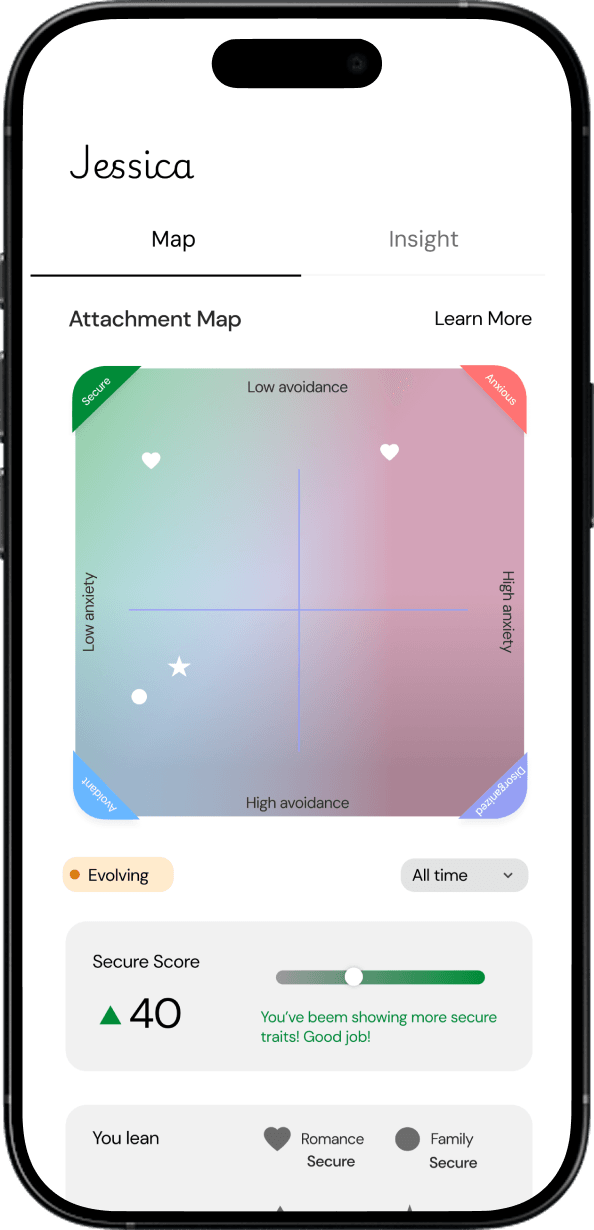
An attachment-focused app (like Attached) can help you:
-
Identify your attachment style (avoidant, anxious, secure, or disorganized).
-
Journal in real time:
“We argued at the airport → I grabbed my headphones → I felt stupid and small.”
-
Spot patterns: the people, places, and topics that make you want to disappear.
-
Practice new scripts with guided exercises instead of improvising in the moment.
When we understand our style and practice different emotion-regulation strategies, our relationships can become more stable and satisfying over time.
You can write a new one.
That Uber Ride Still Hurts
I truly saw just how avoidant my father was in that moment. It hurts to think about the painful memories he had as a child, that led him to shutting down and shame spiraling so quickly.
But it also hurts me, because this is an old wound that still hurts.
My younger self felt ignored, neglected, whenever my dad has his headphones in.
But here’s what I remind myself now:
Headphones is there to help him to overcome his overwhelm and shame.
That’s why I’m so passionate about the Attached app.
Because you’re capable of rewriting these moments, so it stops hurting those around us.
You can learn to say:
“I’m stressed. I don’t know what I’m doing with this app.
I feel stupid. Please be patient with me.”
That one sentence can do more for your attachment than a hundred silent rides.
The app to help you feel better, less anxious immediately
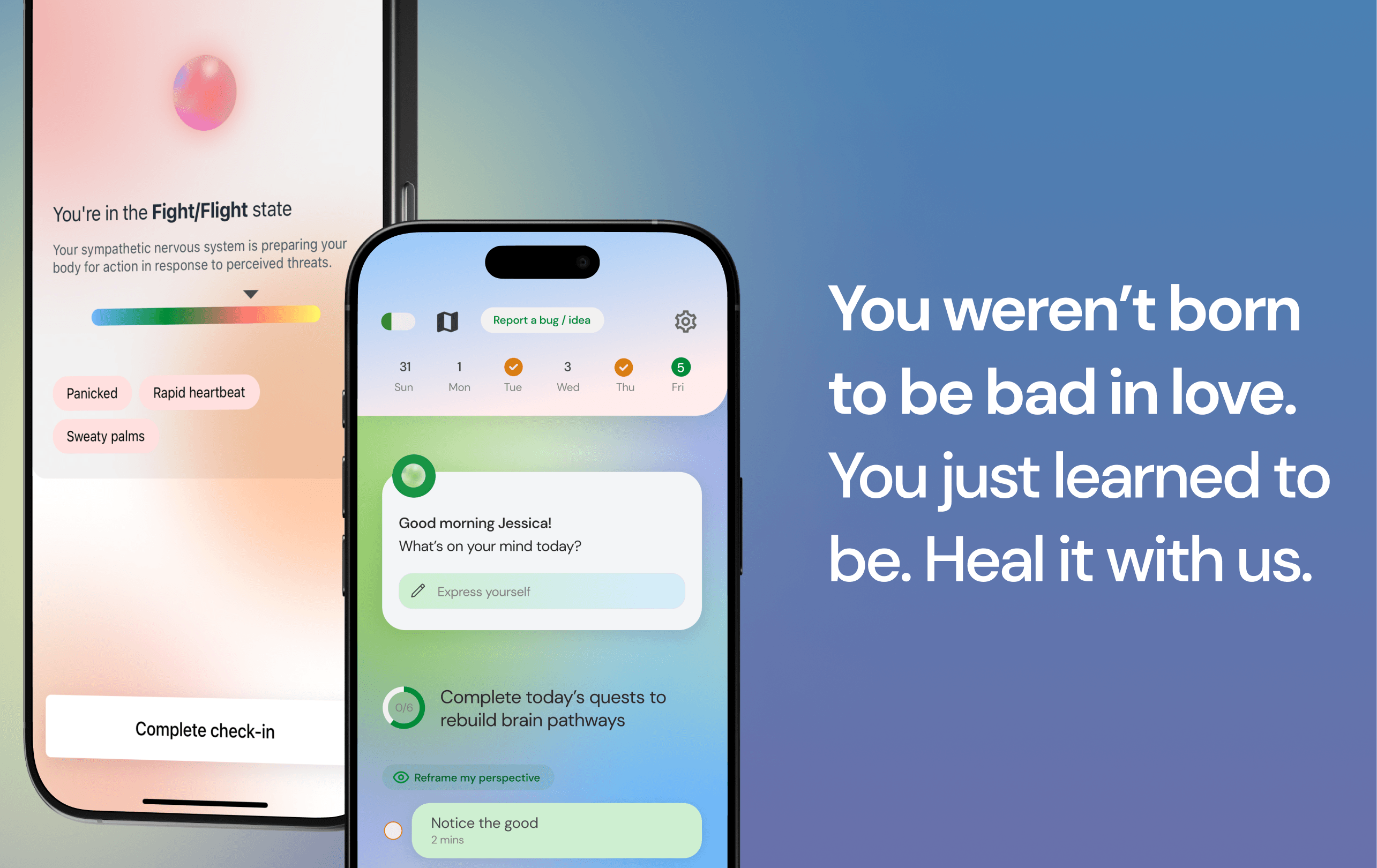
Love shouldn’t feel like chasing someone’s attention while they disappear into their headphones. The Attached app helps you explore your relationships and attachment style so you can become happier and freer, backed by attachment science.
The Attached app helps make this process easier with:
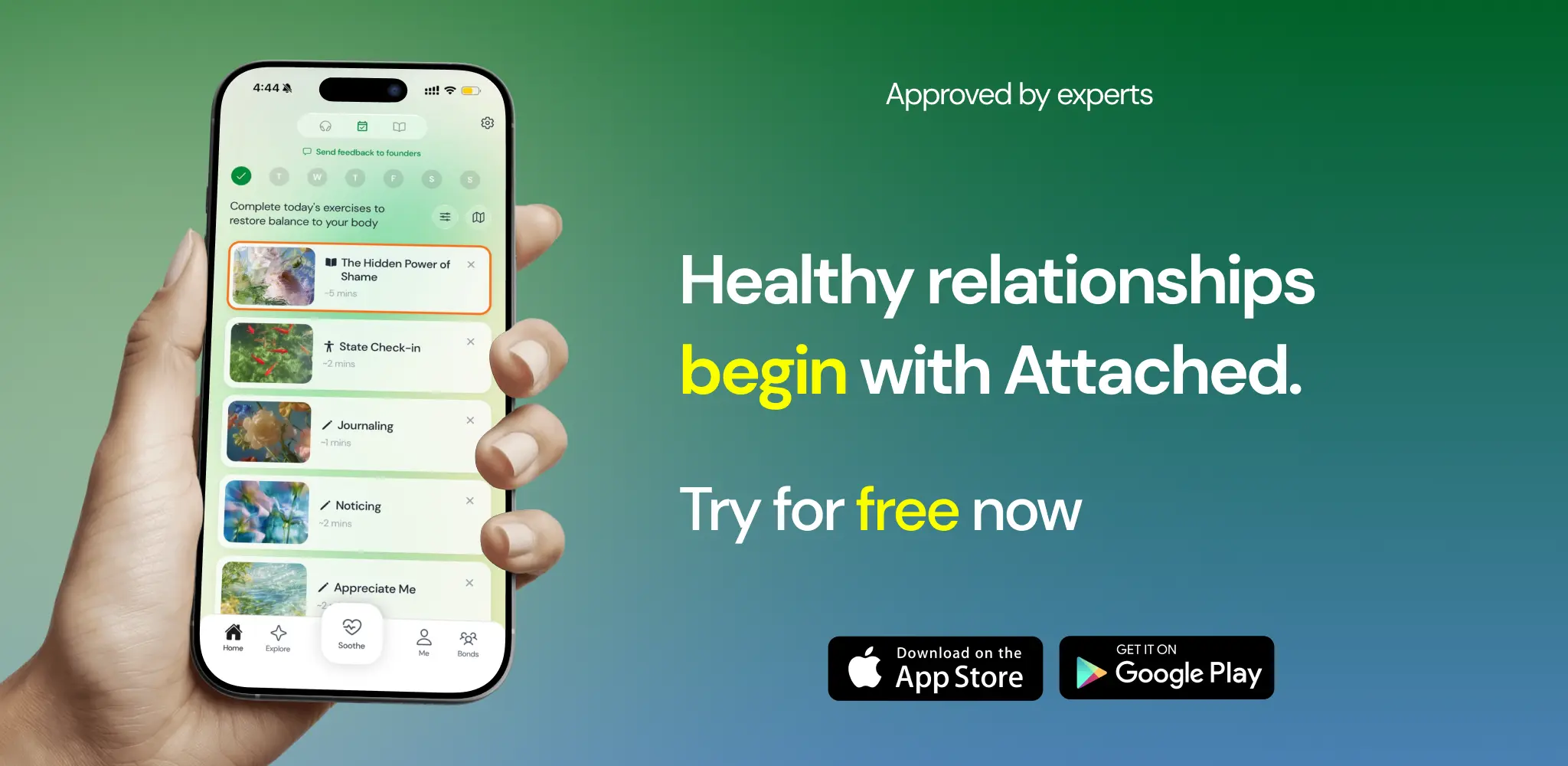
- Daily Exercises for habit-building
- Self-Soothe Mode for tough emotional moments (so you don’t have to shut down or escape)
- Journal to find hidden emotional patterns
- Weekly insights from Eden, your relationship guide
Download Attached for free and start working toward security, one day at a time.
Related articles
More reading to help this topic connect across the blog.
If you have anxious attachment, shadow journaling can help you understand yourself and your relationships better. Dive deep and discover parts of yourself that you usually avoid.
Anxious-avoidant attachment is the draining loop where one person reaches for closeness and the other reaches for space, and each move makes the other's fear worse. This guide covers the psychology behind it and what actually helps you change it.
Avoidant love rarely looks loud or obvious. These 12 signs can help you tell when an avoidant partner is deeply invested, even if they struggle to say it directly.
What if your Valentine’s gift didn’t just say “I love you,” but also improved your relationship for the long-run? These 13 therapist-approved picks do more for your relationship than any heart-shaped box ever will.
Understand your attachment style
Read the full guide to each attachment style, or take the quiz to find yours.