You Know You're Anxiously Attached. So Why Can't You Stop?
You already know.
You know it's anxious attachment. You know the two-hour silence isn't evidence of anything. You can narrate the whole spiral while it's happening: this is my abandonment fear, this is protest behavior, this is the part where I draft a text I shouldn't send.
And then you send it anyway.
This is the strangest part of working on your attachment style, and almost nobody warns you about it: understanding the pattern doesn't stop the pattern. You can run a team at work, handle a crisis without blinking, explain attachment theory better than some therapists — and still re-read one text forty times at 11pm.
If that's you, you're not failing. You've hit the insight-regulation gap. It has a mechanism, and it has a way through.
What Is the Insight-Regulation Gap?
The insight-regulation gap is the distance between knowing why you do something and being able to stop doing it in the moment. You have the insight. What you don't have yet is regulation — the ability to change what your body does when the alarm goes off.
Most people who work on anxious attachment get stuck exactly here. Reading about attachment gave you a map. But a map has never once calmed a nervous system.
Why Insight Doesn't Reach the Alarm
Your understanding of attachment theory lives in one kind of memory. Your attachment responses live in another.
The knowledge is declarative — facts you can say out loud. The pattern is procedural — a body-level sequence learned over years, the same category of memory as riding a bike. Neuroscientist Joseph LeDoux showed that threat responses fire through fast, older circuits before the slower, reasoning parts of your brain even get the news. By the time you think this is just my attachment system, your heart rate already changed.
That's why you can be mid-spiral and fully aware of it. The awareness is real. It's just arriving after the alarm, on a channel the alarm doesn't listen to.
There's a second reason, and it's more uncomfortable: insight can become a hiding place. If you're the high-functioning type — competent everywhere except this one wound — analyzing the pattern feels like progress, because analysis is the thing you're good at. One more book. One more podcast. It's productive-feeling, and it's safer than the actual work, which happens in the ten minutes after a trigger, not in a highlight reel of attachment facts.
What Actually Closes the Gap
Not more information. Repetition, in the right conditions. Attachment researchers Mikulincer and Shaver, who've spent decades studying how attachment patterns shift in adulthood, are blunt about this: patterns update through repeated lived experiences of security, not through explanation.
Practically, that looks like:
- Train when you're calm, not just when you're on fire. A nervous system learns new responses best at low activation. Two minutes of practice on an ordinary Tuesday — a slow exhale, naming one feeling precisely — builds the pathway you'll need on the bad night. Waiting until the spiral to practice is like learning to swim during the shipwreck.
- Shrink the rep. Don't aim for "never anxious again." Aim for one different move per trigger: read the text once, put the phone in the other room, wait ten minutes before replying. One changed move, repeated, is how procedural memory rewrites.
- Close the loop with your body first. Longer exhale than inhale, feet on the floor, name where the feeling sits. Regulation opens the window; then the insight you already have can actually steer.
- Keep receipts. This is the step high-achievers skip. Write down the trigger and what you did. Not because journaling is virtuous — because your anxious brain will swear you're not improving, and the only thing that beats that story is your own data. In Attached's analysis of 51,676 journaling-based measurements, attachment anxiety fell measurably among consistent journalers, and 21% of people moved from an insecure to a secure pattern. Not by learning more theory. By logging the reps.
What This Stage Is Actually Telling You
If you've hit the insight-regulation gap, it means you've already done the first half of the work. Most people never even find out what their pattern is. You did — probably years of it, maybe therapy too.
The gap isn't a verdict that you're unfixable. It's the signal to switch training methods: from studying the pattern to practicing against it, in small reps, with proof you can look at.
The goal was never to become someone who knows everything about anxious attachment. It's to become the person who reads the text once, puts the phone down, and gets her evening back.
How Attached Fits In
Attached is built for exactly this stage — the practice half, after insight:
- Daily exercises sized to fit the two calm minutes you actually have
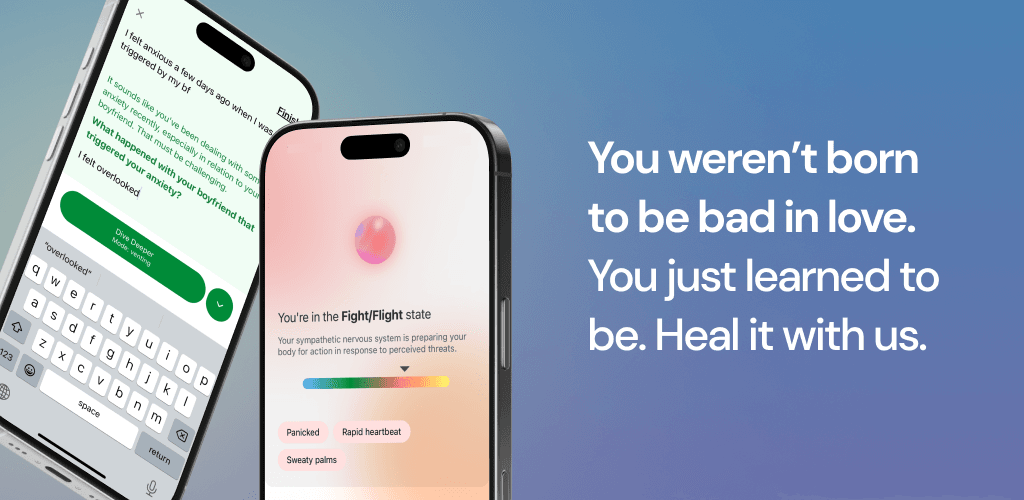
- Self-Soothe Mode for the ten minutes after a trigger, when knowing isn't enough
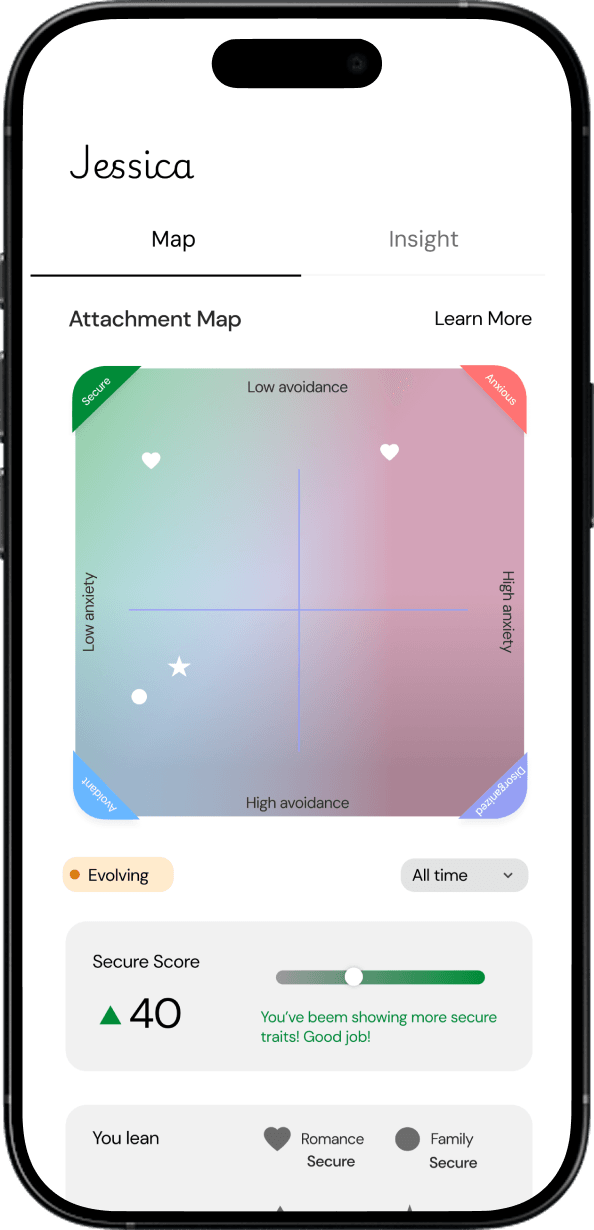
- A guided journal that tracks your pattern over time — so you can watch the spiral get shorter, in your own words, with receipts
Download Attached for free and start closing the gap.
- LeDoux, J. (1996). The Emotional Brain: The Mysterious Underpinnings of Emotional Life.
- Mikulincer, M., & Shaver, P. R. (2016). Attachment in Adulthood: Structure, Dynamics, and Change.
- Squire, L. R. (2004). Memory systems of the brain: A brief history and current perspective. Neurobiology of Learning and Memory.
FAQ
Why do I still act anxious when I know my attachment style?
Because knowledge and attachment responses are stored in different memory systems. Your understanding is declarative (facts), while the pattern is procedural (an automatic body-level sequence). The alarm fires faster than reasoning, so insight arrives after the reaction has started. Change comes from repeated practice during and between triggers, not from more information.
Is the insight-regulation gap a sign I need more therapy?
Not necessarily — many people in this stage are already in therapy and doing well in it. The gap usually means the work needs a practice component between sessions: small, repeated regulation reps during real triggers. Insight from therapy plus daily practice tends to move patterns faster than either alone. If your anxiety is severe or your situation isn't changing at all, that's worth raising with a professional directly.
How long does it take to change an anxious attachment pattern?
There's no fixed timeline, but change shows up in weeks-to-months of consistent practice, not days. In Attached's journaling data, measurable drops in attachment anxiety appeared among people who practiced consistently, and about 21% moved from an insecure to a secure pattern. The spiral typically gets shorter and less frequent before it disappears — track it, or you'll miss the proof.
Related reading

Related articles
More reading to help this topic connect across the blog.
Anxious-avoidant attachment is the draining loop where one person reaches for closeness and the other reaches for space, and each move makes the other's fear worse. This guide covers the psychology behind it and what actually helps you change it.
What if Taylor Swift’s “type” didn’t change by accident… but because of something else? And why Travis Kelce might be different to the rest.
Most of the changing happens outside the therapy room. A memoir about Tuesday spirals, therapy homework, and the between-session practice that finally made the pattern real.
She did it. After all those breakup songs, Taylor Swift found her true love.
Understand your attachment style
Read the full guide to each attachment style, or take the quiz to find yours.