Signs an Avoidant Loves You: 12 Things They Do Instead of Saying It

Signs an Avoidant Loves You: 12 Things They Do Instead of Saying It
Relationships with an avoidant partner feel like a puzzle with shifting pieces. You feel a deep connection one night and face a cold front the next morning. Many people constantly search for signs an avoidant loves you to find certainty.
For someone with an avoidant attachment style, love rarely comes through grand romantic speeches. They show it through subtle shifts in behavior and the quiet decision to stay when their instinct tells them to run.
Here are the 12 hidden signs your avoidant partner is deeply in love with you.
1. The Vulnerability Hangover
Your partner shares something deeply personal and disappears for two days. This is a vulnerability hangover. They pushed past their comfort zone to offer emotional intimacy. Their system now requires time to stabilize again by creating distance.
2. Practical Help Over Romantic Words
Avoidants view "I love you" as a very loaded commitment. They use practical help as their primary love language. They fix your laptop, research your tax options, or check your tire pressure. They care about your well being through action.
3. Safe Proximity
Avoidants treat their home as a sanctuary. They invite you to spend parallel time together. You both read different books in the same room without talking. They let you into their private world without the fear of feeling suffocated.
4. Inclusion in Future Planning
Avoidants remain highly sensitive to losing their independence. They mention a concert next year or ask for your opinion on a long term decision. This signals future planning. They include you in their mental map of the future.
5. Reduced Deactivation Strategies
When an avoidant feels too close, they use deactivation strategies like nitpicking or ghosting to cool the connection. These cycles become shorter or less intense over time. Their trust in you overrides their fear.
6. Consistent Communication
The frequency might not be 50 texts a day. They check in daily to share a meme or a news article. They practice consistent communication. They make a conscious effort to keep the tether connected.
7. Subtle Physical Touch
Deep emotional talks feel scary. They substitute them with subtle physical touch. A hand on the small of your back or resting their feet on yours while watching a movie signals comfort and safety.
8. Protecting Your Secure Base
An avoidant acts as your secure base during a crisis. They step up to handle logistics while remaining calm. You are a priority in their life through their protective actions.
9. Revealing Their Fear of Rejection
They admit to being afraid of losing you or feeling not good enough. They drop their mask. For a dismissive avoidant, admitting to any fear of rejection represents the ultimate sign of trust.
10. Sharing Personal Space
They give you a drawer at their house or let you leave your toothbrush. They manually override their need for total autonomy to make room for your presence.
11. Noticing Small Details
An avoidant partner often acts as a highly observant person. They remember exactly how you take your coffee or a small story you told months ago. They are deeply invested in studying you.
12. The Decision to Stay
Leaving represents the easiest path for an avoidant. Things get hard and they stay to work through the conflict. This provides the strongest evidence of love they can give.
Understanding the Avoidant Heart
An anxious attachment partner wants verbal reassurance. The avoidant heart usually speaks through action and consistency. Recognizing these signs an avoidant loves you can help you stop missing what is already there.
Respecting their need for independence proves you are a safe partner. That is often what helps turn their fear into a secure base for both of you.
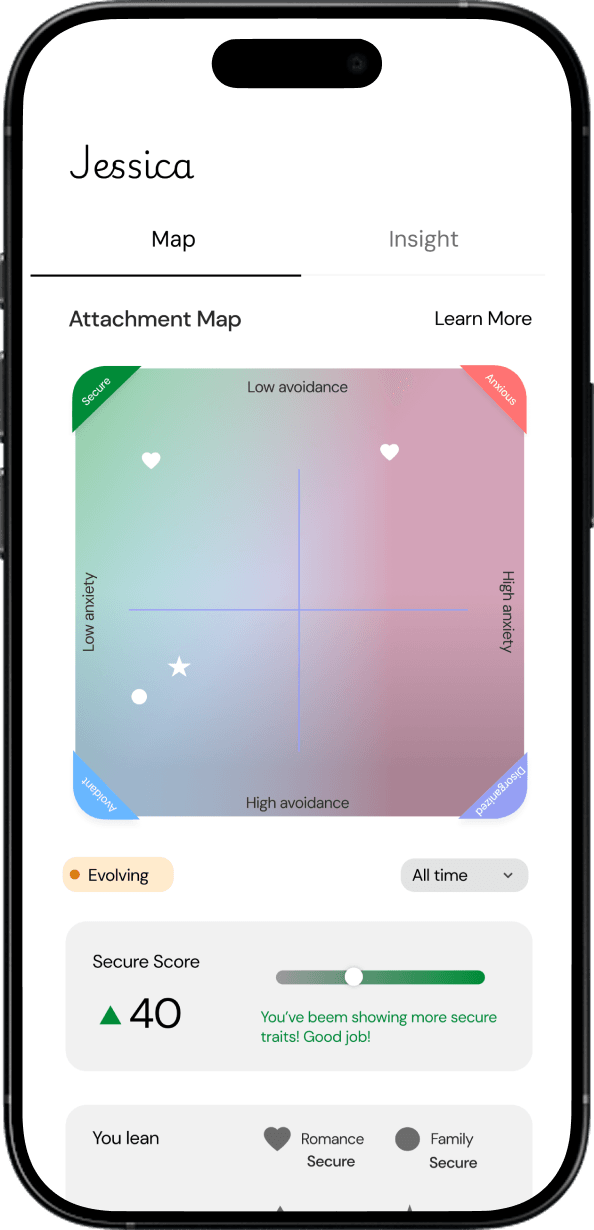
For an anxious person, this is often the hardest part. You can see care in flashes, then panic when the distance returns. That uncertainty can quickly turn into overthinking, checking for signs, and trying to decode every shift in tone. The Attached app can help you understand your own attachment style, calm the spiral of rumination, and build steadier communication habits so you are not forced to guess what every moment means.
Related articles
More reading to help this topic connect across the blog.
If someone you love always has their headphones in, this story will help you see what they’re actually running from, and what you can do about it.
Do you feel like the closer you get, the faster they disappear? Uncovers the ways your texts might be losing an avoidant partner—without even realizing it—and what that says about the kind of love you keeps chasing.
What if, you've never been in love before? Here are 7 signs you've never felt real, genuine love.
They pull away just when things get good. They send mixed signals that drive you CRAZY. But before you give up on your avoidant partner, you need to read this.
Understand your attachment style
Read the full guide to each attachment style, or take the quiz to find yours.