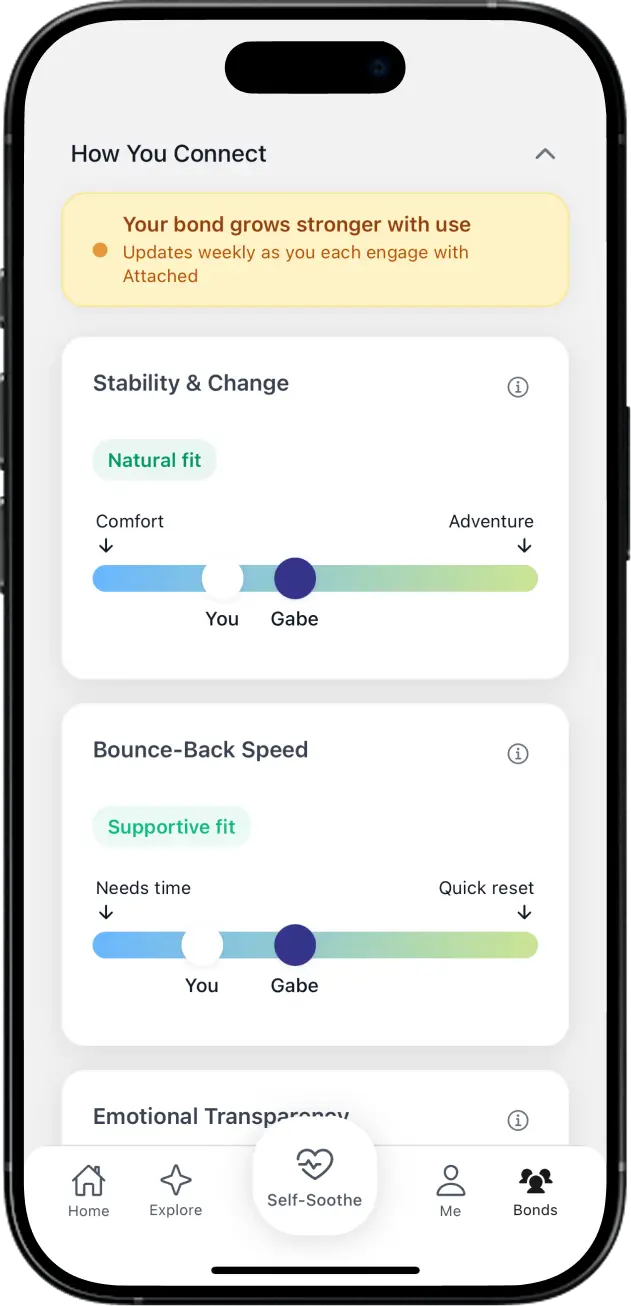
Descubre hoy tu estilo de apego. Encuentra tu mapa relacional único, sola o en pareja
Apego ansioso: señales, causas y cómo construir más seguridad

Cuando la cercanía se siente escasa
Quieres cercanía, pero cuando alguien se distancia sientes desesperación, inseguridad o abandono.
Quieres tranquilidad, pero incluso cuando te la dan, tu mente empieza a preocuparse por la próxima separación.
Eso es lo que suele sentirse con apego ansioso.
¿Qué es el apego ansioso?
El apego ansioso, también llamado apego ansioso-preocupado, es un estilo de apego inseguro. Suele desarrollarse cuando el cuidado en la infancia fue inconsistente: a veces había cercanía, otras veces distancia.
La experiencia central es sencilla:
- Necesitas mucha conexión para sentirte segura.
- La distancia activa miedo.
- La incertidumbre se convierte en hipervigilancia.
Tu sistema nervioso aprende a escanear señales de abandono y a buscar alivio inmediato.
Señales comunes en adultos
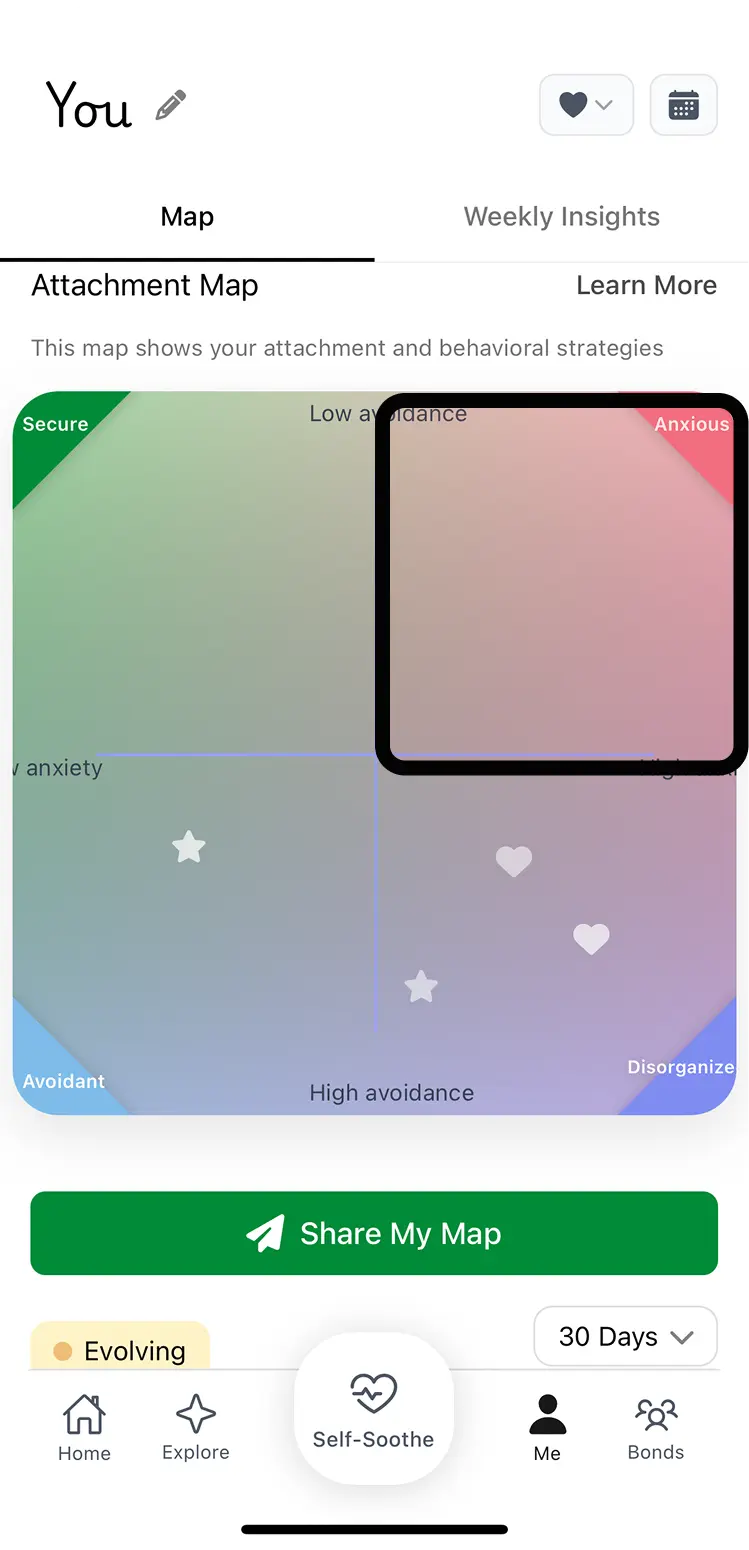
Podrías tener apego ansioso si:
- Necesitas mucha validación para sentirte tranquila en la relación.
- Sobreinterpretas mensajes, silencios o cambios pequeños en el tono.
- Te cuesta regularte cuando tu pareja necesita espacio.
- Persigues la conexión cuando sientes distancia.
- El amor calmado te cuesta más que el amor intenso.
- Temes profundamente que te dejen o te reemplacen.
De dónde viene
Muchas personas desarrollan este patrón cuando crecieron con figuras de cuidado impredecibles o emocionalmente inconsistentes.
El mensaje que aprende el cuerpo es:
"Para que me quieran, tengo que insistir, anticiparme y no bajar la guardia."
Por eso, en la adultez, el vínculo puede sentirse absorbente y cualquier señal ambigua puede parecer peligrosa.
El cuerpo también participa
El apego ansioso no vive solo en la mente. También vive en el cuerpo.
Cuando tu historia asocia distancia con peligro, tu sistema nervioso responde con activación:
- más alerta
- más urgencia
- más necesidad de reconectar ya
Por eso una respuesta tardía o un cambio de energía puede sentirse enorme, aunque desde fuera parezca pequeño.
Apego ansioso vs. otros estilos
| Estilo de apego | Miedo central | Patrón en relaciones | Forma de regularse |
|---|---|---|---|
| Seguro | Bajo miedo a la pérdida | Abierto, estable, confiado | Se regula y comunica |
| Ansioso | Abandono | Busca cercanía y validación | Hiperactivación |
| Evitativo | Invasión o pérdida de autonomía | Se distancia y minimiza | Desactivación |
| Desorganizado | Cercanía y abandono a la vez | Vaivén e intensidad | Mezcla de ambas |
Cómo se ve en las relaciones
En las relaciones, el apego ansioso suele aparecer como:
- necesidad de confirmación frecuente
- miedo a que el vínculo cambie de repente
- dificultad para confiar cuando la otra persona es independiente
- sensación de montaña rusa emocional
No significa que ames demasiado. Significa que tu sistema aprendió a sobrevivir buscando seguridad fuera de ti.
Cómo empezar a construir más seguridad
El cambio empieza cuando dejas de depender solo de la tranquilidad externa y empiezas a construir seguridad interna.
-
Pon nombre a lo que sientes.
"Estoy activada", "tengo miedo", "me siento insegura" calma más que reaccionar en automático. -
Ayuda a tu cuerpo a bajar la activación.
Respiración lenta, grounding, pausas y movimiento suave ayudan a que la ola baje. -
Construye consistencia contigo misma.
Cumplirte, escribir, descansar y sostener hábitos seguros cambia tu relación contigo. -
Practica tolerar la distancia sin colapsar.
No toda distancia es rechazo. A veces es solo espacio. -
Busca apoyo basado en apego.
Terapia, trabajo somático y recursos guiados pueden acelerar muchísimo este proceso.
La app Attached incluye herramientas, ejercicios y guías para ayudarte a pasar de la ansiedad a una conexión más segura.
FAQ
FAQ
Do I have to be in a relationship to use this app? Can I use it alone?
Who's Eden the relationship coach from Attached?
I've tried talk therapy before but it hasn't helped, how is Attached any different?
- Online talk therapy: Many online therapists on general platforms may not specialize in attachment-based issues.
- Attached: Built around attachment patterns, guided reflection, and relationship habits, our tools help you notice the patterns behind relationship stress and practice different responses.
- Online talk therapy: Many platforms match you randomly with a therapist who may not have deep attachment expertise.
- Attached: Backed by experts in attachment; we designed the app around relationship reflection, attachment education, and daily practice.
- Online talk therapy: Providers may not remember every detail between sessions.
- Attached: Eden remembers and adapts to your journey.
- Online talk therapy: Limited hours of availability.
- Attached: 24/7 access so you can manage triggers and exercises anytime.
How is Attached different to ChatGPT?
- ChatGPT: General purpose AI assistant.
- Attached: Built for attachment patterns, self-reflection, and relationship habits.
- ChatGPT: Answers general inquiries.
- Attached: Uses psychology-informed prompts to help you reflect, slow down, and choose your next step.
- Bite-sized lessons based on relationship science
- Eden, your coach, grounded in relationship psychology
- Personalized meditations
- Accountability via gamification
How is attachment related to my interpersonal problems?
Does this still help if I'm currently in therapy?
Do I need to give a credit card to start the trial?
Is my data safe?
Can I use Attached for all attachment styles?
I don't have insecure attachment. Can I use Attached for general wellness?
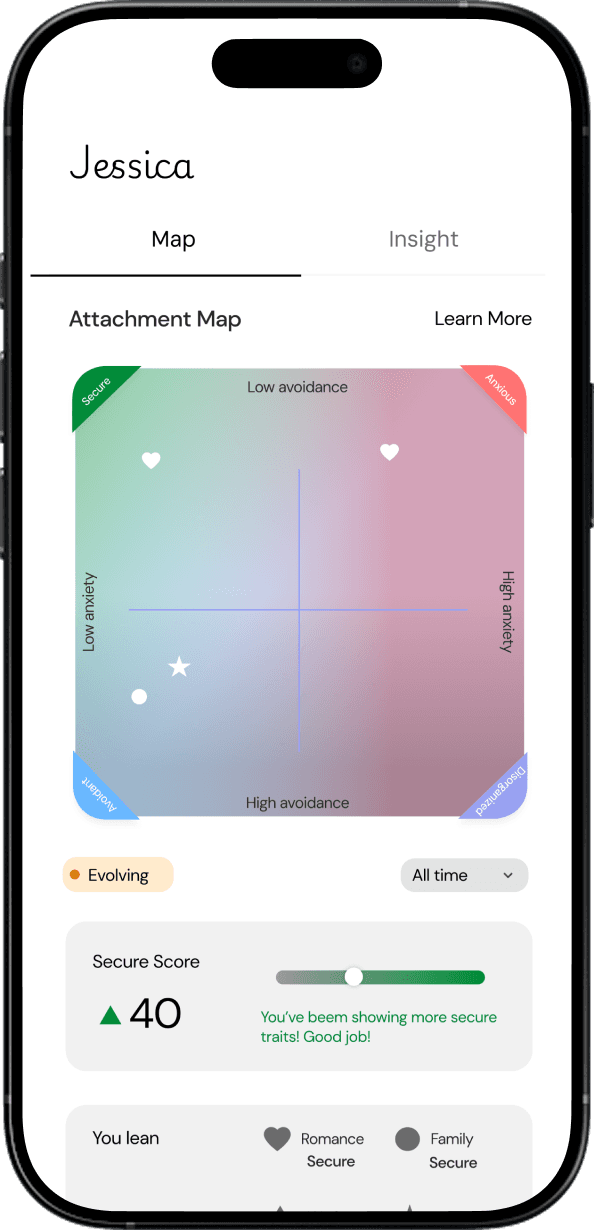
Discover your attachment style now and get a personalized plan
Attached is changing thousands of lives
Even in therapy, I struggled to be fully honest, mostly out of embarrassment over irrational thoughts. But this app made it safe. The app's slow, intentional pacing helped me absorb the lessons and reflect on how they apply to my life. The Trigger Cards were a game-changer—custom to my real triggers and guide me in the moment. I've started recognizing how my anxious attachment shows up and blocks me from fully experiencing love.
I'm very grateful for this app as it has been helping me understand myself and my patterns, encouraging growth through self-compassionate journaling, reflection, and habit tracking. My favorite part is the personalized meditations created uniquely for me.
After my divorce and the death of my best friend and mother, I struggled to adapt. I've been in therapy for years and this app is an incredible tool to help me practice the things my therapist recommends. The journaling tool reframes thoughts using AI, and the meditation feature guides acceptance, breathing, and grounding techniques.
This app is beyond helpful. It simplifies your journey through lessons, guided meditations, and journal prompts. It keeps you on track and maps your progress. It's worth the investment and I'm so glad I found it!
Even in therapy, I struggled to be fully honest, mostly out of embarrassment over irrational thoughts. But this app made it safe. The app's slow, intentional pacing helped me absorb the lessons and reflect on how they apply to my life. The Trigger Cards were a game-changer—custom to my real triggers and guide me in the moment. I've started recognizing how my anxious attachment shows up and blocks me from fully experiencing love.
I'm very grateful for this app as it has been helping me understand myself and my patterns, encouraging growth through self-compassionate journaling, reflection, and habit tracking. My favorite part is the personalized meditations created uniquely for me.
After my divorce and the death of my best friend and mother, I struggled to adapt. I've been in therapy for years and this app is an incredible tool to help me practice the things my therapist recommends. The journaling tool reframes thoughts using AI, and the meditation feature guides acceptance, breathing, and grounding techniques.
This app is beyond helpful. It simplifies your journey through lessons, guided meditations, and journal prompts. It keeps you on track and maps your progress. It's worth the investment and I'm so glad I found it!
Start with a free week on us, no credit card needed.
After free week
What could cost you $7,600/year is now $156/year
No credit card to start
FAQ
Do I have to be in a relationship to use this app? Can I use it alone?
Who's Eden the relationship coach from Attached?
I've tried talk therapy before but it hasn't helped, how is Attached any different?
- Online talk therapy: Many online therapists on general platforms may not specialize in attachment-based issues.
- Attached: Built around attachment patterns, guided reflection, and relationship habits, our tools help you notice the patterns behind relationship stress and practice different responses.
- Online talk therapy: Many platforms match you randomly with a therapist who may not have deep attachment expertise.
- Attached: Backed by experts in attachment; we designed the app around relationship reflection, attachment education, and daily practice.
- Online talk therapy: Providers may not remember every detail between sessions.
- Attached: Eden remembers and adapts to your journey.
- Online talk therapy: Limited hours of availability.
- Attached: 24/7 access so you can manage triggers and exercises anytime.
How is Attached different to ChatGPT?
- ChatGPT: General purpose AI assistant.
- Attached: Built for attachment patterns, self-reflection, and relationship habits.
- ChatGPT: Answers general inquiries.
- Attached: Uses psychology-informed prompts to help you reflect, slow down, and choose your next step.
- Bite-sized lessons based on relationship science
- Eden, your coach, grounded in relationship psychology
- Personalized meditations
- Accountability via gamification