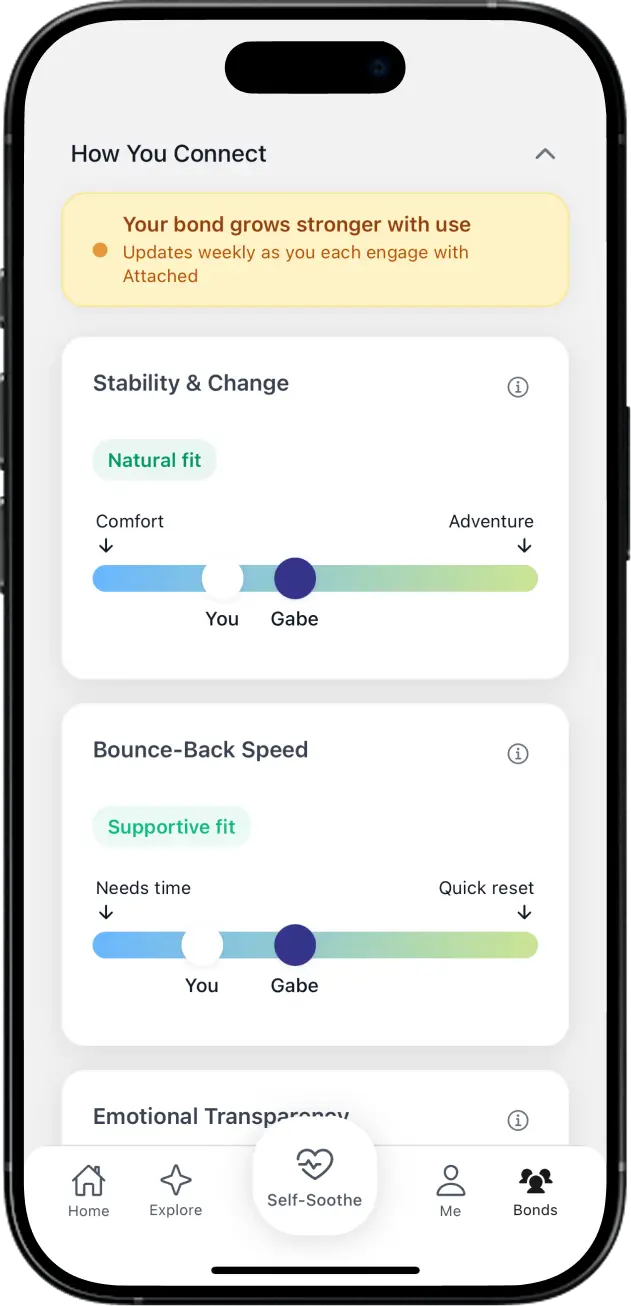
Descubre hoy tu estilo de apego. Encuentra tu mapa relacional único, sola o en pareja
Apego temeroso-evitativo: ven aquí… no, espera, vete

¿No sabes si este es tu patrón? Haz el test de estilo de apego gratis y descúbrelo en 5 minutos.
Cuando el amor y el miedo comparten habitación
Conoces a alguien. Va bien. Muy bien.
Y entonces, puntual como un reloj, suena la alarma. Le encuentras un defecto. Empiezas una pelea. Te quedas en silencio. Haces exactamente lo que juraste no volver a hacer.
Después esa persona se aleja… y de pronto lo único que quieres es que vuelva.
Si el amor se siente como una puerta que abres y cierras de golpe, esta guía es para ti. Eso es el apego temeroso-evitativo.
¿Qué es el apego temeroso-evitativo?
Es el estilo de apego inseguro que corre dos programas a la vez:
- El programa ansioso: acércate, no la pierdas, la cercanía es seguridad
- El programa evitativo: protégete, no dependas, la cercanía es peligro
Los demás estilos eligen un carril. El temeroso-evitativo vive en el cruce.
En la investigación este patrón también se llama apego desorganizado: son dos nombres para la misma dinámica. Tenemos una guía completa del apego desorganizado centrada en sus raíces; esta página se centra en cómo se vive en las relaciones adultas y qué hacer al respecto.
La experiencia central: "Te quiero. Y me asustas. Y no sé a cuál de las dos sensaciones creerle."
Señales comunes en adultos
Puede que tengas este patrón si:
- Idealizas intensamente al principio y te sientes atrapada cuando esa persona por fin está disponible
- Pones a prueba a tu pareja: te alejas para ver si te busca, te guardas cosas para ver si lo nota
- Tus relaciones se sienten como sistemas de clima: cercanía intensa, frentes fríos repentinos
- Puedes pasar de "eres todo para mí" a "necesito salir de esto" en un mismo día
- Te cuesta confiar en la amabilidad; una parte de ti espera la trampa
- Después de alejar a alguien, sientes un anhelo enorme… por la misma persona que acabas de alejar
El ciclo de empujar y perseguir
El circuito suele funcionar así:
- Perseguir. Alguien se siente seguro y emocionante. Te acercas, a menudo rápido.
- Pánico. Llega la intimidad real. Tu sistema nervioso la lee como exposición, no como consuelo.
- Empujar. Creas distancia: una crítica, una pelea, silencio, una necesidad repentina de espacio.
- Duelo. Con la distancia lograda, el programa ansioso vuelve a encenderse. Extrañas con desesperación.
- Perseguir otra vez. Buscas, reparas, reconectas… y el ciclo se vuelve a armar.
Ninguno de los dos movimientos es aleatorio. Los dos son protección.
Temeroso-evitativo vs. evitativo despectivo
Los dos estilos evitativos se confunden constantemente. La diferencia está en lo que pasa por dentro cuando aparece la distancia:
- La persona evitativa despectiva siente alivio. La distancia le resulta cómoda y rara vez busca reconectar.
- La persona temerosa-evitativa siente alivio un día… y luego anhelo, dudas y el impulso de escribirle.
Una desactiva. La otra oscila.
Si te reconoces más en la primera descripción, lee la guía del apego evitativo despectivo.
De dónde viene
Este patrón suele desarrollarse cuando las personas de las que dependías eran, a veces, también las que te asustaban, te abrumaban o te fallaban profundamente: cuidados impredecibles, un cuidador que un día era cálido y al siguiente frío o ausente, o crecer entre conflictos que nadie te ayudó a entender.
El dilema de esa niña es imposible: la persona que necesito para consolarme es la persona de la que necesito protegerme. El sistema nervioso lo resuelve como puede: dejando los dos programas encendidos. Alcanzar y protegerse. Amar y escanear el peligro.
Nada de eso fue tu culpa. Fue una respuesta inteligente a un entorno confuso. Solo que ahora te está cobrando la factura.
Cómo se ve en las relaciones
- Química que se siente como destino al principio (la intensidad se confunde con conexión)
- Parejas desconcertadas: adoradas, luego bloqueadas, luego buscadas otra vez
- Celos y problemas de confianza incluso en relaciones objetivamente seguras
- Rupturas y reconciliaciones, a veces varias rondas
- Un miedo profundo, casi nunca dicho: si me vieras de verdad, te irías
Cómo sanar el apego temeroso-evitativo
Sanar este patrón es enseñarle a tu sistema nervioso una frase que nunca terminó de creer: cercanía y seguridad pueden ser lo mismo.
- Aprende tu circuito. Registra el ciclo: perseguir, pánico, empujar, duelo, perseguir. Escribir después de cada vaivén construye el mapa.
- Baja la velocidad. La química temerosa-evitativa arde rápido. Un ritmo más lento le da menos falsas alarmas a tu sistema.
- Di el patrón en voz alta. "Me alejo cuando me asusto; no es por ti" es la frase más poderosa para este estilo: convierte a tu pareja en aliada.
- Surfea la ola sin actuar. Cuando el impulso de huir (o perseguir) sube, espera 24 horas antes de decisiones grandes. La ola sube y baja.
- Regula el cuerpo, no solo los pensamientos. Respiración, movimiento y meditaciones guiadas bajan la línea base.
- Busca apoyo hecho para esto. La terapia o el coaching ayudan a muchas personas. Para la práctica diaria, Attached ofrece journaling guiado, meditaciones y ejercicios diseñados alrededor de los patrones de apego.
FAQ
FAQ
Do I have to be in a relationship to use this app? Can I use it alone?
Who's Eden the relationship coach from Attached?
I've tried talk therapy before but it hasn't helped, how is Attached any different?
- Online talk therapy: Many online therapists on general platforms may not specialize in attachment-based issues.
- Attached: Built around attachment patterns, guided reflection, and relationship habits, our tools help you notice the patterns behind relationship stress and practice different responses.
- Online talk therapy: Many platforms match you randomly with a therapist who may not have deep attachment expertise.
- Attached: Backed by experts in attachment; we designed the app around relationship reflection, attachment education, and daily practice.
- Online talk therapy: Providers may not remember every detail between sessions.
- Attached: Eden remembers and adapts to your journey.
- Online talk therapy: Limited hours of availability.
- Attached: 24/7 access so you can manage triggers and exercises anytime.
How is Attached different to ChatGPT?
- ChatGPT: General purpose AI assistant.
- Attached: Built for attachment patterns, self-reflection, and relationship habits.
- ChatGPT: Answers general inquiries.
- Attached: Uses psychology-informed prompts to help you reflect, slow down, and choose your next step.
- Bite-sized lessons based on relationship science
- Eden, your coach, grounded in relationship psychology
- Personalized meditations
- Accountability via gamification
How is attachment related to my interpersonal problems?
Does this still help if I'm currently in therapy?
Do I need to give a credit card to start the trial?
Is my data safe?
Can I use Attached for all attachment styles?
I don't have insecure attachment. Can I use Attached for general wellness?
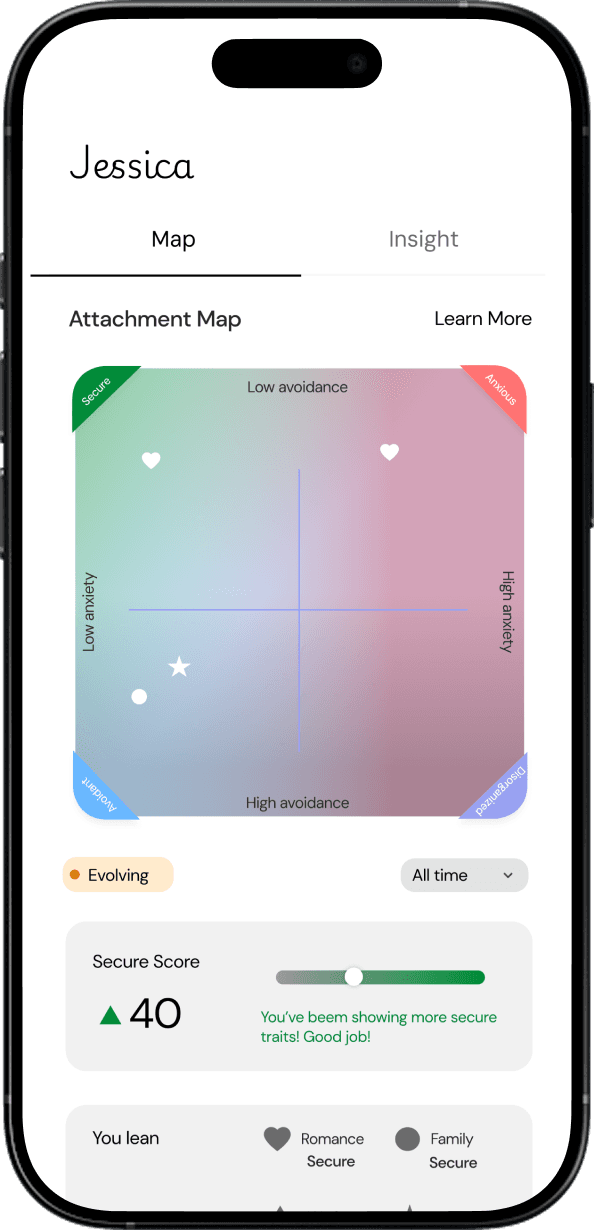
Discover your attachment style now and get a personalized plan
Attached is changing thousands of lives
Even in therapy, I struggled to be fully honest, mostly out of embarrassment over irrational thoughts. But this app made it safe. The app's slow, intentional pacing helped me absorb the lessons and reflect on how they apply to my life. The Trigger Cards were a game-changer—custom to my real triggers and guide me in the moment. I've started recognizing how my anxious attachment shows up and blocks me from fully experiencing love.
I'm very grateful for this app as it has been helping me understand myself and my patterns, encouraging growth through self-compassionate journaling, reflection, and habit tracking. My favorite part is the personalized meditations created uniquely for me.
After my divorce and the death of my best friend and mother, I struggled to adapt. I've been in therapy for years and this app is an incredible tool to help me practice the things my therapist recommends. The journaling tool reframes thoughts using AI, and the meditation feature guides acceptance, breathing, and grounding techniques.
This app is beyond helpful. It simplifies your journey through lessons, guided meditations, and journal prompts. It keeps you on track and maps your progress. It's worth the investment and I'm so glad I found it!
Even in therapy, I struggled to be fully honest, mostly out of embarrassment over irrational thoughts. But this app made it safe. The app's slow, intentional pacing helped me absorb the lessons and reflect on how they apply to my life. The Trigger Cards were a game-changer—custom to my real triggers and guide me in the moment. I've started recognizing how my anxious attachment shows up and blocks me from fully experiencing love.
I'm very grateful for this app as it has been helping me understand myself and my patterns, encouraging growth through self-compassionate journaling, reflection, and habit tracking. My favorite part is the personalized meditations created uniquely for me.
After my divorce and the death of my best friend and mother, I struggled to adapt. I've been in therapy for years and this app is an incredible tool to help me practice the things my therapist recommends. The journaling tool reframes thoughts using AI, and the meditation feature guides acceptance, breathing, and grounding techniques.
This app is beyond helpful. It simplifies your journey through lessons, guided meditations, and journal prompts. It keeps you on track and maps your progress. It's worth the investment and I'm so glad I found it!
Start with a free week on us, no credit card needed.
After free week
What could cost you $7,600/year is now $156/year
No credit card to start
FAQ
Do I have to be in a relationship to use this app? Can I use it alone?
Who's Eden the relationship coach from Attached?
I've tried talk therapy before but it hasn't helped, how is Attached any different?
- Online talk therapy: Many online therapists on general platforms may not specialize in attachment-based issues.
- Attached: Built around attachment patterns, guided reflection, and relationship habits, our tools help you notice the patterns behind relationship stress and practice different responses.
- Online talk therapy: Many platforms match you randomly with a therapist who may not have deep attachment expertise.
- Attached: Backed by experts in attachment; we designed the app around relationship reflection, attachment education, and daily practice.
- Online talk therapy: Providers may not remember every detail between sessions.
- Attached: Eden remembers and adapts to your journey.
- Online talk therapy: Limited hours of availability.
- Attached: 24/7 access so you can manage triggers and exercises anytime.
How is Attached different to ChatGPT?
- ChatGPT: General purpose AI assistant.
- Attached: Built for attachment patterns, self-reflection, and relationship habits.
- ChatGPT: Answers general inquiries.
- Attached: Uses psychology-informed prompts to help you reflect, slow down, and choose your next step.
- Bite-sized lessons based on relationship science
- Eden, your coach, grounded in relationship psychology
- Personalized meditations
- Accountability via gamification