Reparenting the Inner Child: A Closer Look at Nicole LePera's New Book
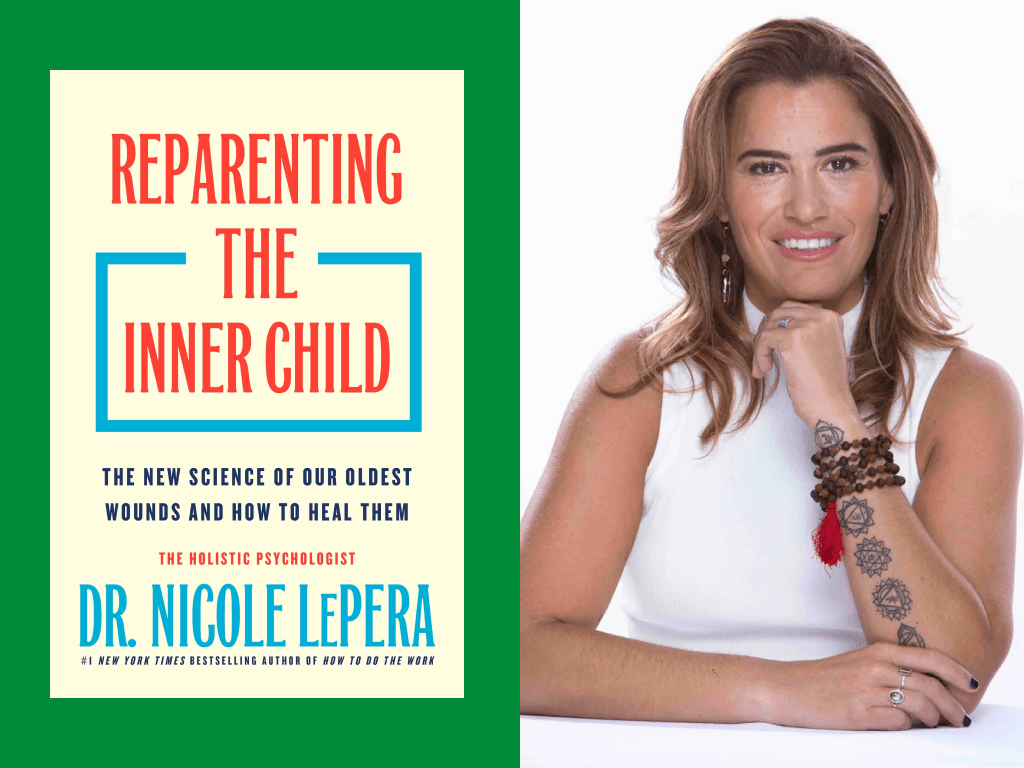
By Dr. Nicole LePera · Published March 24, 2026 · Flatiron Books · 384 pages
Our Review
About forty pages in, I recognized a pattern I've had my whole life and never quite been able to name. That doesn't happen often.
"Inner child" has been watered down by Instagram carousels and pretty journal prompts to the point that it can feel almost meaningless. Like something you agree with in theory but never really use. I went in skeptical. I came out with a framework I've actually been using.
LePera is not asking you to picture your younger self and give her a hug. She is asking harder questions. Why do you shut down in arguments? Why do you people-please until resentment takes over? Why do some relationships feel tense all the time, even when you cannot explain why?
That's inner child work.
What she really gets right is the nervous system piece. She does not split emotional patterns from the body. Your anxious attachment, your avoidance, your habit of disappearing when things get close. Those are not character flaws. They are survival strategies your nervous system learned before you had words for what was happening. The chapter on somatic tools alone is worth reading.
The four pillars she builds the book around, loving discipline, self-care, joy, and emotional regulation, could have felt like a generic wellness checklist. They do not. Each one comes with actual exercises, reflection prompts, and case studies specific enough to make you stop and think, oh. That's me. Much of the time, the person on the page feels uncomfortably familiar.
If I had one criticism, it is that some middle chapters run long. The pacing slows down and the work starts to feel heavier than it needs to. Still, it is worth sticking with. The second half builds well on the first, and by the end the book feels more like something you can use than something you just read.
This book is for people who grew up in homes where emotions did not feel safe, where being "good" mattered more than being real. It is also for anyone stuck in a relationship pattern they cannot seem to break, no matter how much therapy they have done. If you are brand new to this kind of work, start with Attached by Amir Levine first. LePera assumes some context.
4 Core Ideas From the Book
1. Your "inner child" is not just a metaphor.
The patterns you formed before age 7 are stored in implicit memory, which means your nervous system repeats them automatically. Healing means working at that level, not just understanding the pattern in your head.
2. Awareness by itself is not enough.
This is the part most self-help books skip. Knowing why you are anxious does not stop the anxiety. You need repeated, embodied experiences of safety, what LePera calls "reparenting moments," for the pattern to start changing.
3. Emotional regulation is something you can learn.
If you grew up in an environment where big emotions were not welcomed or modeled, your nervous system never learned how to self-regulate. That is not your identity. It is a missing skill, and it can be learned at any age.
4. Thinking alone will not change what your body still feels.
Somatic tools like breath, movement, and body awareness are not optional extras. They are part of how this work reaches the body, which is where these patterns live.
Continue the Work With Attached
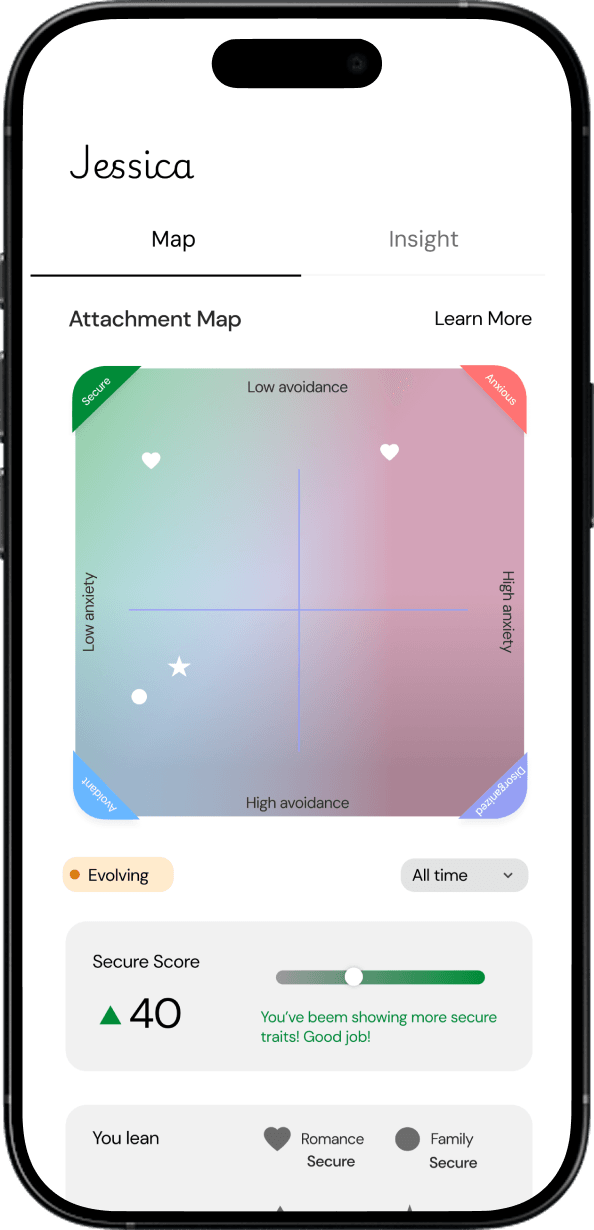
Start with the Attachment Style Test. It takes about 3 minutes and helps you see which patterns are most active for you. For a lot of people, it makes the book feel much more personal and concrete.
From there, the part of Attached that's most relevant to LePera's work is the personalized inner child meditations. Not generic guided breathing. Meditations built specifically around your attachment style — because what an anxiously attached nervous system needs to feel safe is genuinely different from what an avoidant one does. That distinction matters, and most meditation apps don't make it.
Start with the Attachment Style Test
Before anything else, you need to know your pattern. LePera's book talks about the inner child in broad strokes, the shutdown, the over-functioning, the people-pleasing, but it cannot tell you which one is yours or how it shows up when you are triggered in a relationship.
The Attachment Style Test does that in about 3 minutes. You get your full profile, secure, anxious, avoidant, or fearful-avoidant, plus a breakdown of how your style tends to show up in real situations. How you text when you are anxious. How you pull away when things feel too close. What your inner child may be asking for when you react in ways you do not fully understand. Most people find that this makes the book click in a more practical way.
Personalized Inner Child Meditations
This is one place where Attached feels more specific than most meditation apps.
LePera spends a lot of time on somatic tools, on the idea that healing has to happen in the body and not just in the mind. You cannot think your way into feeling safe. You have to feel your way there, slowly and repeatedly, until your nervous system begins to trust it. That is what the meditations in Attached are designed to support.
But a generic "inner child meditation" usually will not get you very far. What an anxiously attached person needs, reassurance that someone is still there and not about to leave, is very different from what an avoidant person needs, which is often permission to feel anything at all without shutting down. Fearful-avoidant people usually need both at once, which gets complicated fast.
The meditations in Attached are built around your specific attachment style. So the one you get is not the same as the one your friend gets. It is written for the way your nervous system learned to protect itself, and what it may need in order to slowly unlearn some of that protection.
If you want a sense of what that feels like before you download anything, you can read a full reparenting meditation script inspired by LePera's work, then generate a personalized one for free.

Lessons and Journal
If LePera's four pillars, loving discipline, self-care, joy, and emotional regulation, resonated but still felt abstract, the lessons inside Attached can help make them more concrete. Each one is grounded in attachment research and paced for people doing this work in the middle of ordinary life.
The journal is quieter but just as useful. LePera's book is full of reflection prompts that are easy to read and just as easy to skip. Having a dedicated space to actually answer them, and to notice how your responses change over time, is different from underlining a sentence and moving on. Healing is often subtle. The journal helps you catch it.
Related articles
More reading to help this topic connect across the blog.
What to actually say when you sit down with your inner child. The sentences that finally worked after weeks of getting nothing back, what to do when it feels fake, and when to skip it entirely.
I spent thousands of dollars so you don't have to. Here's which type of meditation to use for what, from mindfulness to IFS to Ideal Parent Figure.
Most of the changing happens outside the therapy room. A memoir about Tuesday spirals, therapy homework, and the between-session practice that finally made the pattern real.
Skip the cold plunge and the 5am routine. Here's how to restore your nervous system based on how much time you actually have — from 2 minutes to a full day off — using simple, research-backed steps like movement, time outside, and being near water.
Understand your attachment style
Read the full guide to each attachment style, or take the quiz to find yours.