2026 Relationship Resolutions for Anxious–Avoidant Couples Tired of the Same Old Fight

You know that fight. It starts small. It ends with one of you crying, talking fast, scrolling TikToks in the bathroom. And the other one in the living room, quietly scrolling the news.
You call it “the same old fight”, or "they don't understand me" Psychology calls it anxious attachment and avoidant attachment in a long-term relationship.
This is a story about turning that pattern into 2026 relationship resolutions you can actually live with.
Resolution 1: “We Will Name Our Attachment Styles Out Loud”
For years I thought:
“I am just too much.” “They are just too cold.”
Then I learned the words anxious attachment and avoidant attachment. Attachment theory says we learn a template for love from early caregivers. Then we carry that template into adult romantic relationships.
If you are anxiously attached, closeness feels like oxygen. Distance feels like danger. Your brain scans for “Are we okay?” every few minutes. If you are avoidantly attached, space feels like oxygen. Emotional need feels like danger. Your brain scans for “Am I about to be trapped or judged?”
Research on adult romantic attachment shows these styles shape how we regulate emotions, seek support, and react in conflict.
We may be secure in relationships, but our partner can bring out an avoidant side of us in fights.
In our case, I'd cry, feel abandoned, feel unloved.
He'd feel frustrated, shut down, and delayed.
So our first 2026 relationship resolution became:
We will say our attachment styles out loud, without using them as weapons.
Not: “You’re so avoidant, of course you’re running.” But: “My anxious part is freaking out right now.” And: “My avoidant part is panicking. I need a second.”
When we named it, the story shifted from:
“You’re the problem” to “Our patterns are the problem.”
Studies on adult attachment show that when partners understand their patterns, they can change how they respond to threat and stress in the relationship.
Resolution 2: “We Will Stop Fighting About Dishes and Start Talking About Fear”
You know that fight. The sink filled with dishes.
My heart sank. I read it as “they don’t care about me.”
I snapped: “Why do I have to do everything?”
His shoulders went up. Eyes went flat. “I said I’d get to it. Calm down.”
I got louder. He got quieter.
We thought we were fighting about chores.
We weren’t. We were fighting about fear.
Research shows that the anxiously attached tends to hyper-activate. When the bond feels threatened, the brain goes into alarm, and you protest: chase, criticize, over-talk, over-text.
Whereas avoidant attachment tends to deactivate. When closeness feels too intense, the brain shuts down the attachment system. You withdraw, minimize feelings, distract yourself.
Most importantly, research shows that both styles hurt relationship quality, especially trust and satisfaction.
So we made our second relationship resolution:
**We will say the fear under the fight. ** From: “You never help” -> “When I see the dishes pile up, my anxious attachment reads it as ‘I’m alone in this.’ I feel scared and unimportant.”
From: “You’re overreacting” -> “When you come at me fast, my avoidant side feels attacked and judged. I get scared I’ll never be enough.”
This didn’t magically fix us. But it slowed us down. We started to see two scared nervous systems, not two villains.
Resolution 3: “We Will Create a Conflict Plan Before We’re Triggered”
By the time we were in the fight, it was already too late. Our past had taken over.
Neuroscience studies show that insecure attachment is linked with stronger activation in threat areas of the brain, like the amygdala, when people feel rejected or under social threat.
Translation: Your brain time travels back to when it first felt hurt, and triggers the alarm ASAP. Your mouth tries to catch up later.
Couple therapies based on attachment, like Emotionally Focused Couple Therapy (EFT), work by helping partners recognize this threat cycle and create a new pattern: notice, slow down, repair. Research has found EFT improves relationship satisfaction and strengthens secure bonding over time.
We couldn’t afford weekly therapy yet. So we stole the idea of a plan.
Our third 2026 resolution:
We will make a conflict plan when we are calm, and we will stick to it when we are not.
We wrote it on a note in the kitchen.
Our plan looked like this:
- Spot the cycle. One of us says: “I think we’re in the anxious–avoidant loop.”
- Pause without abandoning. Avoidant partner: “I’m overwhelmed. I need 20 minutes. I promise I’ll come back.” Anxious partner: “Okay. I will not follow you. I’ll use my self-soothing tools.”
- Return on purpose. Come back at the time we named. No “forgetting.”
- Share the story we told ourselves. “The story my attachment style told me was…”
- Ask for one clear need. “Right now I need reassurance / space / a hug / clarity.” The key was predictability. Anxious attachment needs to know: “You will come back.” Avoidant attachment needs to know: “You won’t chase me while I calm down.”
Our plan gave both nervous systems a map.
Resolution 4: “We Will Practice One Act of Secure Love Each Day”
We used to wait for big changes.
But attachment science says your nervous system learns from repeated micro-moments, not rare dramatic gestures. Over time, small, reliable signals of safety build a more secure internal model of relationships.
So our fourth resolution:
One act of secure love. Every day. From each of us.
Secure love is a behavior.
Some examples we used:
For the anxious partner: Send one honest, non-testing text: “I’m feeling a bit anxious today. Can you tell me we’re okay?”
Self-soothe for 10 minutes before starting a heavy talk.
Ask directly instead of scrolling and mind-reading.
For the avoidant partner
Send a reeassuring text before a long silence: “Long day. I’m quiet, but I’m thinking of you.”
Offer reassurance before being asked: “We’re okay. I care about this.”
Stay in the conversation 5–10 minutes longer than feels comfortable.
For both of you
A 10–20 second, tight hug when you reunite.
One appreciation a day: “I noticed you did X. I'm so grateful”
A weekly walk where the only agenda is: “How are we, really?”
These tiny “secure attachment reps” represent what attachment-based couple therapies try to build in session: more responsive, emotionally attuned moments that tell both brains, “You are safe with me.”
You do these things, and slowly, you feel more secure.
Resolution 5: “We Will Measure Progress by How We Rupture and Repair”
Here’s what nobody told me:
Even securely attached couples fight. They snap. They misunderstand. They get tired and say the wrong thing.
The difference is not no rupture. The difference is fast repair.
Research on couples and attachment styles shows that insecure attachment is linked to more hostile conflict behaviors and less effective repair attempts. Intimacy tends to mediate this: the less safe you feel, the more defensive you become.
So our last 2026 relationship resolution:
We will measure progress by how fast we repair, not by whether we never fight.
We started tracking:
- How quickly we noticed the pattern.
- How often we used our conflict plan.
- How many times we said, “I’m sorry, can we try that again?”
- How rarely we threatened to leave.
Let me show you our before and after.
Before:
Trigger: One person comes home late and forgets to text.
Anxious partner: “You obviously don’t care. I’ll never be a priority.”
Avoidant partner: “Here we go again. You’re so dramatic.”
Result: Shouting. Silent treatment. Two days of distance.
After a year of these resolutions (still messy, but different)
Trigger: Same late arrival.
Anxious partner: “My anxious attachment is loud right now. I feel unimportant.”
Avoidant partner: “I get that. I should have texted. I felt stressed and I shut down. I’m sorry.”
Result: Tension, a few tears… and then a hug in under an hour.
This became a total different relationship to the one we had before.
Because we made 2026 relationship resolutions that matched how our attachment styles and nervous systems actually work, not how we wish they worked.
If You’re Reading This Thinking “This Is Us”…
You are two attachment systems trying to protect you, using old rules that no longer fit.
You can stay together and still rewrite the rules.
You can say:
“We will name our attachment styles.”
“We will talk about fear, not dishes.”
“We will make a conflict plan before the next storm.”
“We will practice one act of secure love a day.”
“We will judge progress by how we repair, not by never arguing.”
That is what it means to make relationship resolutions that actually heal anxious attachment and avoidant attachment in a long-term relationship.
Not a new partner. Not a new personality.
The app to help you feel better, less anxious immediately
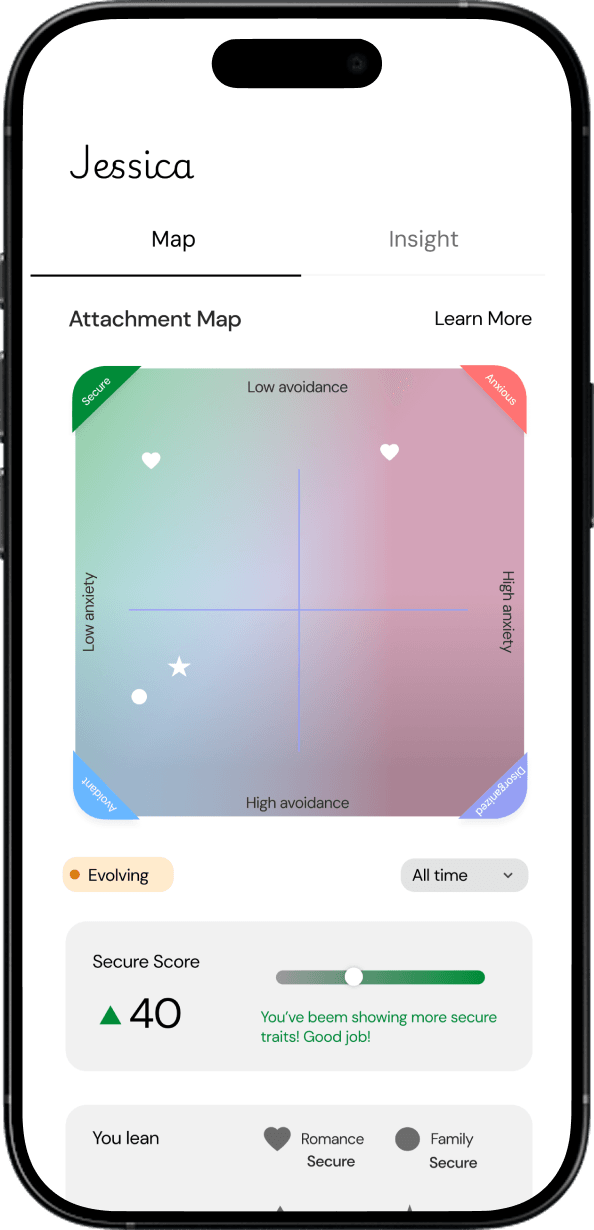
Relationships shouldn’t be painful. The Attached app is the No.1 app to help you understand your attachment style so you can become happy and free, backed by attachment science.
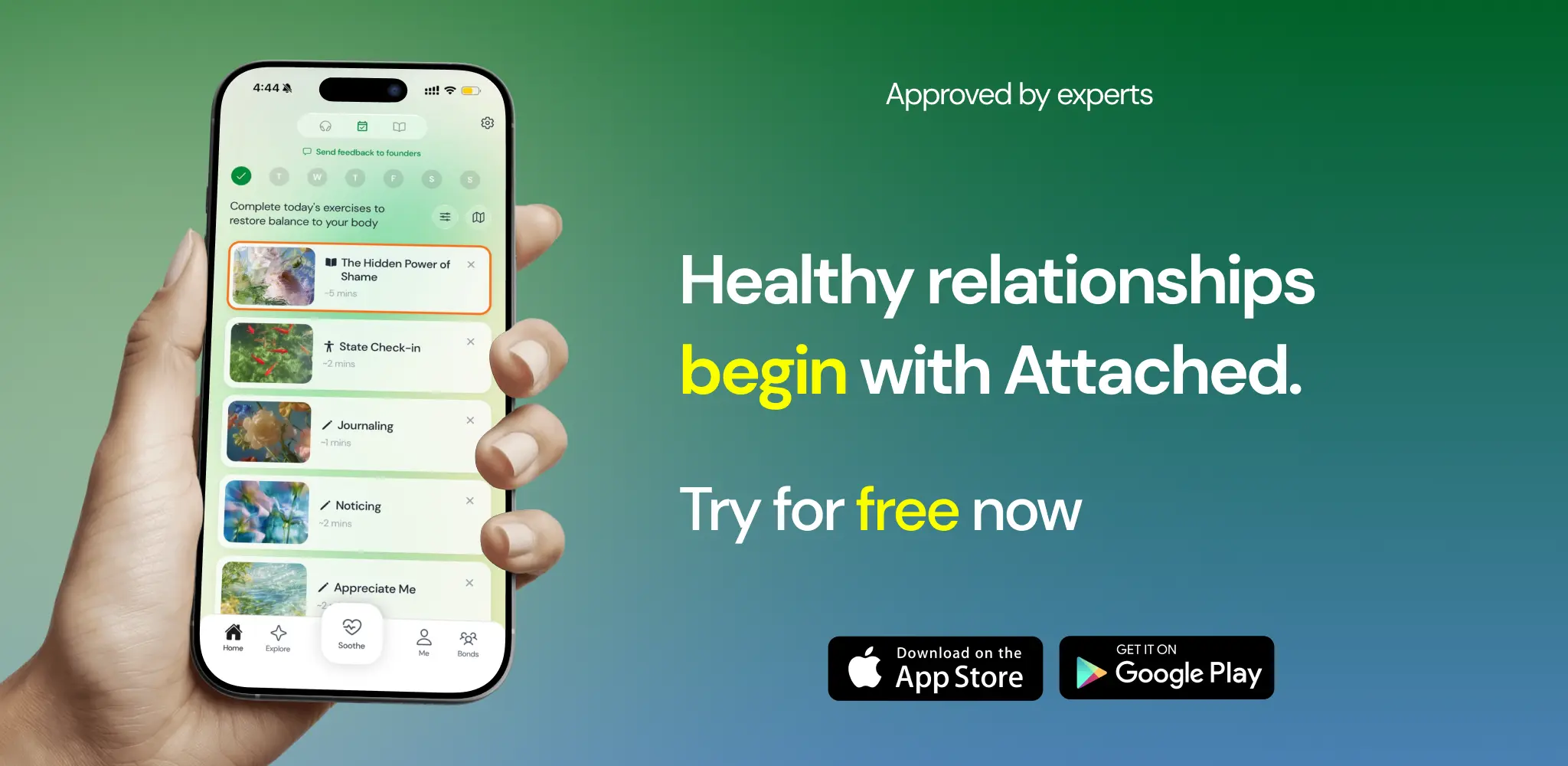
The Attached app helps make this process easier with:
- Daily Exercises to understand the root of your patterns
- Self-Soothe Mode for tough emotional moments when your anxious or avoidant system is spiraling
- Journal to find hidden emotional and relationship patterns over time
- Weekly insights from Eden, your relationship guide, to understand your attachment style and move toward secure
Download Attached for free now!
Sources: https://pubmed.ncbi.nlm.nih.gov/9376331/ https://pmc.ncbi.nlm.nih.gov/articles/PMC4845754/ https://www.researchgate.net/publication/263553128_How_anxious_and_avoidant_attachment_affect_romantic_relationship_quality_differently_A_meta-analytic_review https://pmc.ncbi.nlm.nih.gov/articles/PMC4448028/
Related articles
More reading to help this topic connect across the blog.
You thought fixing him would make the relationship better, let's look at how we can fix them step by step.
Start 2025 with a fresh mindset. Here are 5 science-backed resolutions to help those with anxious attachment build healthier, more secure relationships in the new year.
What if your Valentine’s gift didn’t just say “I love you,” but also improved your relationship for the long-run? These 13 therapist-approved picks do more for your relationship than any heart-shaped box ever will.
You can sit across from your partner, share dessert, kiss for a photo… and still feel alone. These 10 questions help you fall in love, again.
Understand your attachment style
Read the full guide to each attachment style, or take the quiz to find yours.