10 Best IFS and Parts Work Books (From Beginner to Deep Dive)

10 Best IFS and Parts Work Books (From Beginner to Deep Dive)
Most therapy models ask you to manage your difficult emotions. IFS asks something stranger and more interesting: what if you talked to them instead?
Internal Family Systems ,developed by Dr. Richard Schwartz in the 1980s , starts from a premise that sounds odd until it doesn't: we're not one unified self. We're a system of parts, each with its own history, its own fear, its own job. The anxious part that checks your phone every two minutes. The inner critic that shows up the second you do something wrong. The part that shuts down completely when things get too close. IFS says none of these parts are bad. They're just trying to protect something that got hurt a long time ago.
That reframe changes everything about how healing works.
These 10 books are the clearest path into IFS and parts work , whether you're hearing about it for the first time or want to go deeper than the introductory texts.
1. No Bad Parts , Dr. Richard Schwartz
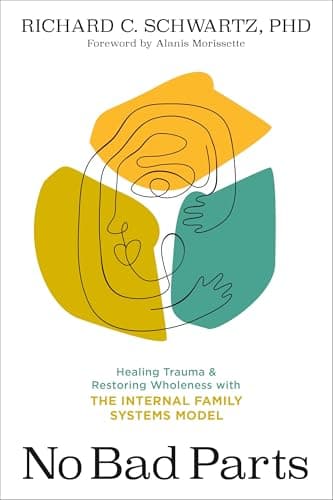
Published 2021 · Sounds True
The book that brought IFS to a mainstream audience, and still the best starting point for most people. Schwartz writes with the kind of warmth that's rare in psychology texts , partly because he genuinely believes what the title says. No part of you is bad. Every part that causes you trouble is doing so because it's trying to protect something underneath.
What makes this book different from an academic IFS text is the exercises. Each chapter has guided practices that let you actually experience the model, not just understand it intellectually. Readers who bounce off of it usually do so because they come in skeptical. The ones who stay are often the ones who have one moment mid-exercise where something shifts, and suddenly the whole framework makes sense from the inside.
"IFS can be seen as attachment theory taken inside, in the sense that the client's Self becomes the good attachment figure to their insecure or avoidant parts." —— Dr. Richard Schwartz
Best for: Anyone new to IFS. Also a good re-read after doing actual IFS work , things land differently once you've experienced it.
2. Self-Therapy , Jay Earley
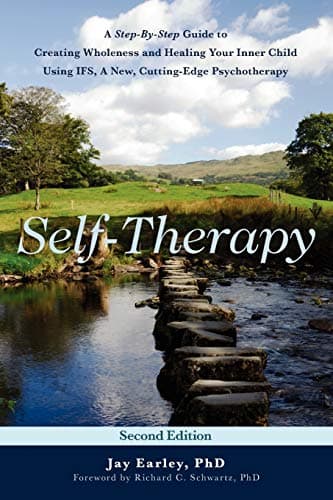
Published 2009 · Pattern System Books
The most practical IFS book that exists. Where Schwartz writes from the perspective of a clinician explaining the model, Earley writes for someone who wants to do the work themselves, step by step, without a therapist in the room.
The book walks you through exactly how an IFS session works , how to identify a part, how to approach it, how to get to know it without being overwhelmed by it, how to find the exile underneath a protector. It's structured in a way that actually functions as a self-guided practice, not just reading material. If you finish No Bad Parts and want to know what to actually do, this is the next book.
"No matter how much pain or dysfunction you have to deal with in your life, every part of your psyche is doing its best to help you." —— Jay Earley
Best for: People who want to practice IFS on their own between therapy sessions, or those who can't access an IFS therapist and want a structured alternative.
3. You Are the One You've Been Waiting For , Dr. Richard Schwartz
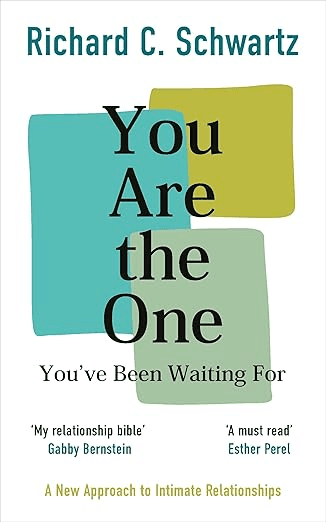

Published 2008 · Sounds True
The relationship book that IFS readers reach for. Schwartz takes the internal family systems model and applies it specifically to intimate partnerships , how our parts show up in love, why we trigger each other the way we do, and what it actually means to become the primary caretaker of your own inner world rather than outsourcing that job to a partner.
The central idea is quietly radical: most of what we want from relationships is something we need to learn to give ourselves first. Not as a self-help truism, but as a concrete practice , because when your exiles stop desperately looking outside for what they need, the whole dynamic of your relationships changes.
"So why is this important? For one thing, if you can become what I call the primary caretaker of your own parts, then you free intimate partners from the responsibility of taking care of raw and needy exiles." —— Dr. Richard Schwartz
Best for: People doing IFS work specifically in the context of relationships. Especially useful if you notice your attachment patterns most strongly with romantic partners.
4. The Internal Family Systems Workbook , Dr. Richard Schwartz
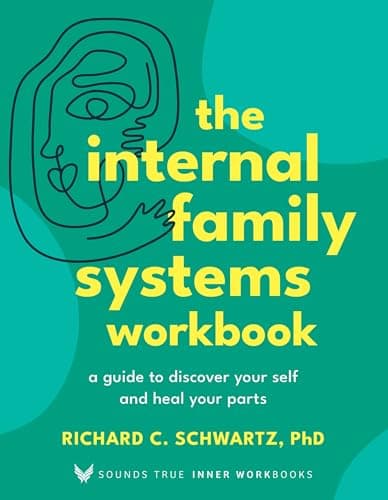
Published 2023 · Sounds True
For people who learn by doing. Schwartz distills the IFS model into over 50 exercises, practices, and meditations , including QR codes linking to audio meditations narrated by Schwartz himself. It's less a book to read and more a tool to work through slowly, returning to different sections as your practice develops.
The workbook covers managers, firefighters, and exiles in separate sections, giving each type of part its own set of practices. For someone already familiar with IFS who wants a structured way to deepen the work, this is the most directly useful thing Schwartz has published.
"A part is not just a temporary emotional state or habitual thought pattern. Instead, it is a discrete and autonomous mental system that has an idiosyncratic range of emotion, style of expression, set of abilities, desires, and view of the world." —— Dr. Richard Schwartz
Best for: People who have read No Bad Parts and want a hands-on companion. Also works well alongside therapy.
5. Parts Work , Tom Holmes
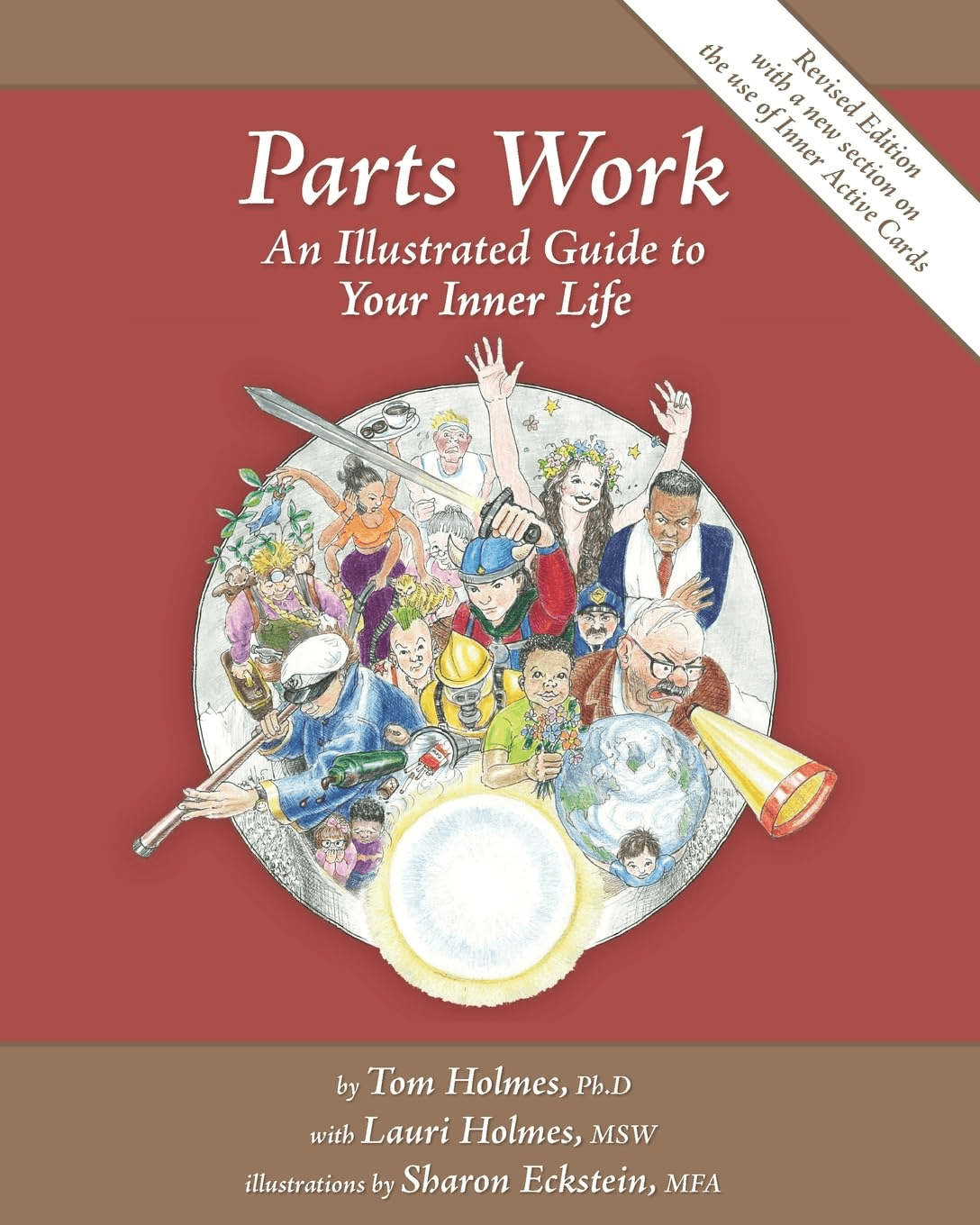

Published 2007 · Winged Heart Press
The gentlest entry point on this list. Holmes uses illustrations throughout to make the IFS model immediately visual and accessible , which sounds like it might be oversimplified, but actually makes the framework stick in a way that more text-heavy books don't always achieve.
It's a shorter book and moves quickly, but the core concepts are all here: parts, Self, the way protectors organize around exiles. For people who feel intimidated by longer psychology books, or who process information better visually, this is a genuinely useful starting point before tackling Schwartz directly.
"We are not one-dimensional, and our multiple dimensions are not static. Just as our bodies are made of many parts that form a dynamic, interwoven system that works together, so it is with our psyches." —— Tom Holmes
Best for: Total beginners, visual learners, or anyone who wants the big picture quickly before going deeper.
6. Freedom From Your Inner Critic , Jay Earley & Bonnie Weiss
Published 2013 · Sounds True
Almost everyone doing inner child or attachment work has an inner critic problem. The voice that says you're too needy, too sensitive, too much, not enough. IFS has a specific framework for working with critics , not silencing them, not fighting them, but understanding what they're protecting and helping them find a less destructive role.
Earley and Weiss take that framework and build an entire book around it. The result is one of the most practically useful IFS books for anyone whose biggest obstacle to healing is their own self-judgment. The approach here , meeting the critic with curiosity rather than opposition , is genuinely counterintuitive and genuinely effective.
"You don't want to give in to the Critic, and it doesn't really work to fight against it. But there is a way to transform it into an invaluable ally." —— Jay Earley & Bonnie Weiss
Best for: Anyone with a loud, persistent inner critic. Also useful for people with anxious attachment, where self-criticism often runs in the background constantly.
7. Transcending Trauma , Frank Anderson

Published 2021 · PESI Publishing
Frank Anderson trained directly with Schwartz and spent decades applying IFS specifically to complex trauma , the kind that doesn't come from a single event but from the accumulation of attachment injuries, chronic emotional neglect, and environments that weren't safe. This book is the most clinically grounded IFS text on the list, but it's written accessibly enough for non-therapists.
What Anderson adds to the standard IFS framework is a deeper integration with neuroscience and trauma research. He explains why the parts-based model works for trauma survivors in a way that Schwartz's more accessible books don't always go into , which makes the whole approach feel more grounded and less abstract.
"When we approach trauma through the lens of IFS, we're not trying to eliminate or suppress the parts that carry pain. We're trying to help them feel safe enough to finally let go of it." —— Frank Anderson
Best for: People with complex or developmental trauma, or anyone who wants the science behind why IFS works for trauma.
8. Somatic Internal Family Systems Therapy , Susan McConnell
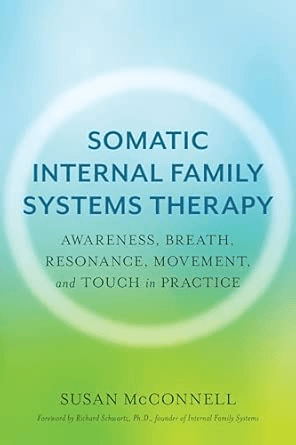
Published 2020 · North Atlantic Books
The body-based extension of IFS. McConnell spent years integrating somatic awareness , breath, movement, physical sensation , into the parts work framework, and this book is the result. The premise is that parts don't just live in our thoughts and emotions; they live in our bodies. The tightness in the chest when you feel abandoned. The freeze response when conflict starts. The collapse that comes after an anxious episode.
Somatic IFS gives you a way to work with those physical manifestations directly, rather than approaching parts only through conversation and visualization. For people whose trauma responses are heavily body-based, this approach often reaches places that purely cognitive work doesn't.
"The body is not just a container for our parts , it is the medium through which they speak most honestly." —— Susan McConnell
Best for: People who feel disconnected from their body, or whose trauma responses manifest primarily as physical symptoms. Pairs well with The Body Keeps the Score.
9. Altogether You , Jenna Riemersma
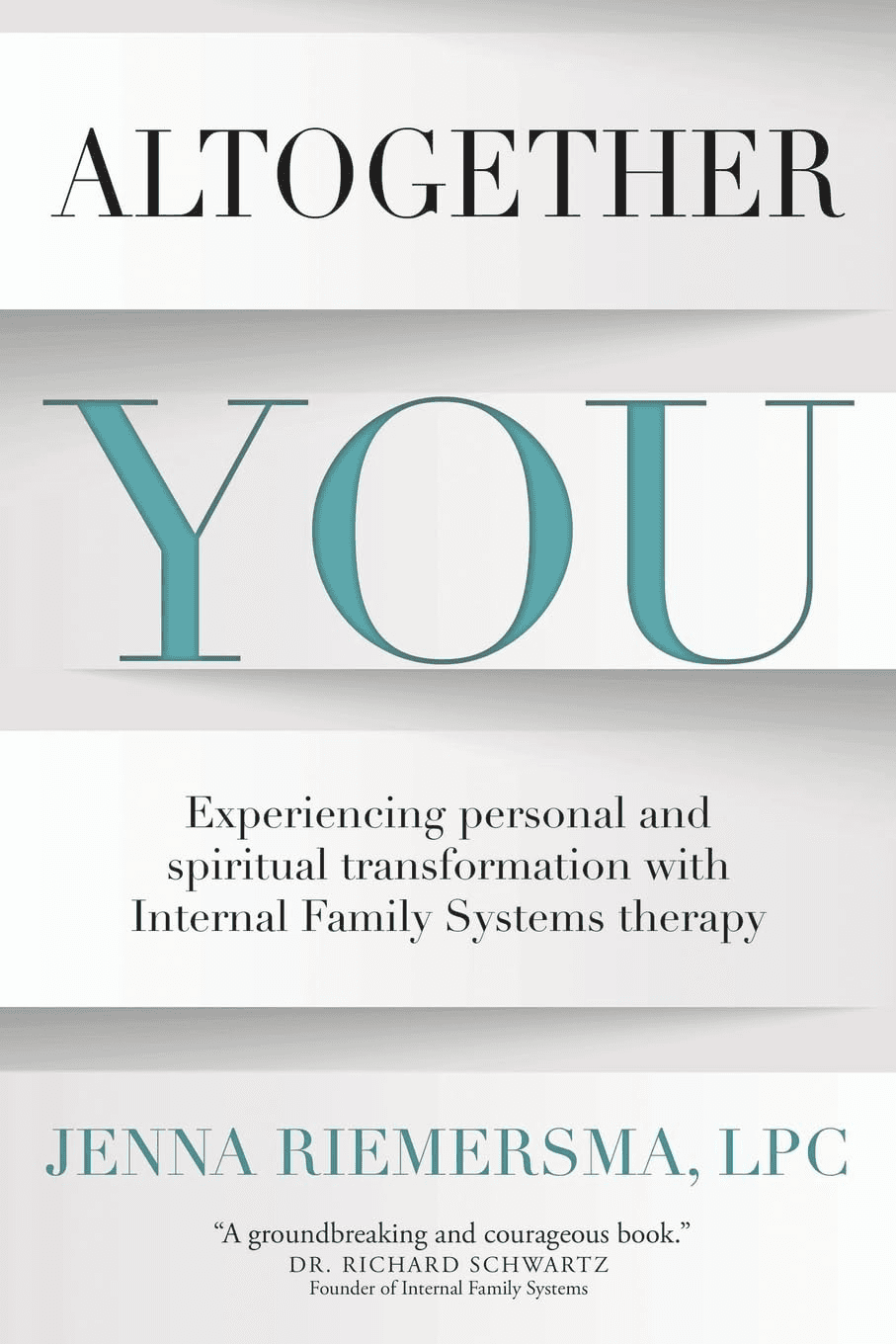

Published 2021 · Tyndale Refresh
A different angle on IFS , Riemersma brings a spiritual dimension to the parts work framework, drawing on both IFS and faith-based traditions to explore what it means to be a whole person. It's not exclusively religious, but it does integrate questions of meaning and spirituality in a way the other books on this list don't.
What makes it worth including here: Riemersma is an exceptionally clear explainer of IFS concepts, and her case examples are among the most illustrative of any IFS book. Even readers with no interest in the spiritual angle often find this the most emotionally accessible entry into the model.
"Every part of you, no matter how disruptive or broken it seems, was created to serve a purpose. The work is learning to hear what that purpose is." —— Jenna Riemersma
Best for: People drawn to spirituality or faith as part of their healing journey, or those looking for an emotionally warm entry into IFS beyond Schwartz's own writing.
10. Align Your Mind , Britt Frank
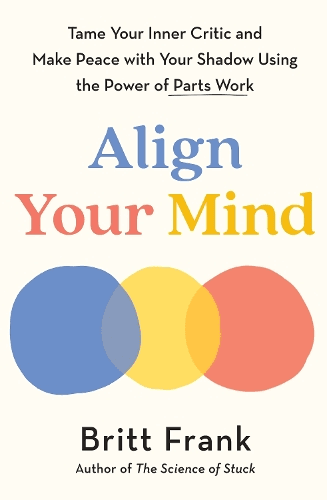
Published 2024 · Sounds True
The most recent book on this list, and one of the most accessible. Frank is a therapist and educator known for making complex psychological concepts feel immediately usable , and she brings that same approach to parts work here, integrating IFS with shadow work and somatic awareness in a way that's practical without being superficial.
The book is structured around the inner critic and the shadow , the parts of us that we most want to reject , and offers concrete tools for working with them rather than against them. It's a good bridge book for readers who are familiar with shadow work concepts but new to IFS, or who want to bring both frameworks together.
"The parts of you that cause the most chaos are usually the ones that are carrying the most pain. They don't need discipline. They need understanding." —— Britt Frank
Best for: People already familiar with shadow work or inner child concepts who want to add IFS tools to their practice. Also a good final read after working through the rest of this list.
Know Which Parts Are Running Your Relationships
Reading about IFS is one thing. Actually sitting with your parts is another. The Attached app has guided meditations designed specifically for IFS work, each one built to help you connect with a different part of your system. Whether you're working with a protective manager, a firefighter running damage control, or an exile carrying something old, there's a meditation for that. If the books on this list have resonated, this is where the practice begins.
Try the IFS meditations in Attached →
Continue the Work With Attached
Reading about IFS is how you understand the framework. The Attached app is where you practice it , with personalized inner child meditations built around your attachment style, structured courses grounded in attachment and parts work research, and a journal to track what shifts as you go.

Related articles
More reading to help this topic connect across the blog.
Discover the 9 best books for healing anxious attachment style. From Attached to The Body Keeps the Score, these science-backed books will help you overcome relationship anxiety, build secure attachment, and transform your relationships.
How I found an IFS (Internal Family Systems) therapist or coach, step by step — where to look, what to ask about training, how to pick by what you're struggling with, and how to use the waitlist to start parts work.
Most people put off shadow work journaling because of wrong ideas about what it is. Here are 5 things people get backwards, and an easier way to start.
I spent thousands of dollars so you don't have to. Here's which type of meditation to use for what, from mindfulness to IFS to Ideal Parent Figure.
Understand your attachment style
Read the full guide to each attachment style, or take the quiz to find yours.