What Avoidants Actually Want in a Relationship (According to Attachment Theory)

What Avoidants Actually Want in a Relationship (According to Attachment Theory)
Avoidants want love. They just don’t want to feel trapped while loving you.
I used to think avoidant partners didn’t care. That their silence meant indifference. That the distance meant rejection. But that wasn’t true. Underneath the space and the shutdowns, there’s something else. Fear.
Fear of being swallowed. Fear of losing control. Fear of depending on someone who might disappear.
The avoidant’s secret
They crave closeness. On their terms.
Avoidant attachment develops when love felt unpredictable or overwhelming in childhood. Maybe a parent smothered them emotionally. Maybe they were shamed for needing comfort. So they learned to survive by turning inward, by becoming “self-sufficient.”
Their independence isn’t arrogance. It’s armor.
They want connection, but they want to earn it slowly, safely. They want reassurance without pressure. Presence without intrusion.
What love feels like to them
When you reach out, they often feel torn. Part of them wants to lean in. Another part screams to run.
This dynamic is especially common in anxious-avoidant relationships, where one partner pursues while the other retreats. That internal tug-of-war can be exhausting.
They may withdraw, not because they don’t care! But because their nervous system interprets intimacy as danger. When someone gets too close, their body activates a stress response: heart rate up, chest tight, mind racing to create distance.
It’s not about you. It’s about safety.
What avoidants actually want...
But rarely say: • “I want to trust that closeness won’t erase me.” • “I want to love without losing my space.” • “I want you to stay, but not push.” • “I want connection that feels calm, not consuming.”
Deep down, avoidants long for the same thing everyone does: a love that feels steady, not scary. They just need to feel choice in it.
When love feels voluntary, not demanded, they soften. When their boundaries are respected, they relax. When you can sit in silence without panicking, they start to believe that connection doesn’t have to cost freedom.
How to build safety with an avoidant partner
- Regulate your own anxiety first. Don’t chase them to soothe your fear. Calm yourself before reaching out.
- Respect space without resentment. When they pull away, let them know you’re still emotionally available.
- Model consistency. Avoidants trust patterns more than promises. Show, don’t tell.
- Name the pattern gently. “I notice when things feel close, you get quiet. Can we talk about what feels safe for you?”
- Celebrate small steps. Every time they share or stay present, it’s courage, not compliance.
Avoidants don’t want to be alone forever. They want to be loved in a way that doesn’t trigger their alarm system.
They want love that feels like a breath. Not a choke.
The app to help you feel less anxious when avoidants don't text back
Love shouldn’t be painful. The No. 1 app to help you explore your relationships and attachment style so you can become happy and free, backed by attachment science.
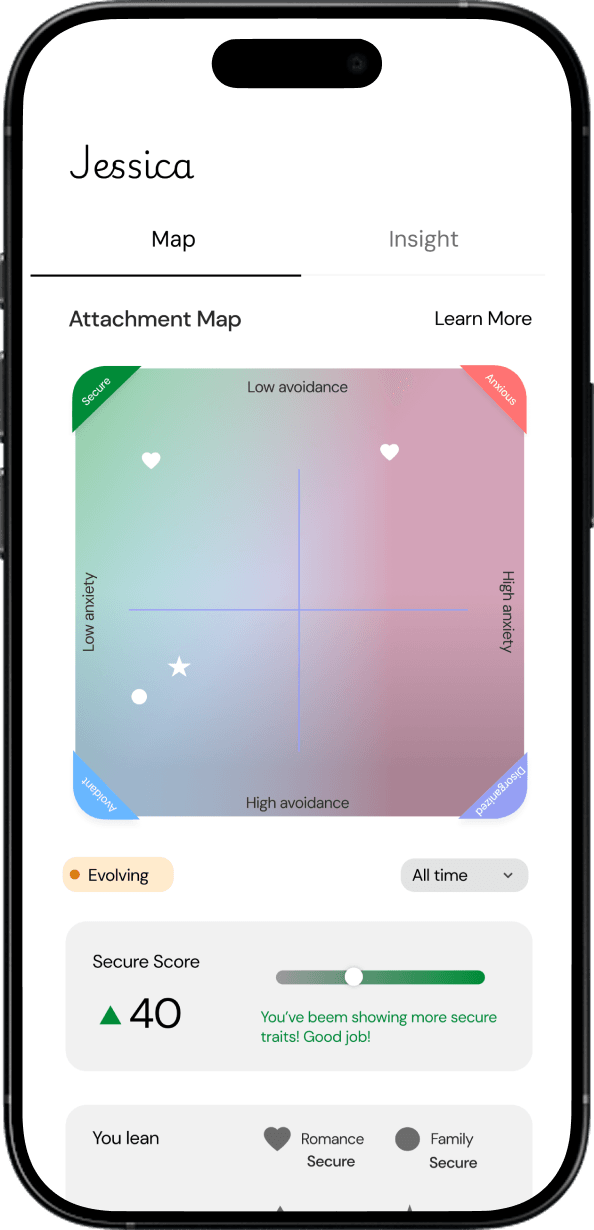
The Attached app helps make this process easier with: • Daily Exercises for habit-building • Self-Soothe Mode for tough emotional moments • Journal to find hidden emotional patterns • Weekly insights from Eden, your relationship guide
Download Attached for free and start working toward secure attachment.
References:
• Bowlby, J. (1969). Attachment and Loss: Vol. 1. Attachment. • Ainsworth, M. D. S. (1978). Patterns of Attachment: A Psychological Study of the Strange Situation. • Mikulincer, M., & Shaver, P. R. (2007). Attachment in Adulthood: Structure, Dynamics, and Change. • Simpson, J. A., & Rholes, W. S. (2017). Adult Attachment, Stress, and Romantic Relationships. Current Opinion in Psychology, 13, 19–24.

Related articles
More reading to help this topic connect across the blog.
What if Taylor Swift’s “type” didn’t change by accident… but because of something else? And why Travis Kelce might be different to the rest.
Why Avoidants Are Attracted to Anxious Partners (According to Attachment Theory) Your brain doesn’t care if love feels safe or not.
Anxious-avoidant attachment is the draining loop where one person reaches for closeness and the other reaches for space, and each move makes the other's fear worse. This guide covers the psychology behind it and what actually helps you change it.
What if, you've never been in love before? Here are 7 signs you've never felt real, genuine love.
Understand your attachment style
Read the full guide to each attachment style, or take the quiz to find yours.