We are All Punch. What Punch the Monkey Teaches Us About Trust & Why You Relate to Him
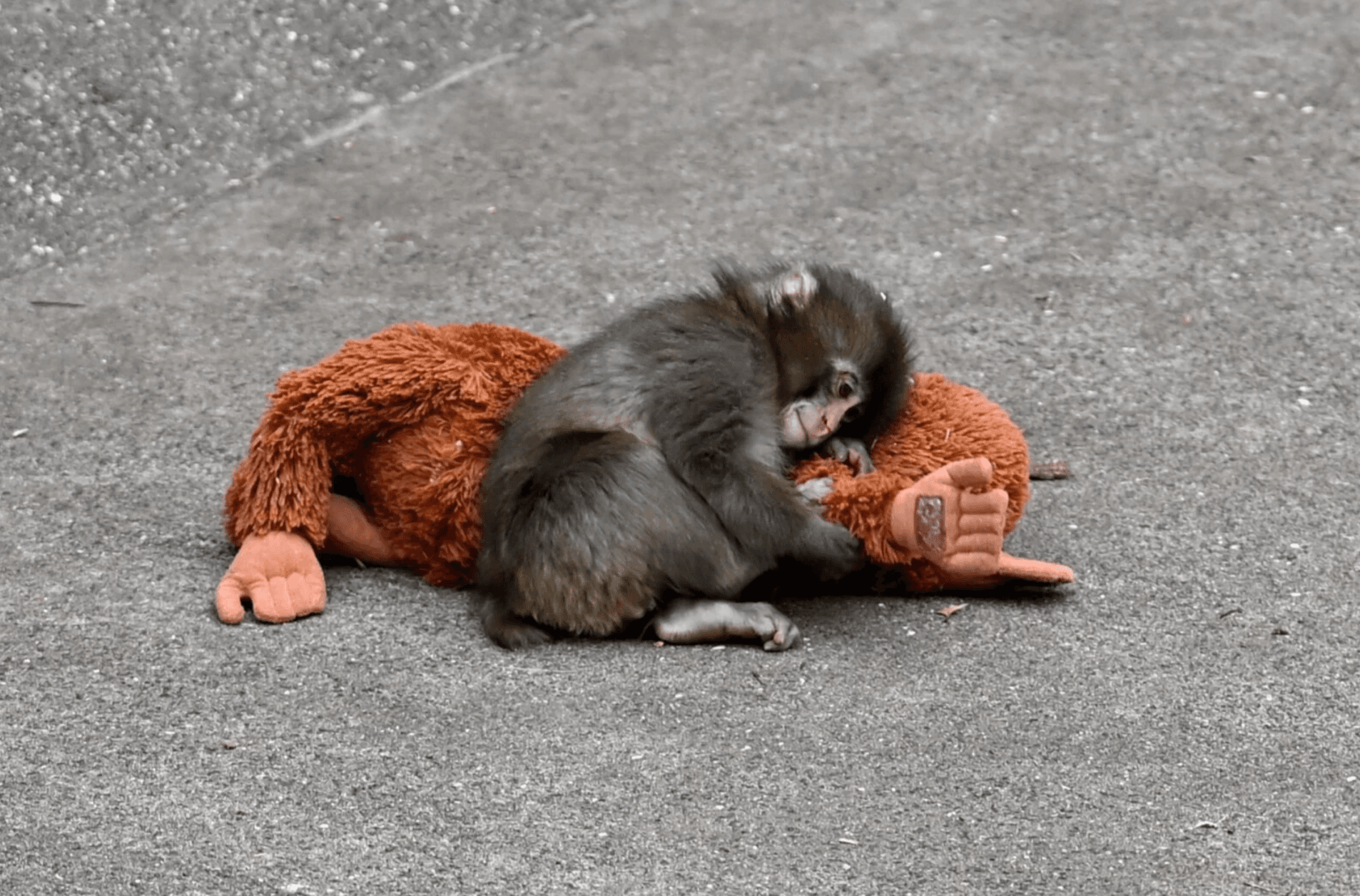
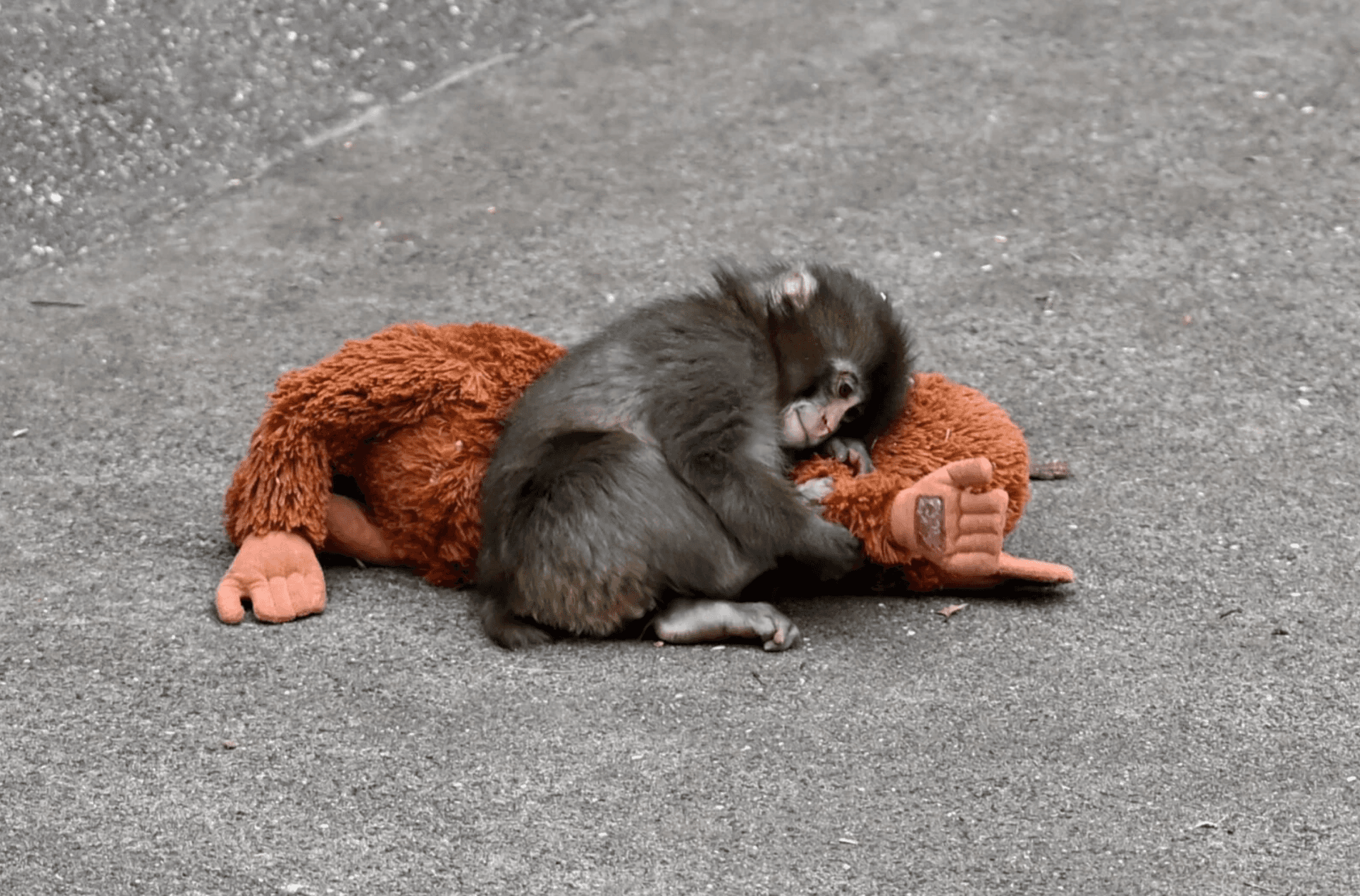
Photo by David Mareuil/Anadolu via Getty Images
Over the past few days, Punch has tugged at all of our heartstrings.
The adorable little monkey clinging onto his IKEA orangutan plush. Us simultaneously crying internally when Punch is rejected by other monkeys, thus running back to his fav toy.
The toy has now been sold out at IKEA, but… What if I tell you that Punch's touching story tells us so much about attachment theory — and that understanding it could change the way you love?
Attachment style applies to you and Punch
Attachment theory says humans and other primates carry a built-in system that scans for safety, closeness, and separation. Early caregiving shapes patterns of seeking comfort, protesting separation, and returning to exploration.
In adult romantic relationships, researchers see four broad attachment styles: secure, anxious, avoidant, and disorganized (fearful-avoidant). In couples, they look like this:
- Secure attachment — "I can lean on you, and you can lean on me." You text back. You repair after conflict. You share feelings without exploding or vanishing.
- Anxious attachment — "I need you close, and I'm scared you'll leave." You cling. You reread your partner's message ten times and still want reassurance.
- Avoidant attachment — "I want connection, but closeness feels dangerous." You stay half-in. You disappear when intimacy rises.
- Disorganized (fearful-avoidant) attachment — "Come here. Go away. I don't know what is safe." You're scared. One day you overshare; the next day you ghost.
For Punch, if rejection from his fellow monkeys continues, he may develop anxious-like, avoidant-like, or disorganized-like social behaviors — cycling between desperately reaching out and pulling away entirely.
Why Punch won't let go of his toy
Maybe you had a safety blanket that you refused to let go of growing up, or it was your toy teddy bear. Just like Punch's plush.
Psychologists call these comfort objects. Comfort objects help children self-soothe when the caregiver steps away. They:
- Lower distress in new situations
- Help kids fall asleep and separate more easily
- Support emotion regulation as they grow
For Punch, his toy gives his little attachment system something to grab when the rejection feels too much. That's why he runs back to his plush when he's rejected, pushed away, or feels sad.
Now let's turn and look at ourselves. What's your plush?
Is it your controller? Phone? Work? TV? TikTok? A playlist you've looped a thousand times? Your partner's hoodie?
These things regulate us, soothe us, and don't reject us. They reduce distress in the short run. But here's what matters: comfort objects were always meant to be a bridge — not a replacement. A child holds the blanket so they can eventually let go of it and reach for a real person. If our adult comfort objects are replacing real connection instead of supporting it, loneliness deepens.
When Punch is rejected… and how the same anxious behavior happens to us
copyright credit - ichikawa city zoo
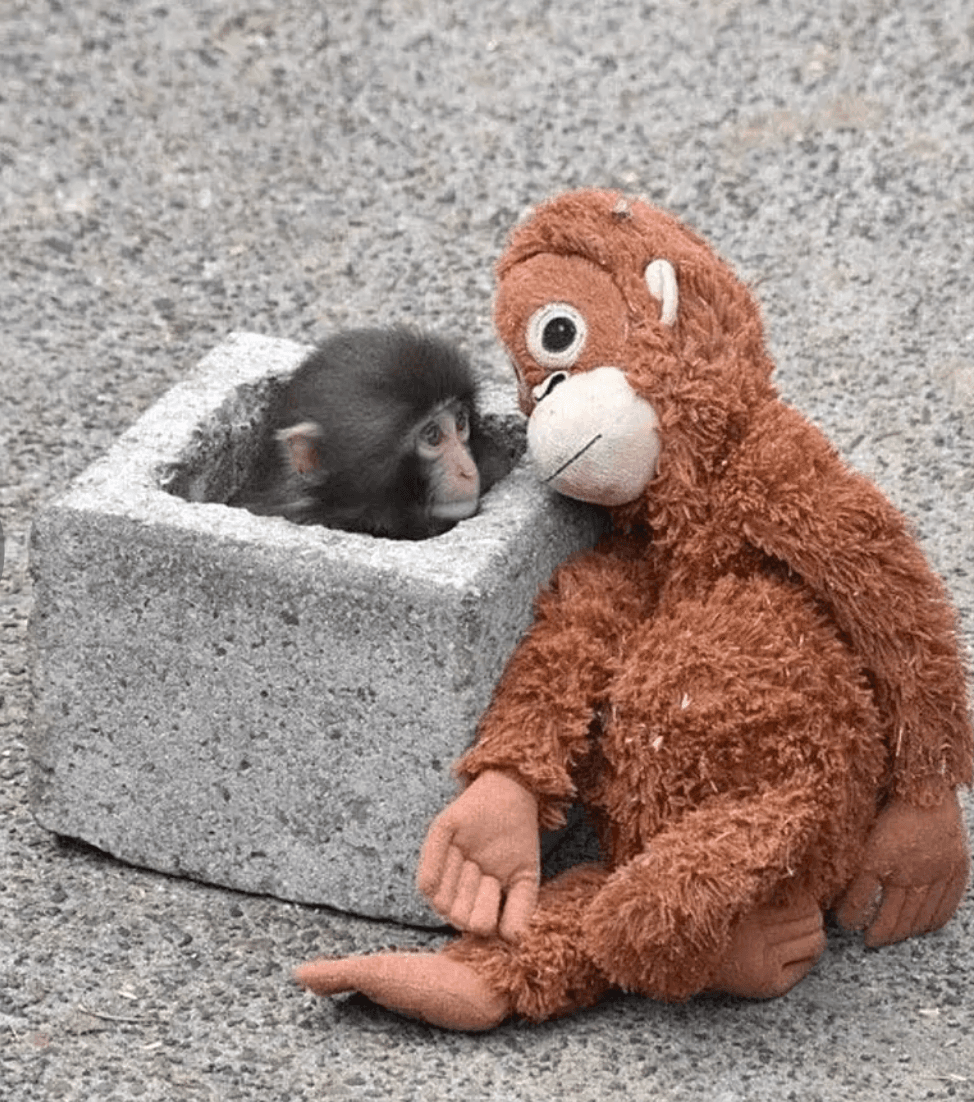
When Punch is rejected, he scrambles up the rock and presses his face into the orangutan plush. His attachment system protects him by pushing him to run toward safety.
Now think about your last relationship conflict. What does your body do when you feel threatened? When your partner goes silent, or you have a fight — do you chase, shut down, or freeze?
When Punch runs toward the plush, what do you run toward?
You can see Punch grabbing onto his toy so tightly when he's stressed. That's exactly how anxious partners cling too. Their system predicts loss, so they hold on tighter — more texts, more reassurance-seeking, more "are we okay?" Because to the anxious system, silence doesn't mean space. Silence means danger.
When Punch is rejected… and how the same avoidant behavior happens to us
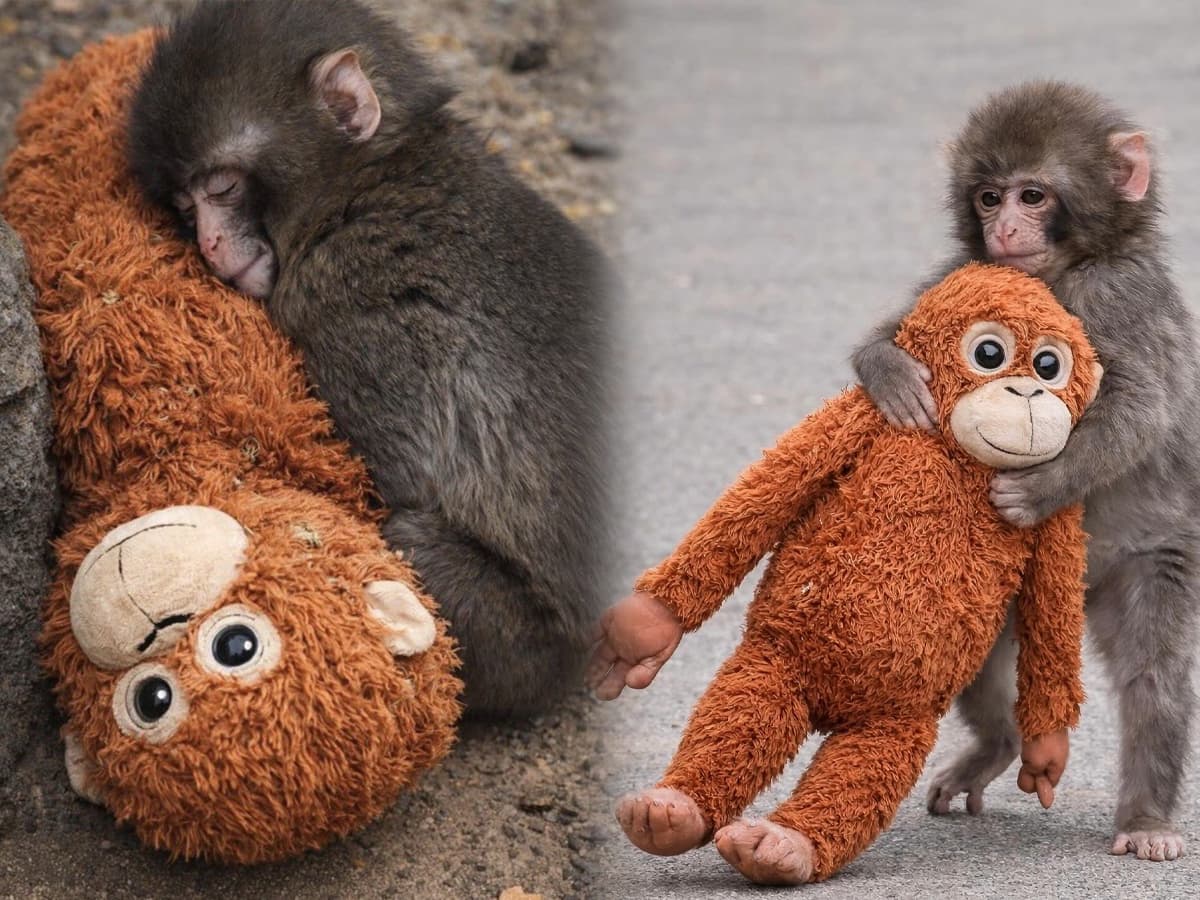
copyright credit - ichikawa city zoo
We also see Punch sitting with his plush, turned away, hiding and avoiding eye contact with the other monkeys. He's not reaching out anymore. He's pulling inward.
When Punch begins to hide his stress and stop signaling his need for connection, he's learning an avoidant strategy — deactivation. The system shuts down the alarm, not because the need disappeared, but because expressing it stopped working.
In adult relationships, deactivation looks like:
- "I'm fine."
- Turning back to your game mid-argument.
- Staying late at work after intimacy deepens.
- Ghosting after a vulnerable date.
- Convincing yourself you didn't care that much anyway.
Punch — or you — learns to reduce the signal. Protecting by shrinking the need. But the need is still there. It's just gone underground.
What Punch actually needs
Here's what Punch's plush can't do — it can't respond to him.
Attachment theory isn't just about self-soothing. At its core, it's about co-regulation: learning to calm down with another living being who sees you, responds to you, and stays. A comfort object can lower distress, but it can't repair a rupture. It can't look at Punch and say, "I'm still here."
That's the difference between self-soothing and co-regulation. Self-soothing keeps you stable. Co-regulation is how you heal.
Punch needs a caregiver — a zookeeper, another monkey, someone — who responds consistently enough that his nervous system starts to update its prediction: reaching out might actually work.
And so do we.
But why did the plush sell out so fast?
Let's pause and ask a question nobody's really asking.
IKEA's Djungelskog orangutan plush sold out almost overnight. Why? It's not because people suddenly needed a stuffed animal. It's because we saw ourselves in Punch.
We watched a little monkey get rejected and run to the one thing that wouldn't push him away — and something in us ached. Because we've done the same thing. We are doing the same thing.
The sellout is a mirror.
If you related to the anxious tendencies I described above — the clinging, the reassurance-seeking, the fear of loss — buying the plush is the pattern. It's reaching for the comfort object instead of addressing what's underneath. If you related to the avoidant tendencies — the hiding, the deactivation, the "I don't care" — the plush is another way to self-soothe in isolation. And if you saw yourself in the disorganized pattern — the push and pull, the chaos — it's one more thing to grab onto while avoiding the real work.
You should not be turning to your plush. You should be asking why you needed one in the first place.
Why this matters for love
It's now easier than ever to escape. We can turn on Netflix in one tap, scroll TikTok in one swipe, and load a game with one click. As a result, our society is becoming lonelier and lonelier. Not because we don't want connection, but simply because we never learned safety.
Not all of us experienced what Punch did — early separation from a caregiver. But many of us experienced similar attachment wounds in different forms: emotional neglect, chaotic households, divorce, inconsistent caregiving, or parents who were physically present but emotionally somewhere else.
And those experiences taught our nervous systems something: connection is unpredictable. Better to find something I can control.
If you're like Punch, how you can find love and safety
Here's the good news. Research has shown over and over that attachment styles can change. Psychologists call it earned secure attachment — the idea that even if you didn't start with a secure base, you can build one. It takes time, but the brain updates.
If you see yourself in Punch, here's where to start:
1. Challenge the story you tell about love
Cognitive Behavioral Therapy (CBT) targets distorted attachment beliefs:
- "If I show my needs, they'll leave."
- "Closeness always ends in pain."
- "I'm too much."
CBT helps you test those thoughts against reality. Over time, your brain updates its prediction model about intimacy. Not every story your nervous system tells you is true — some are just old survival strategies that haven't caught up to the present.
2. Heal the younger part
Internal Family Systems (IFS) and Schema Therapy work with the vulnerable child part inside you — the part that learned to cling or hide. Instead of shaming that part, you:
- Notice it.
- Validate it.
- Give it new corrective experiences through therapy and safe relationships.
Over time, that inner Punch learns: connection does not always equal danger.
3. Move from self-soothing to co-regulation
Comfort objects aren't the enemy. But healing means gradually letting real people in alongside them. That looks like:
- Telling someone what you actually need instead of disappearing.
- Letting a friend sit with you when you're upset, even when your instinct says to isolate.
- Staying in the conversation ten seconds longer than your avoidant system wants you to.
Small moments of reaching out — and having someone reach back — are how your attachment system rewires.
Punch's future and ours
I don't know exactly how Punch will turn out. But we do know that in human terms, he experienced early attachment disruption. I hope that the love and care of his zookeepers — and maybe, eventually, a responsive companion — will help his nervous system learn what ours can learn too:
That it's safe to put the plush down and reach for something real.
The app to help you feel better, less anxious, immediately
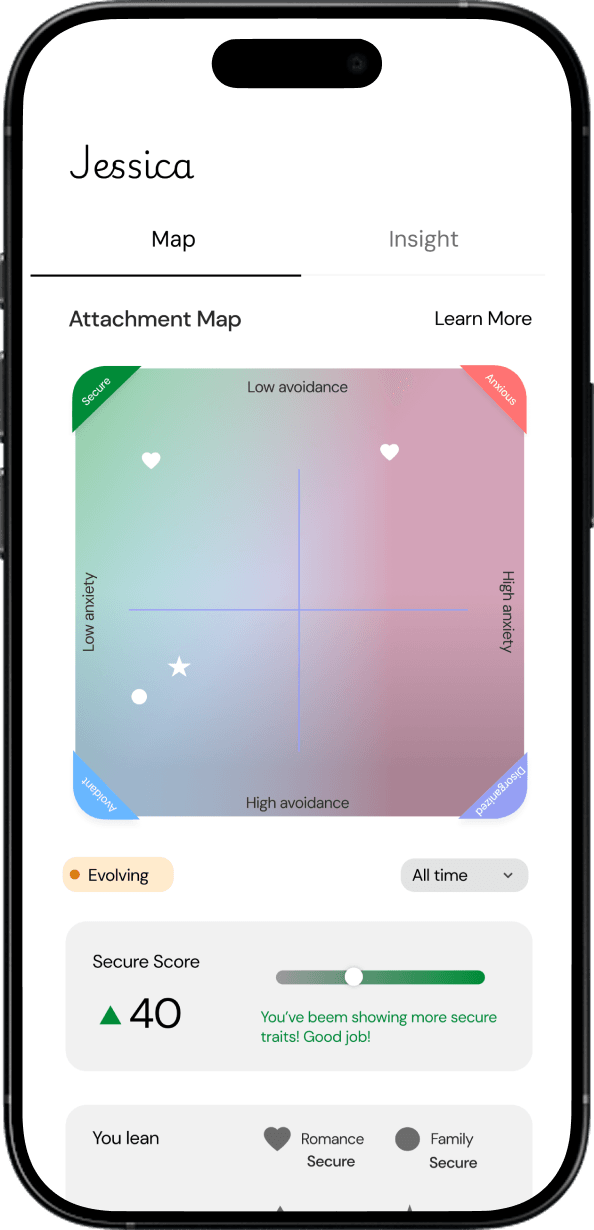
Love shouldn't be painful. The No.1 app to help you explore your relationships and attachment style so you can become happy and free, backed by attachment science.
The Attached app helps make this process easier with:
- Daily Exercises for habit-building
- Self-Soothe Mode for tough emotional moments
- Journal to find hidden emotional patterns
- Weekly insights from Eden, your relationship guide
Download Attached for free so you can be supported, and your real relationships can finally feel like home.
Related articles
More reading to help this topic connect across the blog.
One hidden way your employees relate to people at work could secretly be costing your company millions.
You can sit across from your partner, share dessert, kiss for a photo… and still feel alone. These 10 questions help you fall in love, again.
Most of the changing happens outside the therapy room. A memoir about Tuesday spirals, therapy homework, and the between-session practice that finally made the pattern real.
Nobody told me about the fourth one.
Understand your attachment style
Read the full guide to each attachment style, or take the quiz to find yours.