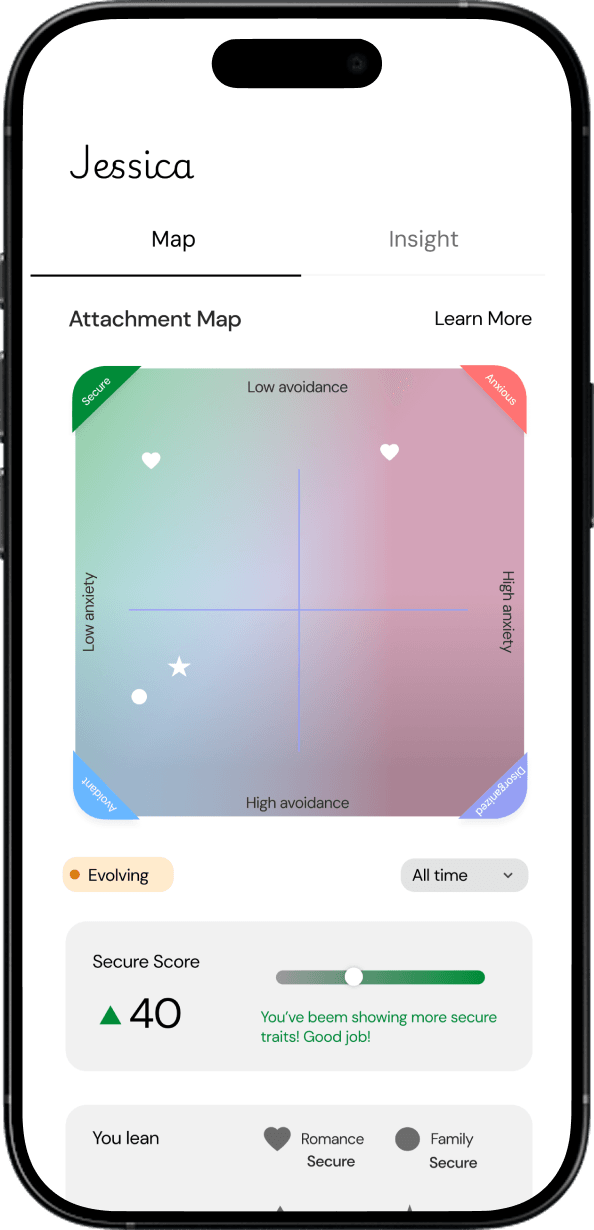
How to Survive a Toxic Holiday Dinner Without Losing the Progress You Made in Therapy

The moment I walk in, my body changes
I feel my shoulders lift before I even hang my coat. I hear the familiar sound of silverware clattering. I smell the same food I grew up with. My muscles brace, like something in the house remembered me before I remembered myself.
This is what psychologists call state-dependent memory. Your body stores environments alongside emotion. When you re-enter the old environment, the old emotion wakes up.
It doesn’t matter that I’m an adult. It doesn’t matter that I go to therapy every week. The moment my mother raises an eyebrow, my nervous system reacts faster than my thinking brain can intervene.
Maybe you know that feeling too.
Why old triggers feel stronger at the holiday table
People with attachment wounds react to two especially common family dynamics:
1. The Critical Parent
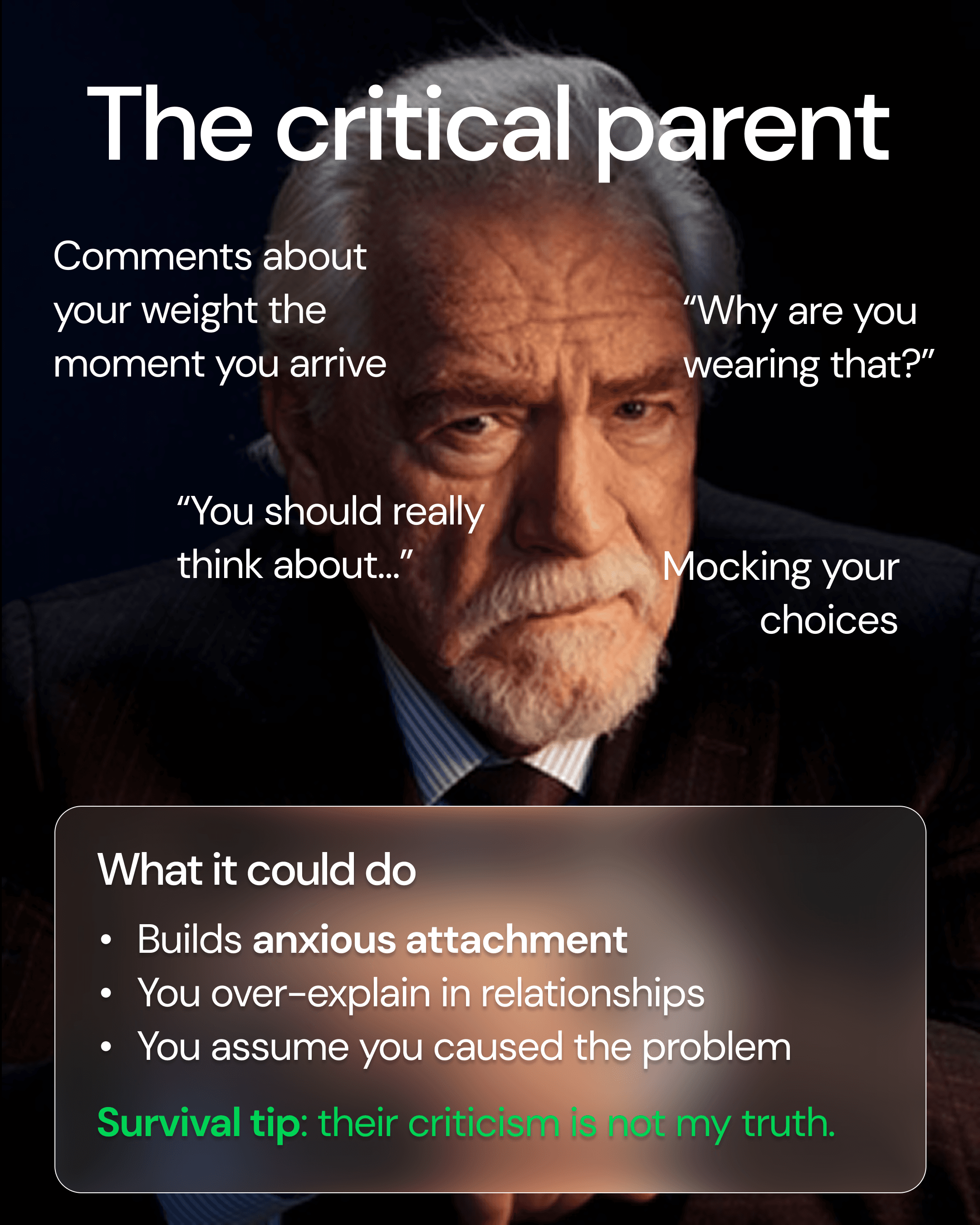
They comment. They judge. They question your choices, your clothes, your career, your body, your tone.
Criticism activates anxious attachment. Your brain jumps into “What did I do wrong?” mode. You try to earn safety. You over-explain. You shrink.
A meta-analysis in 2016 found that chronic parental criticism during childhood predicted higher adult anxiety and hypervigilance (Luyten et al., 2016).
2. The Emotionally Unpredictable Caregiver
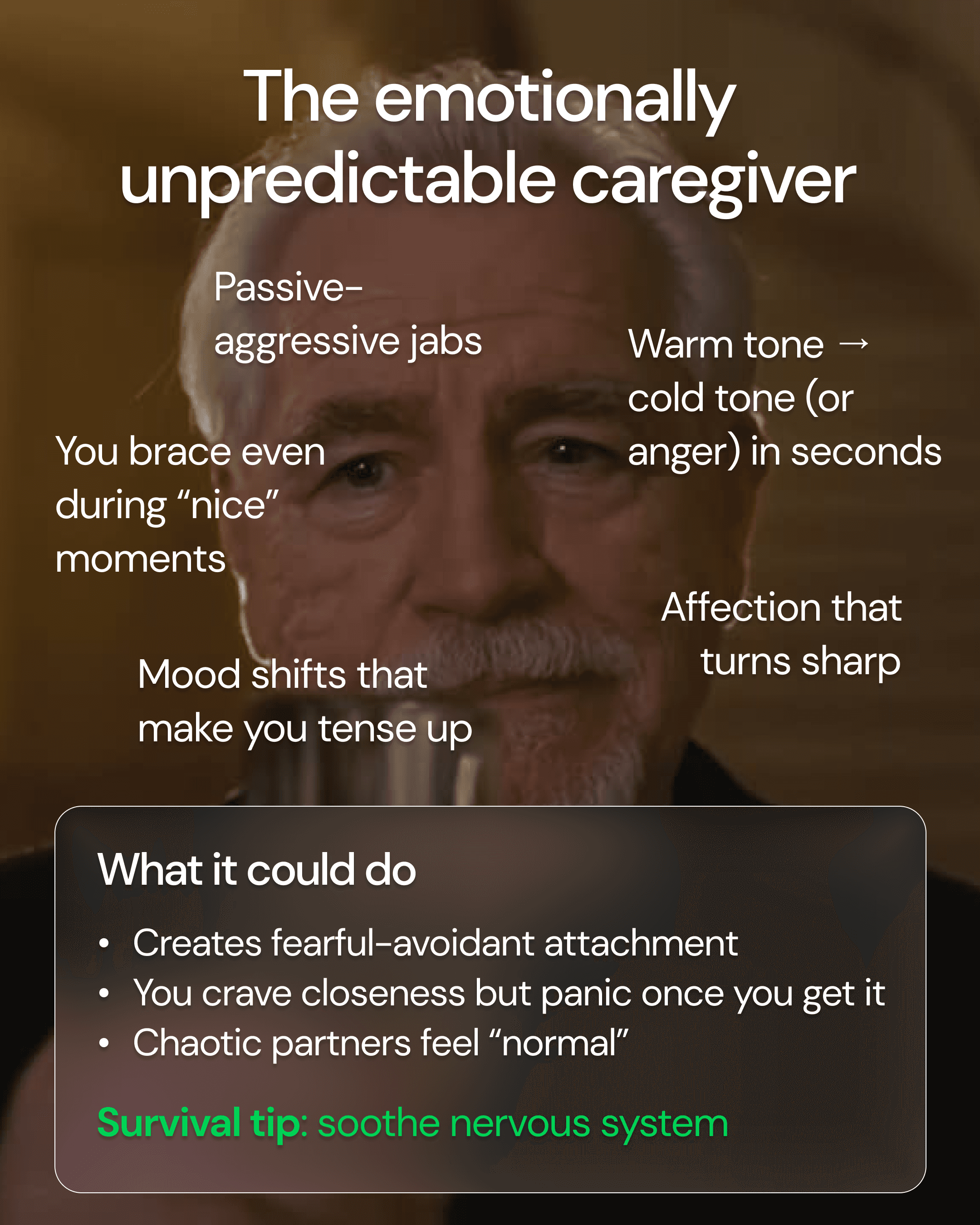
Warm one moment. Cold the next. Laughing… then snapping.
This activates fearful-avoidant or disorganized attachment.
Research on inconsistent caregiving shows it produces the strongest stress spikes in reunion situations, which is what holidays basically are (Main & Solomon, 1990).
The regression nobody talks about
I sit at the table, and suddenly I’m younger. Not in a cute nostalgia way. In a “my brain drags me back into the old family script” way.
Psychologists call this emotional regression.
You might see it in yourself too: • You fawn. • You shut down. • You shrink to avoid drama. • You over-talk to fill the tension. • You nod to keep the peace. • You abandon your adult self.
These are adaptive survival behaviors, not failures. Your younger self learned them to stay safe.
Nothing is wrong with you. Something happened to you.
So I built a survival plan. You can too.
I learned I can’t change my family. But I can protect the parts of me therapy helped me grow.
Here’s what I do. Take whatever helps you.
1. I prepare before I enter the house Psychologists call this anticipatory coping. It reduces stress by 20–30% in most clinical studies (Aspinwall & Taylor, 1997).
I write down the three likely triggers: • the comment about my weight • the question about my career • the unpredictable mood shift
Then I write the specific sentence I’ll say when each happens.
Example: “I’m not discussing this today. Let’s keep it light.”
It sounds simple. But having the words ready saves me from freezing.
You can pick your own script. Short is best.
You can use a tool like the Attached app, their Trigger Cards feature makes this easy.
2. I regulate my body before I regulate my thoughts Most people try to talk themselves down. But the body fires first.
A 2011 polyvagal study found that grounding the body calms the mind, not the other way around (Porges, 2011).
Before dinner, I do this: • Put both feet on the floor • Press my fingertips together • Inhale for 4, exhale for 6 • Relax my tongue (this one works weirdly fast)
The point is to remind your nervous system that you are not trapped anymore.
You can use a tool like the Attached app, their personalized meditations makes self-regulation easy.
3. I stop trying to win In insecure attachment, we chase approval. We try to “redeem” the moment. We try to impress or fix or perform.
But a toxic dynamic can’t be solved at the dinner table.
So I say this to myself quietly:
“You’re allowed to stop performing now.” It interrupts the childhood program.
4. I leave the room when I need to This used to feel dramatic.
But stepping out is actually a boundary with your body, not with your family.
You can walk out with a simple line:
“I need a moment. I’ll be back.”
That line saved me last year.
5. I debrief after the dinner, not during it People with attachment wounds often spiral during conflict. But research shows self-reflection works better after the stress ends (Kross & Ayduk, 2011).
So I wait until I’m home. Then I write down: • What triggered me? • Which part of me reacted: adult self or child self? • What did I need?
The point is awareness.
Awareness is the real progress therapy teaches you.
You can use a tool like the Attached app, their psychology-backed guided journaling helped me tremendously.
If the night goes badly, you did not lose your progress
I used to shame myself for slipping. But now I know this:
Regression under pressure isn’t a setback. It’s a measurement of where the wounds still live.
That’s what attachment science teaches us. These patterns were wired in survival conditions. They don’t disappear just because we understand them.
But every time you notice the pattern, every time you choose one small self-protective move, you grow new neural pathways.
That’s what healing actually looks like. Tiny choices that protect the adult you are becoming.
The app that helped me get through the holidays
When I can't see my therapist because either the walls are too thin at home, or my therapist is also on holiday leave... I turn to the Attached app. It helps me come back to myself after moments like this.
The app gives you: • Daily grounding exercises to rebuild the safety you didn’t get growing up • Self-Soothe Mode for when your chest tightens and your brain spirals • A private journal to make sense of the patterns your family still activates • Weekly insights from Eden, who explains attachment wounds in simple, kind language
Try Attached for free and give your adult self the safety your child self never had.
Resources • Ainsworth, M. D. S. (1978). Patterns of Attachment. • Main, M., & Solomon, J. (1990). Procedures for identifying disorganized attachment. • Phelps, E. A. (2004). Human emotion and memory: interactions of the amygdala and hippocampal complex. • Luyten, P. et al. (2016). Parental criticism and adult anxiety. • Aspinwall, L., & Taylor, S. (1997). Anticipatory coping. • Porges, S. (2011). Polyvagal Theory. • Kross, E., & Ayduk, Ö. (2011). Emotion regulation and psychological distance.

Related articles
More reading to help this topic connect across the blog.
What to actually say when you sit down with your inner child. The sentences that finally worked after weeks of getting nothing back, what to do when it feels fake, and when to skip it entirely.
Somewhere out there in a parallel universe. Sam wakes up rested and notices a wave of sadness from yesterday.
Most of the changing happens outside the therapy room. A memoir about Tuesday spirals, therapy homework, and the between-session practice that finally made the pattern real.
Most people put off shadow work journaling because of wrong ideas about what it is. Here are 5 things people get backwards, and an easier way to start.
Understand your attachment style
Read the full guide to each attachment style, or take the quiz to find yours.